Africa's AI Data-Centre Boom Is Being Built on Gas, Not Sun
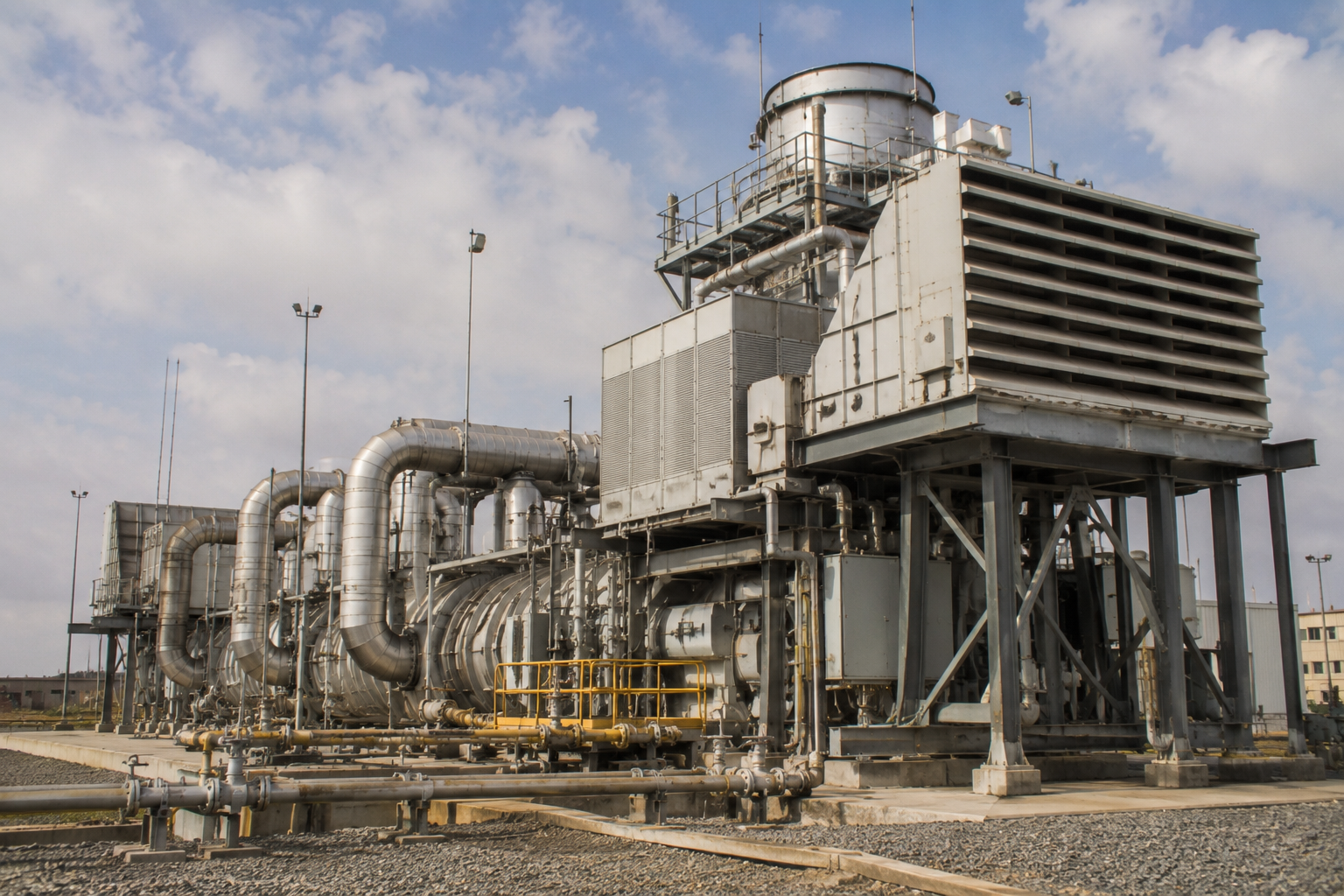
In March 2026, Tetracore Energy Group announced a $400 million data centre in Ogun State, Nigeria. The facility will be 20 megawatts, while the gas plant powering it will be 100 megawatts.
That ratio, five times as much generation capacity as the facility it serves, isn't an engineering anomaly, but a reflection of the current state of AI data centre development across most of Africa, where solar and wind can't guarantee the continuous, dispatchable power that AI workloads require, operators are building gas. They are building more gas than the facility needs, because redundancy is the price of reliability in markets where the grid cannot be trusted. And they are building it off-grid entirely, so that the global AI capex cycle that is driving the investment decision remains the only thing that can take it away.
Two bets on the same demand
Africa's data centre market was valued at approximately 3.49 billion USD in 2024. The African Energy Chamber projects that electricity demand will reach 2 gigawatts by 2030, growing at a compound annual rate of 9 percent, while electricity generation is projected to reach 6.81 billion USD by 2030, growing at a compound annual rate of 11.79 percent. The IEA projects global data centre electricity consumption will double from 415 TWh in 2024 to approximately 945 TWh by 2030, with AI-optimised data centres alone quadrupling in that period. The demand is real, the dispute is about which energy source will meet it.
Two competing infrastructure bets are currently being placed across Africa simultaneously. The renewable bet is most visible in Kenya and South Africa. Kenya's grid is approximately 90 percent renewable, with geothermal at 48 percent, hydro at 24 percent, wind at 13 percent, and solar at 5 percent, making it structurally capable of offering what most African grids can't: dispatchable, non-intermittent clean power that meets the uptime requirements of mission-critical AI infrastructure.
The Microsoft and G42 1 billion USD data centre investment in Kenya, a 100 MW facility powered by geothermal energy from the Naivasha field, expandable to 1 gigawatt, is the clearest expression of what the renewable bet looks like when the grid can support it. In South Africa, Teraco began construction in November 2024 of a 120 MW solar plant designed to supply its data centres across the country, expected to reach operational status in late 2026, the first wheeling arrangement of its kind in South Africa, permitting power to move from a renewable producer in Free State province to data centre facilities in Johannesburg and Cape Town via the Eskom grid.
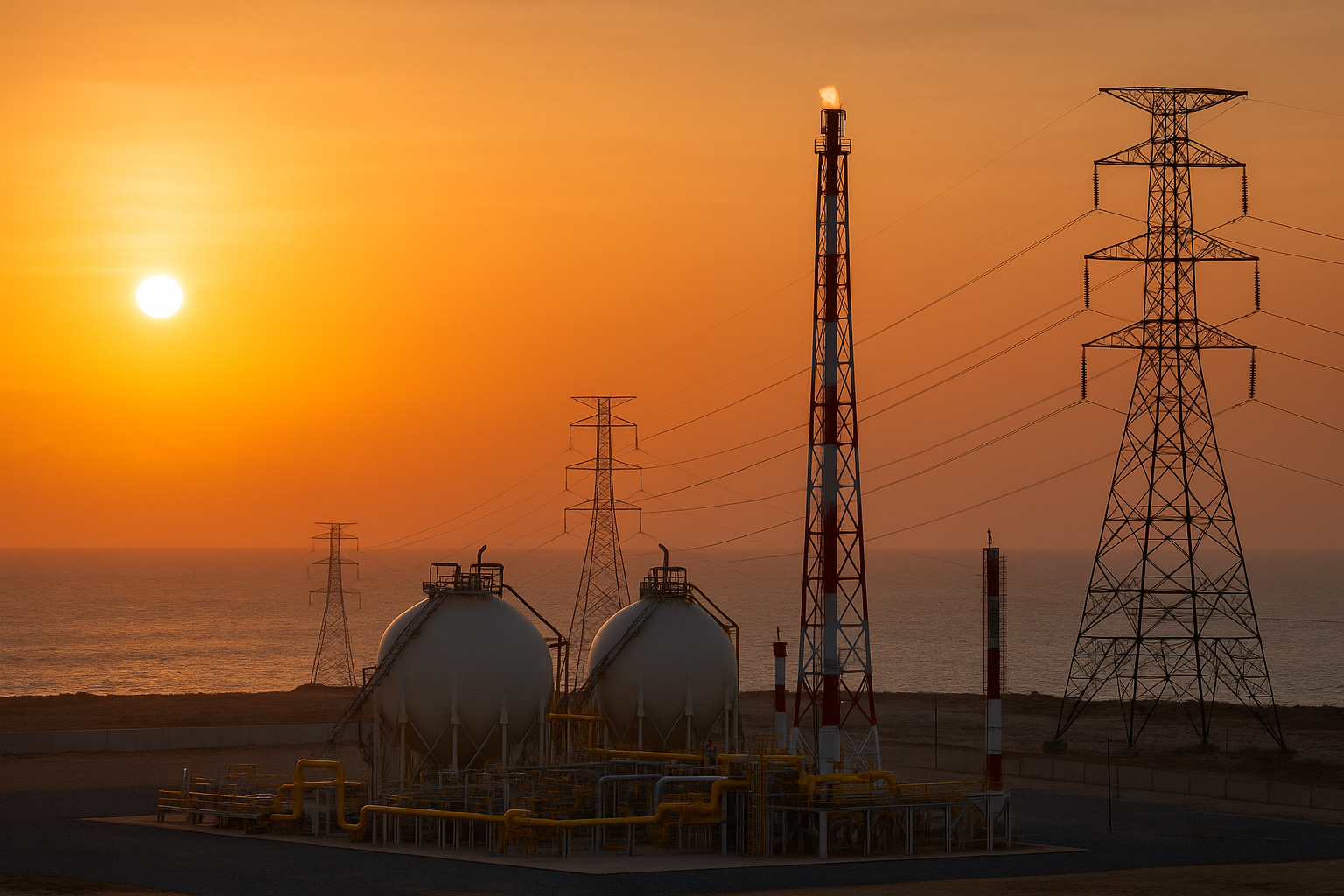
The gas bet is most visible in Nigeria and is gaining ground in Egypt, Algeria, Mozambique, and Senegal. The Tetracore model 20 MW data centre and a 100 MW on-site gas plant are the archetype. It is designed to operate entirely independently of Nigeria's national grid, a design choice the company describes as necessary given persistent power reliability challenges. Airtel Nigeria's USD 120 million hyperscale facility in Lagos, 38 megawatts of GPU-ready compute, is embedded in a market where the national grid has never delivered more than 5,801 megawatts to 242 million people and where available generation dropped to approximately 4,300 megawatts as recently as February 2026 due to gas supply disruptions.
The African Energy Chamber has been explicit about the logic: gas offers what renewables alone cannot currently guarantee in emerging markets, stable, dispatchable baseload power, and data centre operators building for AI workloads can't absorb the reliability risk of a grid or a solar-wind hybrid that cannot sustain consistent output at the required voltage and load.
The dispatchability gap that gas fills by default
The dispatchability argument deserves to be understood precisely rather than dismissed as fossil fuel advocacy or accepted uncritically as a technical necessity.
AI inference, the operational phase of AI, now accounting for roughly 80 to 90 percent of total AI-related computing, is continuous. Unlike model training, which can be scheduled during periods of available power, inference happens every second the model is live. A large language model serving queries in real time can't queue requests during a cloud-cover event and batch-process them when the sun returns. The power contract that underpins a mission-critical AI facility is priced on guaranteed uptime, not on average availability, or curtailment-adjusted output, but on the assurance that 99.99 percent of the time, at any hour, or weather condition, the required load will be met at the required voltage.
Solar and wind, at their current deployment levels across most of Africa outside Kenya and South Africa, can't meet this requirement without battery storage at a scale that doesn't yet exist commercially in the markets where the gas build-out is happening. This is the working reality of operators making site selection decisions in Lagos, Abidjan, Cairo, and Maputo right now. The IEA's Energy and AI report acknowledges that across all scenarios, fossil fuels, led by natural gas, remain important for meeting the near-term surge in data centre electricity demand through 2030. The renewable transition for data centres is projected to be largely a post-2030 phenomenon in most markets.
The Tetracore model, build the gas plant first, at five times the initial compute capacity, and operates it entirely off-grid, is therefore a rational operator response to the dispatchability gap.
The stranded-asset risk the gas narrative does not price
The case for gas-to-data-centre infrastructure in Africa, as presented by the African Energy Chamber and the investor discourse around African Energy Week 2026, rests on an assumption that deserves scrutiny: that hyperscale technology companies will remain in African gas-powered data centres long enough to justify the gas infrastructure built to serve them.
The Tetracore facility costs USD 400 million. Of that, a significant portion is the 100 MW gas plant. That gas plant's economics depend on a data centre customer that has no contractual, regulatory, or logistical commitment to stay in Ogun State that can't be unwound faster than the gas plant's financing horizon. The history of hyperscale data centre siting is a history of migration: facilities move toward cheaper power, lower latency to users, more favourable regulatory environments, and stronger grid reliability. The global AI capex cycle that is currently driving investment decisions in Lagos and Cairo is set in San Francisco, Seattle, and Redmond. Its turning, if it turns, will produce exactly the demand shock that African gas-to-data-centre advocates are not modelling.
The mechanics of who bears this risk is the question the gas narrative doesn't answer. Behind-the-meter gas generation built by a private African energy company to serve a single hyperscale anchor tenant isn't the same asset as a gas power plant connected to the national grid and serving a diversified industrial customer base. If the anchor tenant migrates to cheaper power elsewhere, for instance, to a grid-connected geothermal field in Kenya, a US campus powered by the Microsoft-Chevron-Engine No.1 2.5 gigawatt gas facility in West Texas, or to a European market with long-duration storage backed by wind, the gas plant's economics collapse. The stranded asset risk sits entirely with the African investor and, if development finance was involved, with the African development finance institution that underwrote it.
This isn't a reason to refuse all gas-to-data-centre development in Africa, but one to price the risk correctly, to structure the financing with appropriate protections, and evaluate gas-for-AI investment against the renewable alternatives available in each specific market rather than treating gas as the default solution for all markets.
Kenya and South Africa name the alternative
The renewable-for-AI case exists in the two markets that have built the conditions for it.
Kenya's geothermal endowment is the decisive factor. Geothermal is dispatchable; it generates continuously, regardless of weather, at a consistent output, with reliability profiles comparable to gas turbines. The Microsoft-G42 investment in the Naivasha geothermal field isn't a renewable bet despite the dispatchability constraint, but a renewable investment because the specific resource, geothermal, meets the dispatchability requirement without gas. The facility's planned expansion to 1 gigawatt makes it one of the largest data centre commitments on the continent, backed entirely by clean, firm power that the Kenyan grid can supply.
South Africa's Teraco model is different in mechanism but points in the same direction. The 120 MW solar farm currently under construction is paired with wheeling arrangements through the Eskom grid, using the existing transmission infrastructure as effective storage across geography, drawing from the solar facility when it generates and from other grid sources when it does not. The model works because South Africa's grid, despite its reliability problems, has the transmission infrastructure and the market design to support wheeling agreements that smaller or less developed grids cannot replicate.
Both models require something that most African electricity markets don't yet have: either a dispatchable renewable resource at the required scale, or a grid architecture sophisticated enough to make intermittent renewables function as firm power through storage, wheeling, or interconnection. Where neither exists, gas fills the gap by default. The critical question is whether the gas infrastructure being built to fill that gap is designed as a bridge to dispatchable renewables, to battery storage, to grid interconnection, or as a permanent solution that forecloses the renewable alternative once the financing is sunk and the contracts are signed.
What utility planners and development finance institutions need to ask
National utility integrated resource plans in South Africa, Kenya, and Nigeria were not designed around AI data centre load profiles. A facility drawing 20 to 100 megawatts continuously, with redundancy requirements exceeding most industrial customers, is a different planning input than the residential demand those IRPs were built to accommodate.
When that load is met by behind-the-meter gas entirely disconnected from the grid, utilities don't see the demand, receive the tariff revenue, and don't build the infrastructure that would eventually serve the same load at lower cost from renewables. The off-grid data centre solves the operator's problem by removing the demand signal that would have justified the grid upgrade.
Three questions DFIs should be asking before supporting gas-to-data-centre projects: Is the anchor tenant contracted for long enough to justify the gas plant's financing horizon? Is the plant designed for transition to lower-emissions fuels? Is there a pathway to grid-connected renewables as storage costs fall?
The electricity bets being placed are consequential and not yet reversible. Which African markets retain the economic value of their AI infrastructure when the global technology cycle turns will depend on which chose the model that outlasts the customer.