Africa Is Losing Electricity It Cannot Afford to Lose
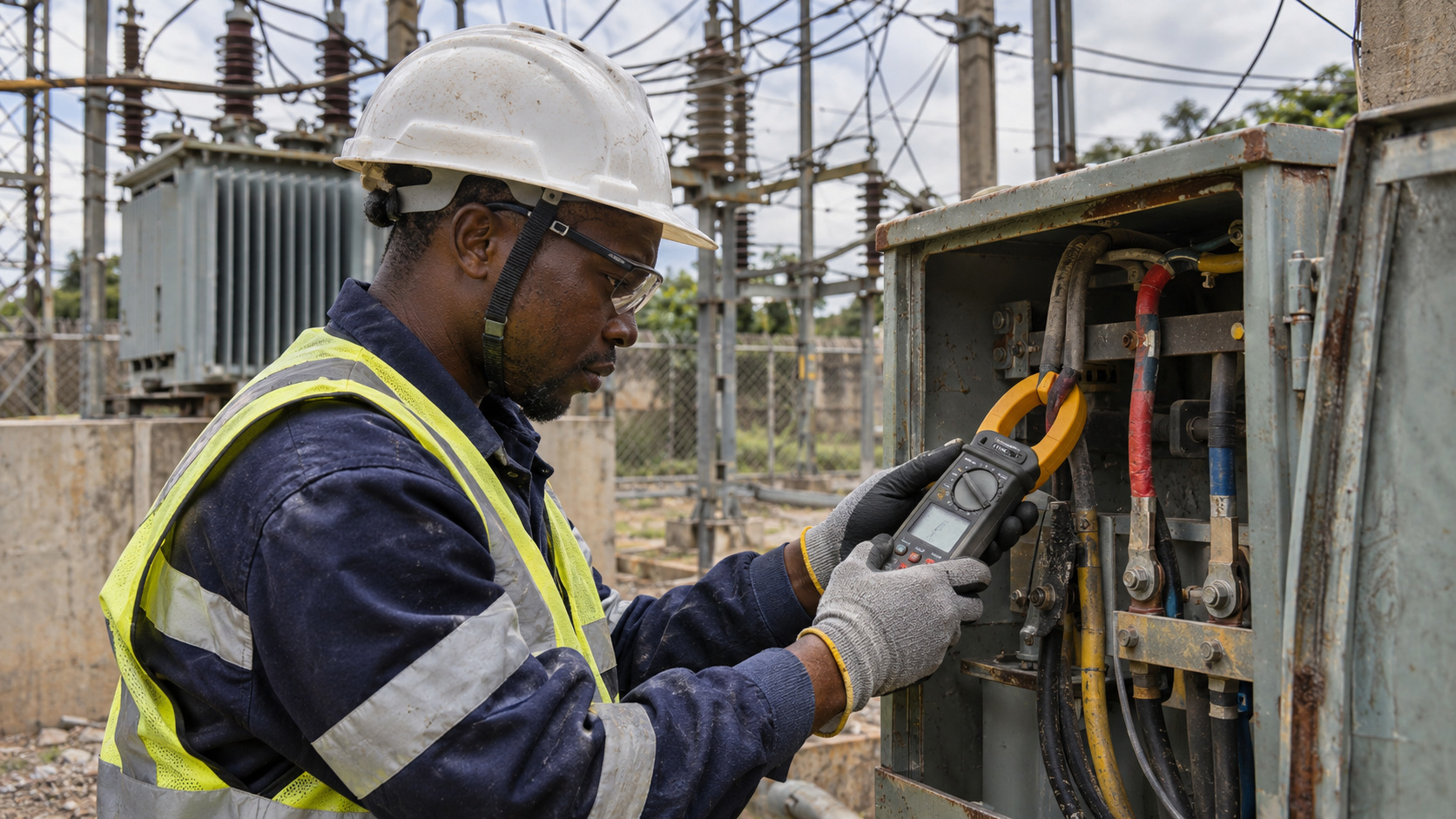
Much of our conversation about Africa's electricity future focuses on what the continent lacks. We talk about the generation capacity we need to build, the transmission infrastructure we need to expand, the millions of households we need to connect and the billions of dollars required to achieve universal electricity access.
These are legitimate concerns. But I'm increasingly drawn to another question. What are we doing with the electricity we already generate?
In some African electricity systems, more than a third of the power entering the system is recorded as lost. In countries where businesses struggle to secure reliable electricity, and governments are mobilising scarce resources to build new generation capacity, this deserves considerably more attention than it currently receives.
On 23 November 2026, the African Energy Commission (AFREC) announced the completion of a loss-reduction capacity development exercise in Malawi. Malawi is seeking to reduce its distribution losses from 20.3 percent to 15.8 percent. It is an important development, not simply because of the electricity Malawi could recover, but because of what the exercise reveals about the institutional capabilities Africa needs to manage its growing electricity infrastructure.
How much electricity is Africa losing?
The answer depends partly on what is being measured. The World Bank's electricity transmission and distribution loss indicator places the Sub-Saharan African average at approximately 13 percent. AFREC, however, reports that more than 40 percent of African Union member states experience network losses exceeding 20 percent.
A 2025 World Bank policy research working paper examining 67 electricity utilities across 47 countries provides a more revealing picture. System losses among the vertically integrated utilities examined range from 6.2 percent in Mauritius to 38 percent in Cameroon. Chad records 37 percent, Liberia 32 percent and the Democratic Republic of Congo 31.2 percent.
Malawi's ESCOM records 27.4 percent under the paper's broader system-loss definition. Fourteen of the 31 utilities presented in the relevant comparison lose more than a fifth of their electricity supply. These figures aren't directly comparable with every national distribution-loss indicator. Some include transmission losses and electricity consumed within generating plants.
But the variation is instructive. South Africa's Eskom and Namibia's NamPower both record 11.8 percent. High electricity losses aren't an inevitable characteristic of African power systems. They are problems associated with particular networks, operating conditions and institutional arrangements.
Not all electricity losses are the same
When we discuss electricity losses, we are often discussing three fundamentally different problems. Technical losses arise from the physical operation of electricity networks. Resistance in conductors, inefficient transformers, overloaded distribution lines and poorly balanced loads all contribute.
Non-technical losses occur when electricity is consumed but not properly measured or accounted for. Illegal connections, meter tampering and inaccurate customer records fall into this category. Collection losses arise when electricity has been supplied and billed, but the utility does not receive payment.
The distinction is important because each problem requires a different intervention. Replacing a transformer will not correct an inaccurate customer database. Installing smart meters will not resolve the physical limitations of an overloaded distribution line. Improving revenue collection will not reduce the electricity dissipated as heat through inefficient conductors.
Before we determine how much money a utility needs to reduce its losses, we must establish what it is losing, where the losses occur and why. That requires capabilities that cannot simply be purchased alongside new equipment.
We are connecting more people to financially fragile systems
The timing of Malawi's intervention is particularly significant. The International Energy Agency reported in November 2026 that a record eight million additional people gained electricity access in Sub-Saharan Africa in 2025. Yet the same commentary presents a less encouraging picture of electricity service.
In 21 of the 35 countries surveyed in 2023 and 2025, respondents reported increasing outages. The proportion of firms experiencing electricity interruptions rose from 74 percent to 79 percent. Approximately 75 percent of electricity utilities in the region are in poor financial health, compared with 45 percent in developing Asia.
We are expanding access while many of the institutions responsible for delivering electricity are struggling to sustain existing services. Electricity losses contribute to this contradiction. A utility that generates or purchases electricity without recovering sufficient revenue has fewer resources available for maintenance and network improvement. Deferred maintenance can subsequently increase technical losses and service interruptions.
Consumers respond by investing in alternative electricity supplies. The IEA estimates that diesel and petrol generator capacity across the region has increased from approximately 75 GW in 2010 to 125 GW. We are effectively financing additional electricity systems to compensate for the weaknesses of existing ones.
Reducing losses will not automatically rescue utilities
There is a temptation to present electricity loss reduction as the solution to Africa's utility financial crisis, but the evidence suggests otherwise. The World Bank working paper examines what would happen if vertically integrated utilities reduced their system losses to South Africa's level of 11.8 percent.
The estimated revenue improvement ranges from 1 percent to 36 percent. Yet only three of the 15 loss-making utilities examined would subsequently generate sufficient revenue to cover their operating costs. When full bill collection is added to the scenario, nine would cover those costs.
This finding should influence how governments and development finance institutions approach utility reform. Electricity losses are one component of a wider financial problem involving tariffs, generation costs, revenue collection and operational efficiency.
Nevertheless, reducing avoidable losses remains an attractive intervention. Unlike tariff increases, it can improve utility finances without necessarily requiring consumers to pay more for the same electricity service.
The World Bank's Independent Evaluation Group found that 24 of 42 supported projects tracking technical losses achieved reductions. In one Tanzanian project area, losses declined from 28 percent to 16.44 percent.
Improvement is possible. It is not automatic.
What Malawi is attempting to do differently
Malawi's recent intervention began with a baseline assessment and technical audit in August 2026, covering selected substations, distribution transformers and two mini-grid sites. Between 16 and 20 November, representatives of the Ministry of Energy, ESCOM, the Malawi Energy Regulatory Authority, mini-grid developers and technical partners convened in Lilongwe to validate the findings and develop loss-reduction action plans.
The target is a reduction from 20.3 percent to 15.8 percent, equivalent to approximately 22 percent of the baseline losses. For every 1,000 GWh entering a distribution network, a reduction of 4.5 percentage points would represent 45 GWh in lower reported losses. How much physical electricity is recovered depends on the technical component of those losses.
Malawi is not starting from an absence of planning. Its National Energy Compact identifies a 2023 roadmap containing 34 loss-reduction initiatives. Initial interventions costing $10.5 million were projected to generate $34.8 million in revenue. Yet AFREC reports that only 30 percent of the regulator's revenue-protection interventions are currently implemented.
That is perhaps the most important finding. The existence of a strategy does not establish the institutional ability to deliver it.
The capability gap between diagnosis and investment
At Energy Transition Africa, we have consistently argued that the continent's energy transition is as much a human and institutional capability challenge as it is a technology and financing challenge. Electricity loss reduction illustrates why.
Identifying an inefficient distribution network is only the beginning. Someone must establish a credible energy balance, locate the losses, determine their causes, assess technical alternatives, calculate the economic benefits of intervention and prepare an investment proposal. Someone must procure the appropriate equipment, supervise installation and independently verify whether the intervention has delivered the anticipated improvement.
These are different professional responsibilities requiring different capabilities. A utility may employ competent electrical engineers but lack reliable customer records. It may install advanced metering equipment without having sufficient analytical capacity to interpret the data. It may identify a technically sound intervention but lack the project preparation expertise required to secure financing.
In May, I examined the mismatch between Africa's energy transition training priorities and the capabilities its electricity systems require. Electricity losses give that argument a measurable economic dimension. The consequences of insufficient capability appear in kilowatt-hours, utility revenues and the quality of electricity service.
Are we developing these capabilities at the required scale?
AFREC's Efficiency First programme, running from 2024 to 2028, represents an important continental response. In April 2026, more than 50 experts from over 20 African countries participated in distribution loss-reduction training in Lusaka. In October, more than 60 engineers and technicians participated in a technical electricity audit in Dodoma, Tanzania.
Malawi followed in November. The programme expects to train more than 200 experts. These interventions are valuable. But we should consider their scale against the number of electricity utilities, distribution networks and communities requiring sustained operational improvement.
A utility doesn't need one person who understands loss reduction. It needs an organisation capable of undertaking loss reduction continuously. The ultimate measure of these programmes should not be the number of professionals trained or action plans produced. It should be the number of interventions financed and implemented, the electricity recovered, the revenue improvements achieved and the durability of those results.
What a serious electricity loss strategy requires
I would propose five priorities for African governments, regulators, utilities and their development partners. First, establish credible loss baselines through adequate network metering and energy accounting. Second, develop occupation-specific workforce plans covering distribution engineering, metering, protection, maintenance, data analysis and revenue management.
Third, evaluate loss-reduction investments alongside new generation projects. Where recovering electricity is less expensive than generating additional electricity, investment priorities should reflect that. Fourth, extend technical assistance beyond training and strategy development into project preparation, procurement, implementation and performance verification.
Finally, require regulators and utilities to publish comparable information on technical losses, commercial losses, collection efficiency, service interruptions and maintenance performance. These are not particularly revolutionary proposals. But implementing them requires a different understanding of what electricity infrastructure investment entails.
The electricity we cannot afford to lose
Africa must continue building electricity generation capacity. Nothing in this argument diminishes that imperative. But I believe we need to become considerably more interested in the performance of the infrastructure we already have. Earlier this year, at TED in Vancouver, I argued that people are the power plant.
Behind every functioning electricity system are people and institutions capable of operating, maintaining, diagnosing and improving it. Malawi's loss-reduction initiative brings that argument into the everyday realities of electricity distribution. A transformer does not diagnose its deteriorating performance. A meter does not independently resolve commercial losses. A distribution network does not develop its maintenance strategy or prepare its next investment proposal. People do.
As Africa mobilises billions of dollars to generate more electricity, we must also invest in the capabilities required to retain the value of every kilowatt-hour we produce. Because a continent struggling to generate enough electricity cannot afford to remain indifferent to the electricity it is already losing.