Five Countries Capture Most of Africa's Energy Finance
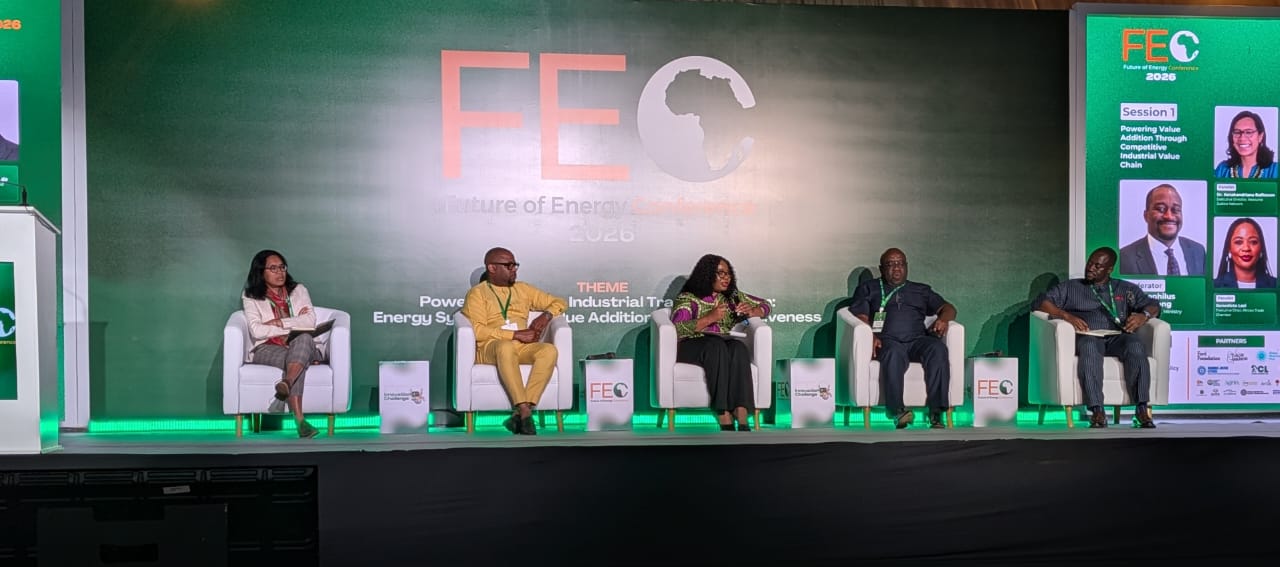
There is plenty of money in the global energy system. The more revealing question is where it is willing to go. At the Future of Energy Conference in Accra, Dr Olufunso Somorin of the African Development Bank offered a statistic that changed the temperature of an otherwise technical discussion: most of Africa's energy finance, he argued, keeps finding its way to a remarkably small group of countries.
The underlying evidence supports the larger point. An analysis by the Carnegie Endowment for International Peace found that between 2012 and 2021, Egypt, Mozambique, Nigeria, South Africa and Angola received 61% of all public and private energy finance tracked in Africa. Ten countries, adding Morocco, Ghana, Uganda, Kenya and Ethiopia, received 77%, leaving the remaining 23% for Africa's other forty-four countries.
Private capital was similarly concentrated. Of the total private finance the Carnegie analysis tracked over the decade, the top ten recipient countries captured $119.63 billion, or 81% of the total. That concentration became the most useful argument to emerge from a panel titled "Repositioning Africa's Energy Systems for Industrial Competitiveness."
Moderated by Rushaiya Ibrahim-Tanko, Global Policy Director at the Energy for Growth Hub, the discussion brought together Dr Ishmael Ackah, Technical Adviser to Ghana's Ministry of Energy and Green Transition; Kabiru Sarki Bello, Director of Investment and Sector Development at Nigeria's Federal Ministry of Power; Somorin; and Wangari Muchiri, chief executive of RE. Think Energy.
Capital has a geography
For years, African energy finance has been described through the language of scarcity. The continent needs more investment, governments need to de-risk projects, development banks need to mobilise private capital, and investors need stronger project pipelines. All of that can be true while missing another problem: capital isn't merely scarce; it is selective.
The Carnegie analysis tracked $345.76 billion in energy finance between 2012 and 2021, an average of roughly $35 billion a year, within the $31.5-45 billion range the paper estimates Africa needs annually to close its energy finance gap. Yet finance repeatedly clustered around economies with larger markets, substantial fossil-fuel resources, established renewable programmes or relatively mature investment frameworks. Private finance was even more revealing: the large majority went to fossil-fuel projects, with the top ten recipients drawing the concentration described above.
The implication is uncomfortable, because it means Africa can have enormous electricity needs, excellent solar resources and ambitious transition targets without automatically becoming investable. Capital doesn't necessarily go where electricity need is greatest; it goes where investors believe contracts, currency, regulation and payment systems are most likely to survive.
Somorin's argument in Accra was less about the aggregate amount of money available than about the conditions determining its destination. The five-country concentration isn't simply a financing statistic, but a map of confidence.
Ghana shows how risk enters an electricity bill
Ackah approached the same question from the price paid by consumers. A power station can be technically sound and still produce expensive electricity because the economics surrounding it are poorly aligned.
Ghana provides several examples. Power purchase agreements are often denominated partly or entirely in US dollars, while utilities collect much of their revenue in Ghanaian cedis. When the cedi depreciates, the cost of servicing dollar obligations rises even though the power plant itself has changed nothing. Foreign-exchange risk becomes an electricity cost, and Ghana's regulator incorporates the cedi-dollar exchange rate, inflation, the generation mix and fuel costs into its tariff reviews.
There is also the legacy of generation procurement. Ghana's installed electricity-generation capacity has run in the range of 5,500-5,750 megawatts through 2024 and into 2025, according to Energy Commission outlook reports, with dependable capacity somewhat lower than the installed figure. Government planning documents have acknowledged that past procurement created periods of excess installed capacity and costly power-purchase obligations. When a contract requires payment for available capacity whether or not all of it is dispatched, surplus generation isn't free. Someone pays.
And electricity pricing is political. Historically, Ghana's tariff architecture has involved cross-subsidisation between consumer categories, with residential consumers benefiting from subsidies partly supported by non-residential and industrial customers, although reforms have sought to reduce that imbalance. For a household, this is an affordability question. For a factory, it is a competitiveness question, while for a government, it is both, which is why electricity tariffs are rarely just engineering calculations, but political choices about who bears the cost of the system.
Nigeria is betting that decentralisation changes the equation
Bello offered Nigeria's Electricity Act 2023 as a different kind of response. The reform allows states to establish and regulate their own intrastate electricity markets, while the federal regulator retains responsibility for interstate activity, the national grid and other federally regulated functions. By May 2026, NERC said 17 states had transitioned to state-level regulation.
The logic is partly institutional and partly financial. Nigeria's electricity market is too large and uneven for every state to face identical conditions. Lagos has a different industrial base from Nasarawa. A state with abundant solar resources, industrial clusters or embedded generation opportunities may be able to structure projects differently from a national system carrying decades of accumulated obligations. Decentralisation could create smaller markets in which tariffs, generation and investment are more closely aligned with local demand.
But it also creates new risks. Investors now have to assess the quality of state regulators as well as federal institutions. Tariff methodologies could diverge, regulatory capability will vary, and changing the level at which a market is governed doesn't eliminate the fundamentals investors care about, and instead relocates them.
Africa is not building electricity systems at industrial speed
Somorin put the scale problem into sharper perspective. Ghana's entire installed power fleet sits under 6 gigawatts. China added more than 430 gigawatts of wind and solar capacity in 2025 alone, according to its National Energy Administration, roughly 75 times Ghana's total installed generation capacity added in a single year from just two technologies.
The comparison is imperfect; China's economy, population, industrial structure and power system are vastly larger. That is precisely why it is useful. Africa's industrial ambitions increasingly involve activities that require electricity at a scale very different from basic household access: data centres, mineral processing, aluminium, steel, battery manufacturing and modern transport systems. The problem is no longer simply connecting more people. It is building power systems capable of supporting economies that consume substantially more electricity, and that requires capital that will not distribute itself according to development need.
Kenya's data-centre problem shows the limits of technology
Muchiri pushed against another familiar assumption: that falling technology costs will solve institutional weaknesses. Kenya provides an instructive case. In 2024, UAE technology group G42 and Kenya's EcoCloud announced plans for a geothermal-powered data-centre campus, alongside a separate $1 billion initiative involving Microsoft, envisaging a new data centre and Microsoft Azure cloud region with an initial capacity of 100 megawatts and the potential to scale toward 1 gigawatt.
By mid-2026, the project had stalled because the Kenyan electricity system couldn't accommodate demand at that scale; President William Ruto said supplying a 1 gigawatt load in full would require cutting power to roughly half the country, against a total installed capacity of around 3,000 megawatts. The technology, investor and renewable resource existed, but the constraint was the system around them.
That example complicates the idea that Africa's transition can be accelerated simply by importing cheaper batteries, solar modules or smarter grids. Technology can reduce the cost of an asset, but it can't by itself create a creditworthy utility, deepen a transmission network, stabilise a currency or build an independent regulator.
Regulation is not what slows investment. Weak regulation can.
For all their differences, the panellists returned to one area of convergence: regulation. Independent regulation is sometimes treated as another layer of bureaucracy between investors and projects. The more important function is economic. Someone has to determine what electricity actually costs to supply, distinguish the cost of serving households from the cost of serving a large industrial customer, decide which costs utilities may recover, how foreign-exchange movements enter tariffs, and whether inefficient expenditure should be passed to consumers, and defend those decisions when they become politically unpopular.
Without that credibility, tariffs become negotiations rather than prices, investors respond by charging more for uncertainty, governments respond with guarantees, utilities accumulate debt, and consumers eventually pay for all three.
The capital gap is also an institutional gap
The Accra discussion ultimately complicated one of Africa's most repeated energy narratives. Yes, the continent needs considerably more capital. But treating every financing shortage as evidence that investors simply need more persuasion misses what the geography of existing investment is already telling us. Currency exposure, weak utilities, regulatory reversals, and poorly structured contracts are real. But so are successful African markets that have shown private investors will commit capital when rules become credible enough.
The objective can't be to pretend risk doesn't exist, but to identify which risks governments can remove, which investors should carry and which development-finance institutions are best placed to absorb. The panel in Accra added a further dimension: the distribution of capital is itself evidence. When dozens of countries compete for energy investment, and the money repeatedly clusters in a small group, asking for more capital isn't enough. The harder question is why the capital keeps choosing the same places.
Until that question is answered, Africa may continue to describe its problem as a financing gap when part of what it is looking at is an institutional geography of investment. The money exists. The real contest is over which African power systems can persuade it to stay.