If Africa Got Another Billion, Would We Build People?
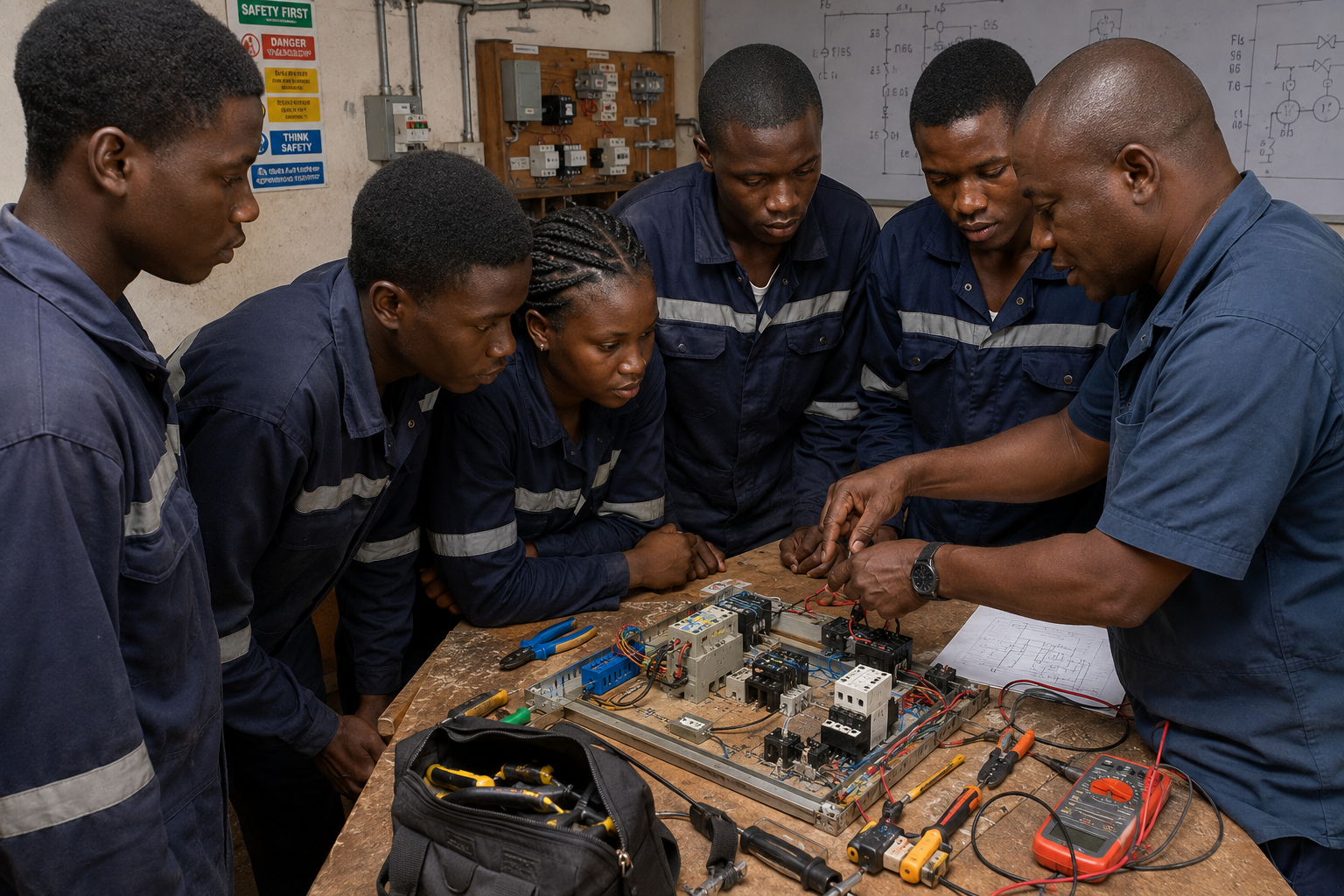
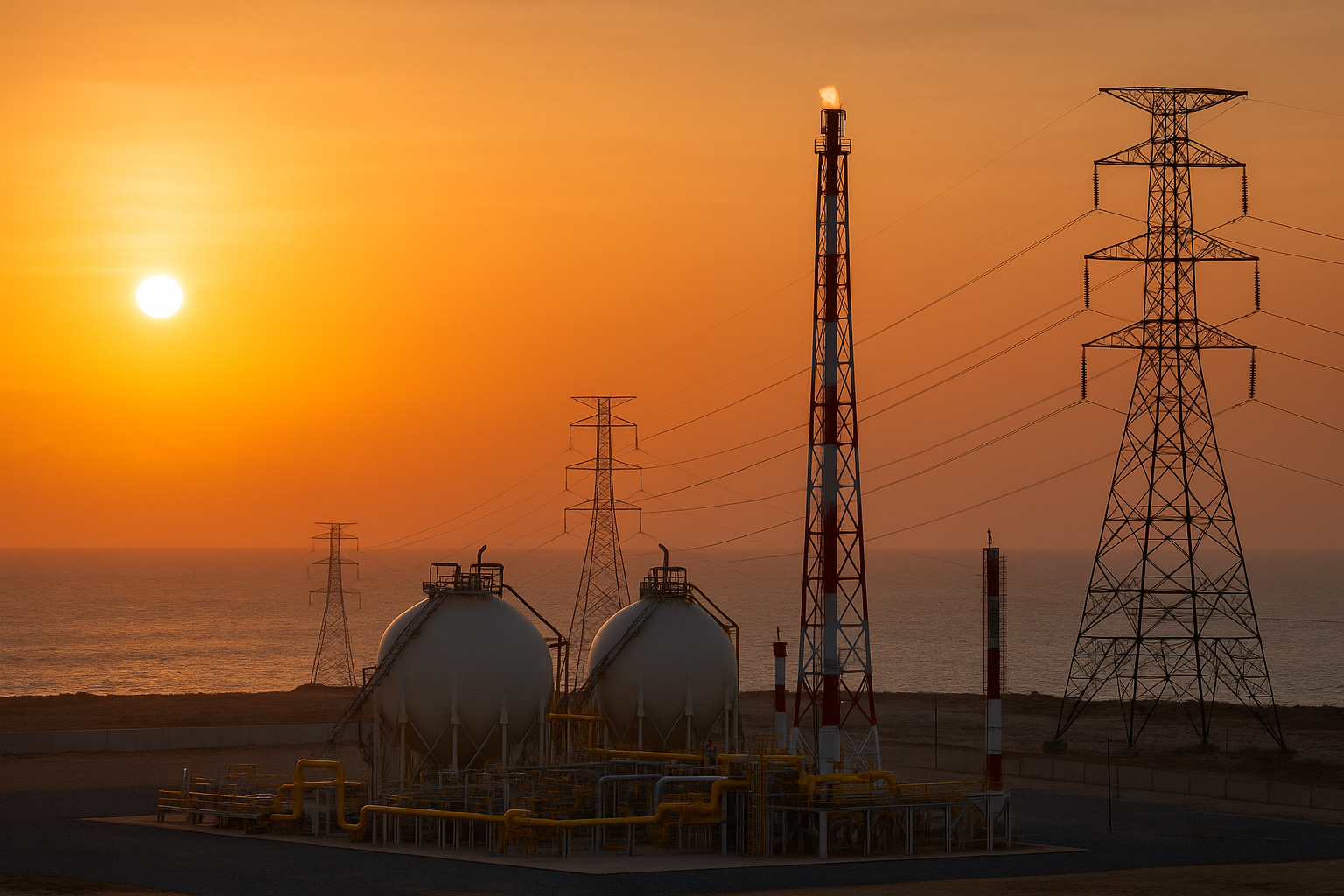
I have attended a number of project commissioning events, not as the person holding the scissors, but as a guest, watching the speeches, photographs, declarations of transformation, the enumeration of megawatts and kilometres and households to be connected. I have watched them in communities where the same infrastructure had been inaugurated before, under a different government, with similar speeches, and had since become the object of the next round of repair requests and donor proposals.
The ceremony is always genuine with real intention, but what is sometimes missing, in the months and years after the photographs fade, is the human ecosystem required to keep what was just inaugurated working.
That gap, between what we build and who sustains it, is the argument I keep returning to. Not because it is new, but because it is consistently underweighted in the way Africa's energy future is being financed, planned, and measured.
The question underneath every investment announcement
Most conversations about Africa's energy future revolve around capital. How much is needed, where it will come from, how to de-risk it, and deploy it at speed. These are necessary conversations, but they rest, without always acknowledging it, on the assumption that capable people and institutions will be available to receive the capital, implement the projects, operate the systems, regulate the markets, and train the next cohort of people who will do the same.
That assumption isn't always warranted. And when it fails, the consequences aren't visible in the investment announcement, but appear two or three years later, in a system that isn't performing as designed, a solar installation whose battery has failed and whose manufacturer's warranty is unenforced, a substation whose protection systems are miscalibrated because the engineer who understood them left for a better offer in a different country, or a grid that collapses repeatedly despite the transformers that were commissioned with appropriate ceremony twelve months earlier.
I have written before about Nigeria's grid collapsing twelve times in 2024, a system with more wheeling capacity than it has ever used, failing repeatedly because of what is missing from the operational human layer running it. That isn't a Nigerian problem, but it is the most visible current expression of a structural pattern that runs across the continent: infrastructure investment moving faster than the human infrastructure investment required to sustain it.
What I mean by human infrastructure
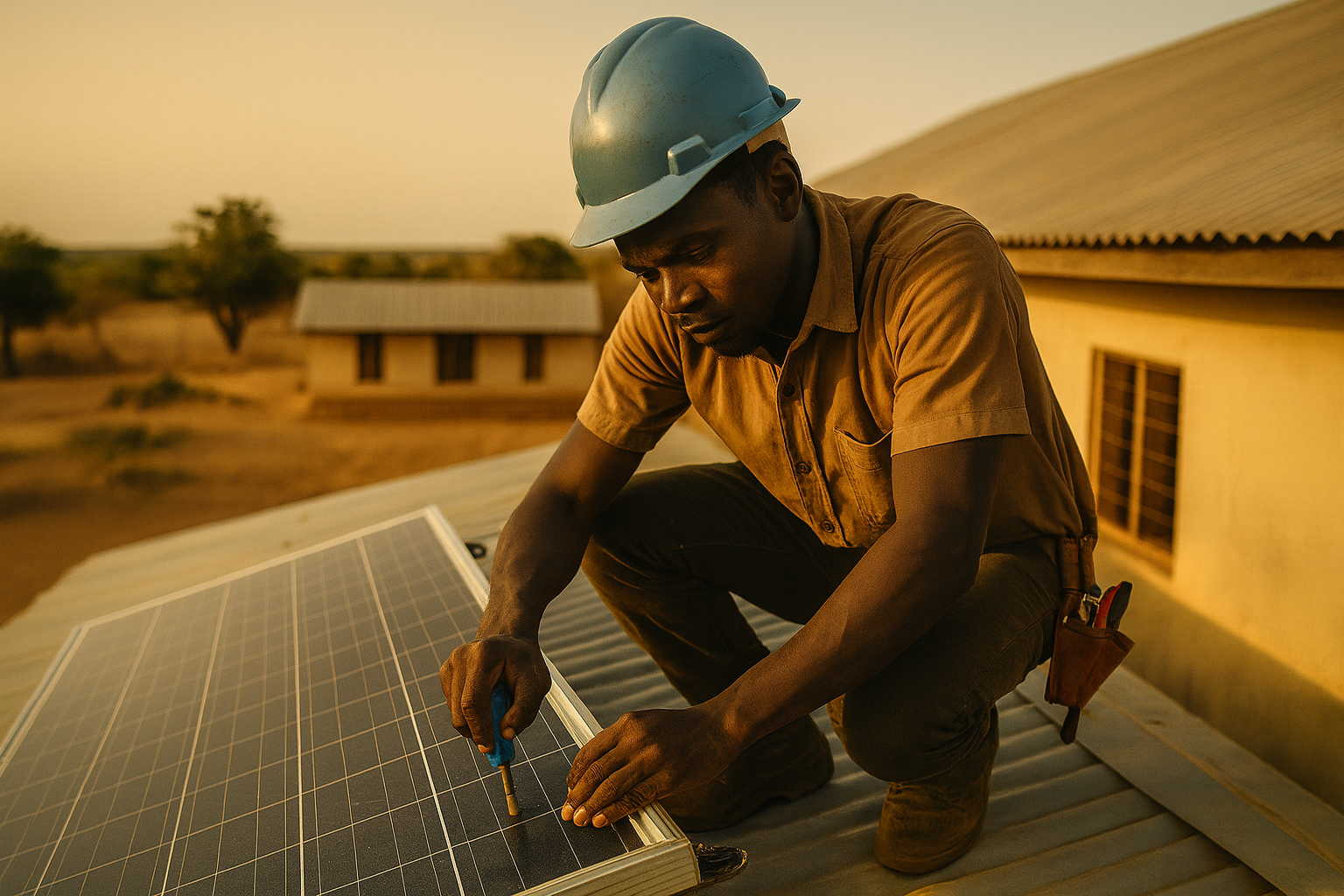
The phrase is not metaphorical. Every piece of physical energy infrastructure depends on a parallel structure of human capability to function over time. The solar panel needs the certified installer who put it in correctly, the trained technician who can diagnose when it is underperforming, the qualified engineer who designed the system it connects to, the quality standard that determined which panels were allowed to be imported, and the regulatory institution that enforces that standard and removes products that fail it from the market.
Remove any layer of that human structure and the physical infrastructure depreciates faster than it should. Not catastrophically, at first, but gradually, in the way that a vehicle maintained by a qualified mechanic outlasts one maintained by whoever happens to be available, or in the way that a grid operated by trained dispatch engineers holds frequency better than one operated by people learning on the job with insufficient information.
Africa's energy transition requires both forms of infrastructure, built simultaneously and at comparable speed. What it consistently gets is physical infrastructure first, and the human infrastructure as an afterthought, a training budget line that is the first to be cut when implementation costs run over, a capacity-building component that is designed with less rigour than the civil works it is meant to support.
I have sat in project design meetings where the technical team's specifications ran to hundreds of pages and the human capacity development plan ran to four. The imbalance reflects a funding architecture and an accountability framework that measure success by megawatts commissioned rather than by systems functioning reliably five years after commissioning.
The demographic argument, stated correctly
Africa is described, often and enthusiastically, as having a demographic advantage. The youngest population of any major world region, the fastest-growing labour force, and a dividend waiting to be claimed.
Demographics don't, by themselves, create economic transformation. They create potential, a large supply of available people that becomes a dividend only when those people have the skills, opportunities, and the institutional environment in which to apply them productively. Without that combination, a large young population isn't a dividend, but a pressure on food systems, urban infrastructure, political stability, and the energy systems trying to serve an economy that isn't absorbing its new entrants fast enough.
The countries that have successfully converted a young population into an economic asset, such as South Korea, Taiwan, Singapore, and Mauritius, did so by treating human capital investment not as a complement to physical infrastructure investment but as its equal and precondition. They built the schools and technical institutes before they needed the engineers, because they understood that the infrastructure they planned to build would require people who didn't yet exist in sufficient numbers and would take years to develop.
Africa's energy transition is at a parallel inflexion point. The infrastructure being planned and financed now, the transmission lines, utility-scale solar farms, mini-grids, smart metering systems, and the regional interconnections, will require, to function as intended, a generation of engineers, technicians, system operators, regulators, energy economists, procurement specialists, and institutional leaders who are being trained right now, or not being trained, with consequences that will be felt for decades.
The current pace of human infrastructure investment isn't matched to the pace of physical infrastructure investment, and that mismatch compounds over time. Every megawatt commissioned into an ecosystem without the operational capacity to sustain it is a future maintenance problem, system failure, donor proposal, and a future ceremony at which the infrastructure is reinaugurated after a period of inadequate performance.
The question that should follow every investment announcement
If Africa received another billion dollars for the energy transition tomorrow, how much of it would go toward developing the people who will keep what we build working for the next thirty years?
Most energy project financing includes a capacity-building component, but those components are modest relative to the civil works and equipment procurement they are meant to support. Most of them are evaluated on outputs, training events delivered, or participants certified rather than on whether the capabilities developed have translated into sustained system performance.
This is both a measurement and values problem simultaneously. We measure what we can photograph. Commissioned infrastructure can be photographed, but the capability of the person operating it is harder to photograph and harder to attribute to any single intervention. So we invest in what we can measure and underfund what we cannot, and then we are surprised when the infrastructure fails at the human layer that the measurement framework made invisible.
The countries that will lead Africa's energy transition in thirty years aren't the ones that commission the most projects this decade, but the countries that have functioning, self-sustaining energy systems in 2055 will be those that built their human infrastructure as deliberately as their physical infrastructure, for example the engineers they are training now, the technical institutes they are establishing now, professional certification systems they are building, the regulatory institutions they are staffing and equipping now, and the mentorship and peer learning systems they are creating now so that the knowledge accumulated by senior practitioners transfers to the people who will eventually replace them.
These investments are less visible than transmission lines. They don't produce ceremonies; instead, they produce the people who make ceremonies unnecessary, the system operators who prevent the collapse, regulators who enforce the standard, technicians who fix the panel before the clinic loses power, and the energy economists who design the tariff structure that keeps the utility solvent and the project pipeline bankable.