Who Speaks for the Community? The Missing Link in Africa’s Energy Transition
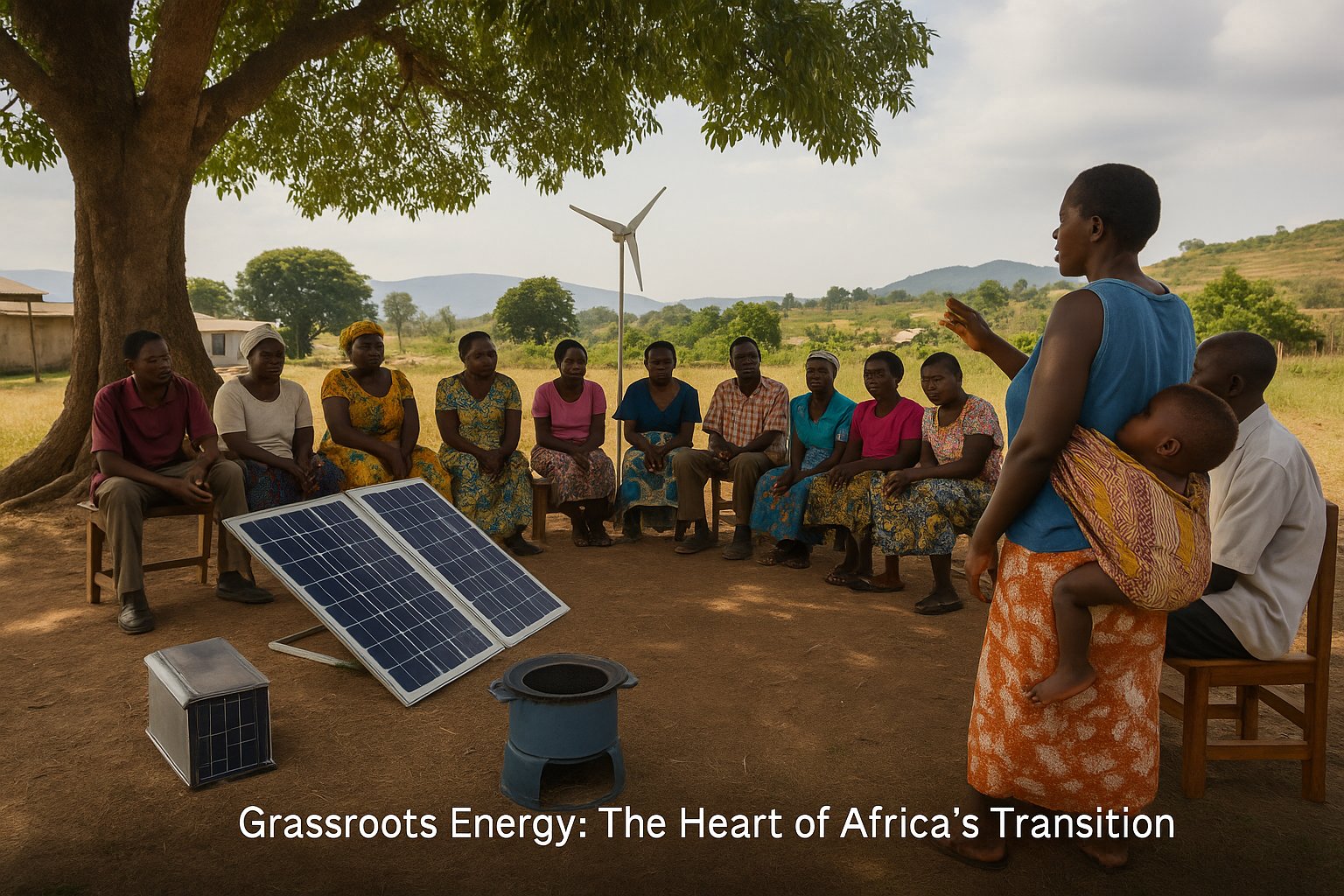
When Grace, a 47-year-old mother of four in Uganda’s Kasese district, spoke at a local town hall meeting, her voice trembled. But what she said cut through: "We see cables and poles, but not power in our homes. Are we not part of this transition?"
Her question echoed across the hills, much like the central question emerging from Africa’s energy future: Who speaks for the community?
While policymakers, financiers, and global agencies debate emissions targets, investment pipelines, and technology transfers, the community-led energy transition in Africa remains more aspiration than reality. And that’s not just a missed opportunity, it’s a failure of justice.
A Clean Transition Without Communities?
The buzzwords of Africa’s energy discourse are familiar: net zero, energy access, renewables, and decarbonization. But scratch beneath the surface, and you’ll find projects that often bypass the very people they’re meant to serve.
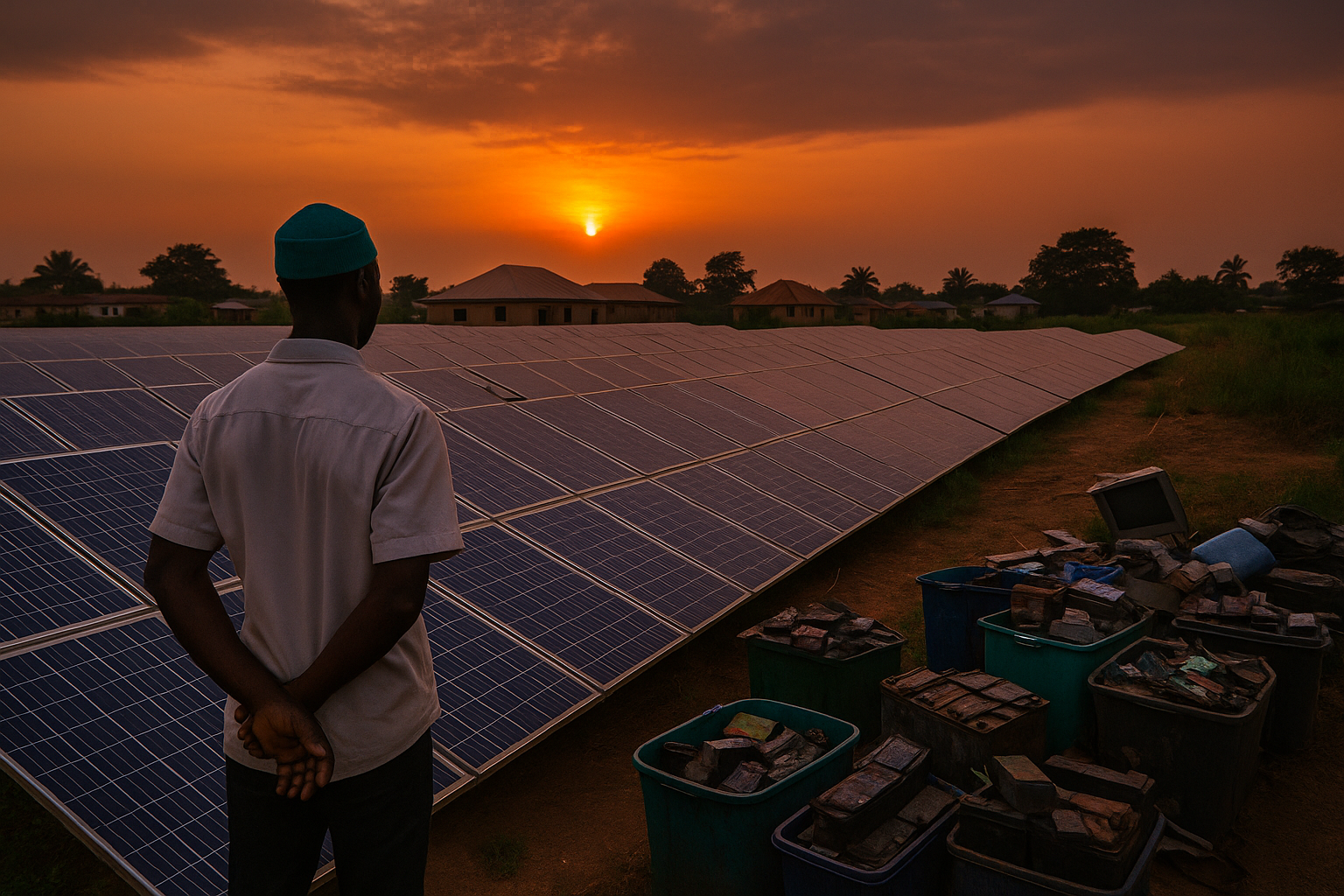
In Nigeria, solar mini-grids have transformed some off-grid villages. But in others, like in Taraba and Kebbi, local communities were never consulted. The result? Infrastructure that stands idle because no one was trained, tariffs weren’t explained, or cultural norms were ignored.
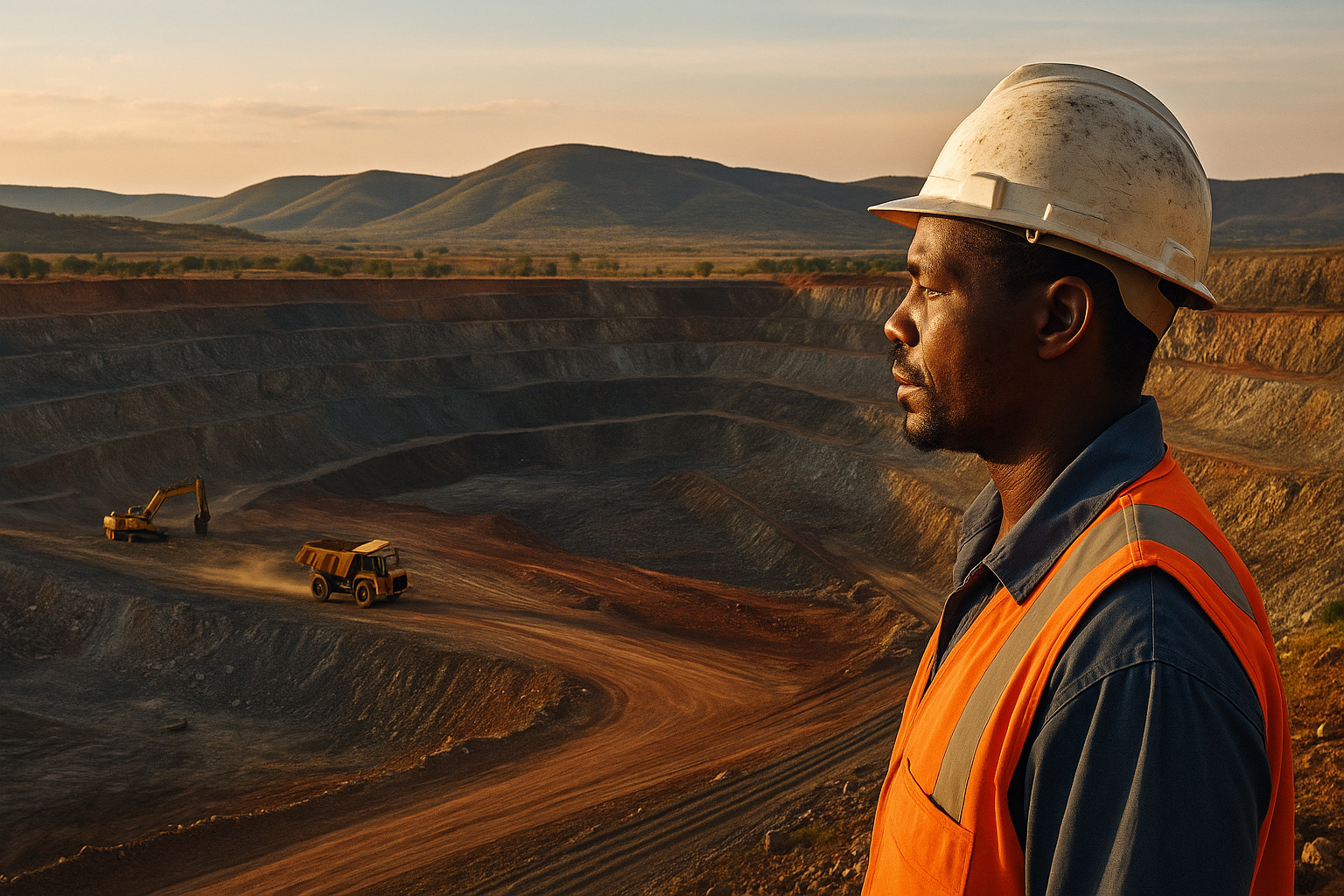
This disconnect was underscored in our recent blog, “Beyond Raw Minerals: Can Africa Benefit from Its Critical Mineral Wealth?”, where we highlighted how even resource wealth—without local agency—can reinforce exclusion.
True energy justice must prioritise community-led energy transition in Africa, where local voices shape energy choices, not just receive them.
Women: Leading, But Left Behind
Women bear the brunt of Africa’s energy poverty. They spend hours collecting firewood, inhale toxic fumes from biomass, and lose productivity in the dark. Yet they are often left out of planning and implementation.
In Senegal, the women-led group Femmes Vertes pioneered clean cooking solutions using biogas and efficient stoves. Despite their success, they struggle to access finance, policy recognition or scale. Donors fund big solar parks, but neglect these decentralised champions.
"We know what works for our people," says Aminata Diop, a community energy organiser in Dakar. "But we are invisible to the big tables."
This mirrors findings from the IRENA report on Gender and Renewable Energy, which states that women in Africa are underrepresented in the energy workforce, especially in technical and leadership roles.
To centre women is not charity, it’s strategy. It’s about shifting from beneficiaries to co-creators.
Grassroots Innovation, Top-Down Blindness
In Kenya’s Kajiado County, the Olkiramatian community runs a solar-powered cattle irrigation scheme. In Malawi’s Dedza district, young people have built a wind turbine from scrap metal. These are examples of local innovation meeting real needs.
Yet such initiatives rarely make it into national energy plans or donor financing rounds. The problem isn’t capacity, it’s visibility and access.
That’s why civil society must push for localisation not as a trend, but a principle. We must demand energy transitions where communities are designers, not recipients. As discussed in our earlier post, “A Treaty to End Fossils”, global negotiations must respect local contexts and not override them.
The community-led energy transition in Africa requires a new financing logic. One that values social capital, not just megawatts.
The Donor Dilemma: Big Bets, Small Reach
Multilateral funders often prefer large, bankable projects. It’s easier to disburse $100 million to one government than $1 million to 100 community groups. But this approach leaves rural Africa in the dark.
According to the Clean Cooking Alliance, only 1% of global energy funding goes to clean cooking solutions, despite 900 million Africans relying on solid fuels.
Isn’t it time we recalibrated the metrics? A village microgrid powering a clinic and school may not impress a balance sheet, but it transforms lives.
Putting Communities in the Room (Not Just on the Map)
At COP28, the slogan was “Leave No One Behind.” Yet very few African grassroots voices were present. Participation remains dominated by state actors and NGOs with donor backing.
We need energy dialogues where community members, like Grace from Uganda, are on stage, not just in reports. We need policies that are co-designed.
The upcoming African Climate Summit is a chance to reset. Governments must commit to participatory energy planning. Donors must fund localisation capacity. And civil society must organise.
At EnergyTransitionAfrica.com, we are curating stories from across the continent. From young solar engineers in Sierra Leone to women-led cooperatives in Zambia. Because stories inspire action.
A Just Transition is a Local Transition
The phrase "just transition" is gaining traction in policy circles. But in Africa, justice means recognising historical inequity and present-day marginalisation.
We must ask: Who is at the table? Whose language is spoken? Who owns the energy? Who benefits?
As we wrote in our piece “Who’s Funding Africa’s Transition?”, control over climate finance shapes whose transition gets funded. Without grassroots representation, the result is energy colonialism by another name.
"The community-led energy transition in Africa is not optional," says Vincent Egoro, Head of Africa at PWYP. "It’s the only way to build resilience, trust, and real impact."
Conclusion: Let the People Power the Transition
Energy is not just about electrons and infrastructure. It’s about people. About mothers who cook, students who study, and farmers who irrigate. When these people lead, the transition becomes more than a policy; it becomes a movement.
So next time we talk energy futures, let’s begin with community realities. Let’s ask Grace. Let’s listen to Auntie Ama. Let’s follow Aminata.
Because they don’t just deserve energy. They deserve a say.