The Future of Oil and Gas Careers in Africa: Why This Decade Will Define You

When people talk about the energy transition, they often speak in absolutes. Some say oil and gas production is finished, others say nothing will change. Neither position is useful if you work in oil and gas in Africa.
Oil is not disappearing from Africa in 2026, and gas isn't vanishing from our grids. According to the International Energy Agency’s World Energy Outlook 2025, global oil demand is expected to plateau later this decade under current policy settings rather than collapse abruptly.
But a plateau isn't the same as growth. And for those of us thinking seriously about oil and gas careers in Africa, that distinction matters a lot.
We are entering a decade defined by structural discipline. Capital is more cautious, investors scrutinise emissions, methane leakage is measured more rigorously, trade policies increasingly integrate carbon standards, and boards are asking new questions.
If you work in oil and gas in Nigeria, Angola, Algeria, Ghana, Mozambique or Senegal, you are not facing extinction. You are facing evolution. And complacency will be far more dangerous than transition.
Oil and gas is not ending tomorrow, but it is entering a more disciplined era
Africa isn't abandoning oil and gas in 2026. And this is quite disappointing to a lot of us campaigners, myself included, who have been calling for the phaseout of fossil fuels on the continent, but it is the truth.
Hydrocarbons remain woven into the fiscal fabric of many African states. In Nigeria, oil revenue still underpins foreign exchange stability. In Angola and Algeria, export earnings from crude and gas remain central to budget planning and macroeconomic management. Strip that away abruptly, and you don't get transition; you get instability.
Gas, in particular, continues to play a stabilising role in several African power systems. In countries where grids are fragile and renewables are expanding unevenly, gas-to-power remains essential for baseload supply and voltage control.
The International Energy Agency’s Electricity 2026 report reinforces this point clearly: gas-fired generation remains a stabilising component of electricity systems in many emerging markets, even as renewables grow.
So no, this is not a shutdown story. But it is a shift story. The global context around oil and gas has changed in ways that are subtle but structural. Demand growth is flattening, not collapsing, but flattening. And that changes investor psychology.
The cost of capital for fossil projects is rising, particularly for assets with high emissions intensity. Financing is more selective, conditional, and more scrutinised. And carbon intensity, once an afterthought, now influences investor decisions, export competitiveness, and corporate valuations.
In the past, oil and gas competitiveness was defined by two numbers: cost per barrel and size of reserves. Today, it is increasingly shaped by methane leakage rates, lifecycle emissions, energy efficiency, and regulatory compliance.
Companies are no longer just competing on how much they extract, but also on how cleanly they operate. And that shift flows directly to professionals. Engineers, operations managers, and executives all now operate in an environment where emissions performance sits alongside production metrics.
The industry is not shrinking uniformly, but rather becoming more selective. And in a selective industry, those who understand the new metrics rise faster than those who ignore them.
The real transition pressure is financial, not ideological
If you listen to public debate, you would think the energy transition is a cultural war. One side frames it as climate activism, while the other frames it as economic sabotage.
But in my opinion, the real pressure is financial. The IMF’s 2025 climate-related fiscal risk assessments make this clear: fossil fuel–dependent economies are increasingly exposed to revenue volatility as global decarbonisation policies tighten, and investor expectations shift. That is a technical sentence with personal implications.
When global markets begin to price long-term transition risk, capital becomes selective. When capital becomes selective, projects face higher scrutiny. And when scrutiny increases, risk premiums rise. This means two things for African oil and gas professionals.
First, companies are under pressure to reduce exposure. That doesn't mean shutting down. It means lowering operational emissions, tightening methane management, improving efficiency, and demonstrating resilience to carbon pricing regimes or border adjustment mechanisms.
Second, governments that depend heavily on hydrocarbon revenues are becoming more aware of fiscal vulnerability. When revenues fluctuate, public spending tightens, leading to slow infrastructure projects and directly impacting job creation.
Your career in oil and gas is not shaped only by your company’s strategy. It is also shaped by sovereign fiscal health. Beyond emissions reduction, the transition is also about macroeconomic risk management. And if you understand that, you begin to see the landscape differently.
Why skills will determine who leads
The African Development Bank’s African Economic Outlook 2025 makes an important point: energy transformation is not only about infrastructure; it is about workforce adaptation.
That resonates with me because for those building oil and gas careers in Africa, the question is no longer “Will oil survive?” The better question is: “What kind of oil and gas professional will thrive?”
The answer is found in skills.
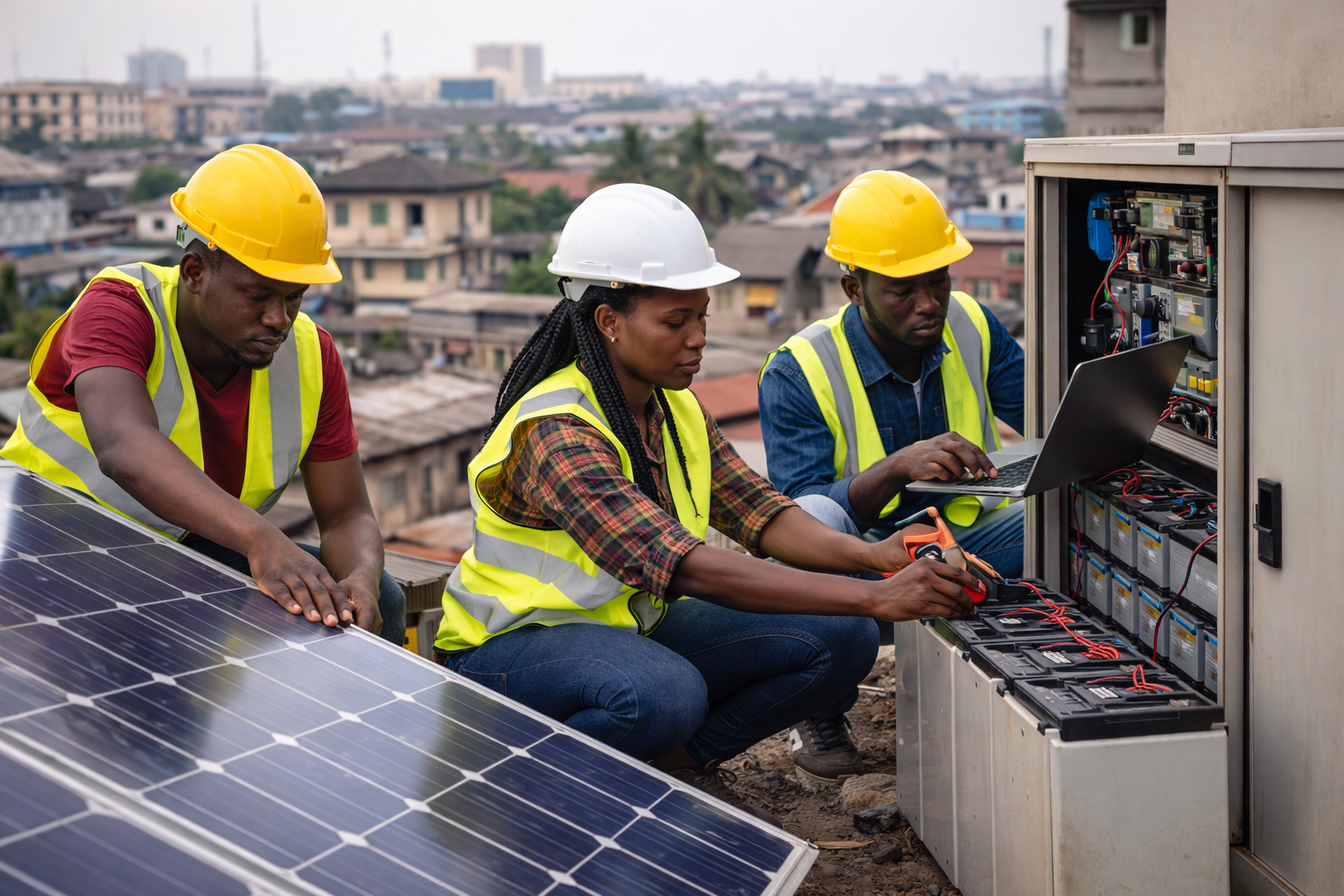
Carbon accounting and reporting are no longer peripheral. Companies must track Scope 1 and Scope 2 emissions with precision. If you understand how emissions are measured, audited and disclosed, you are strategically relevant.
Methane monitoring and mitigation have moved to the centre of regulatory attention. Those who understand detection technologies and leakage reduction strategies are not just technicians; they are risk managers.
Energy efficiency optimisation is no longer a nice-to-have. Lower energy intensity improves margins and strengthens competitiveness.
Climate finance literacy matters. Understanding how blended finance works, how guarantees reduce the cost of capital, and how transition risk is priced allows you to engage beyond the operational layer.
And increasingly, grid integration knowledge matters. Gas-to-power strategies now intersect with renewable intermittency and dispatch flexibility. If you understand how gas stabilises a high-renewable grid, you understand the system also.
These are not “green” skills in the activist sense. They are system skills. They position you for the future of work in energy. That is the shift. And it is already underway.
Adaptation is leverage, not retreat
There is a misconception that adapting to the energy transition implies surrendering to it. But I see it differently.
Companies that lower operational emissions don't weaken their position; they strengthen it. Those who invest in digital monitoring increase efficiency. Those who manage methane leakage improve competitiveness. And those who engage constructively with carbon markets diversify risk.
ETA has previously examined how credibility in financing determines broader investment flows in Africa’s transition. The same principle applies to oil and gas careers in Africa. Credibility compounds.
When you understand emissions reporting, when you can explain carbon intensity metrics, and when you grasp sovereign exposure and investor expectations, you position yourself as an architect of adaptation.
Adaptation expands influence, while resistance narrows it. Markets reward those who evolve early, not those who wait for compulsion.
Conclusion: What you should do in 2026
If you are serious about building resilient oil and gas careers in Africa, this year matters.
If you are an early-career professional, expand deliberately. Add climate policy fundamentals. Study carbon accounting frameworks. Learn energy economics.
If you are mid-career, deepen strategic awareness. Understand project finance structures. Engage with emissions reduction initiatives inside your organisation. Study sovereign risk exposure.
If you are a senior, lead the shift. Encourage workforce upskilling. Integrate emissions strategy into corporate planning. Align gas strategy with grid realities rather than unchecked expansion.
The transition is not a cliff, but a curve. And curves reward those who anticipate. This decade will not be defined by collapse. It will be defined by preparation.
The defining question is simple: Will you evolve alongside your industry, or will you assume stability is guaranteed?
Because the global energy system is not freezing in place. It is maturing. And those who mature with it will lead Africa’s next energy chapter.
What are you adding this year?