Gas Is Back: What Mozambique’s LNG Revival Reveals About the Real Energy Transition
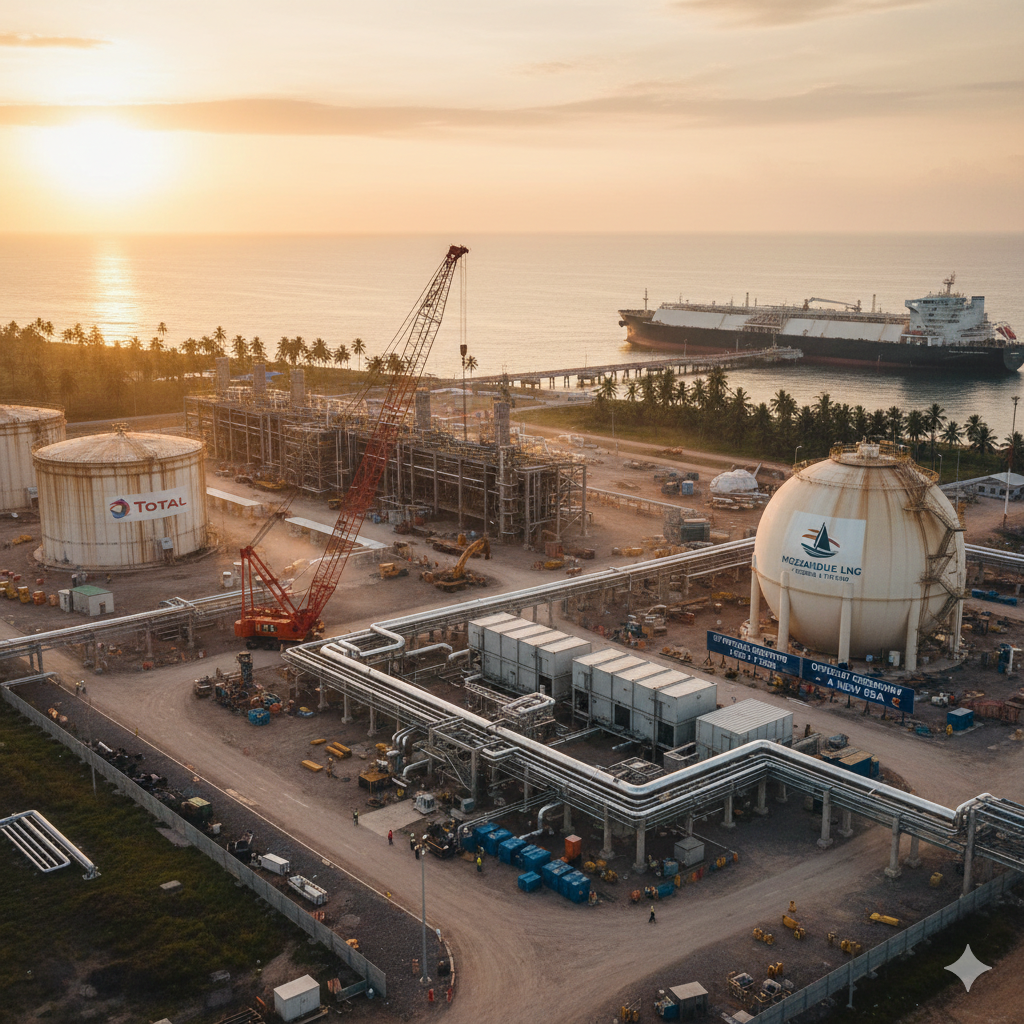
For years, the global energy transition has been narrated as a linear story: renewables rise, fossil fuels fall, and gas fades as a temporary bridge. That story is now colliding with reality.
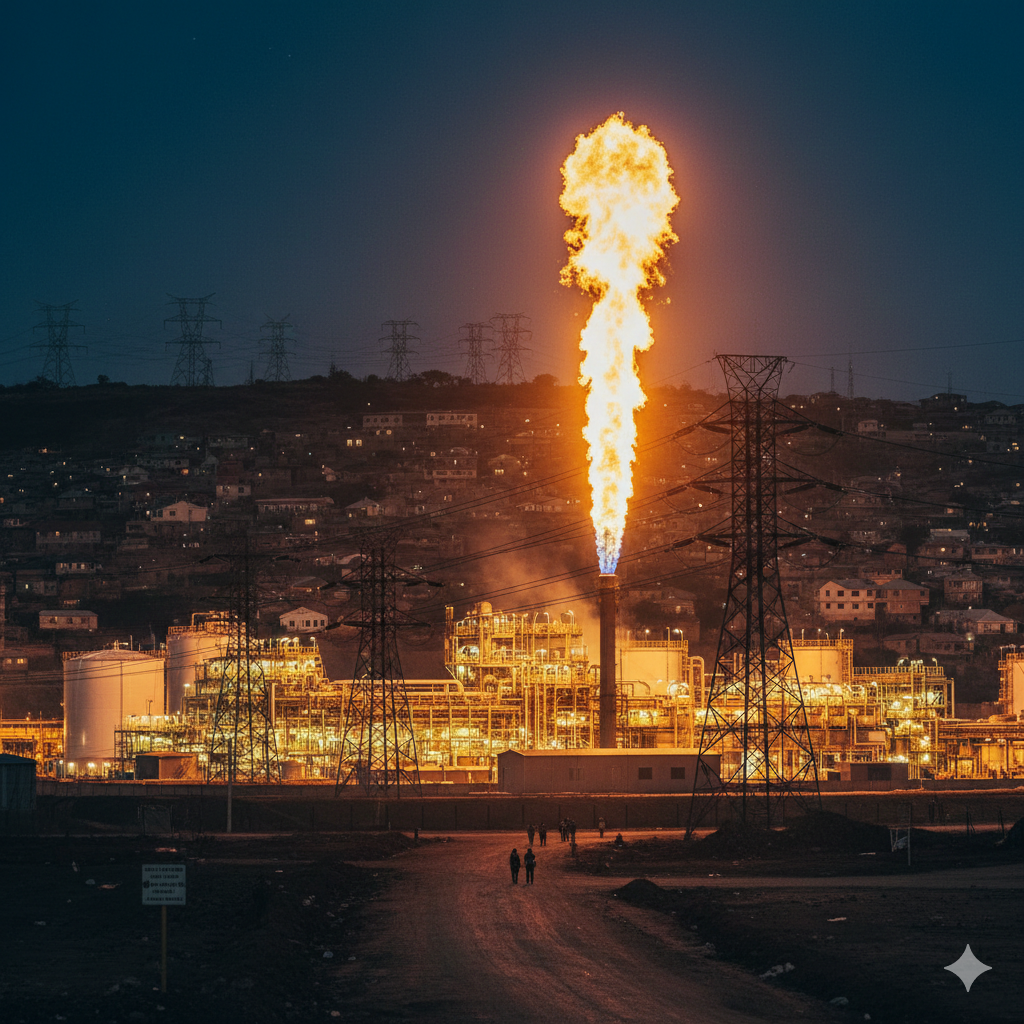
In late January 2026, TotalEnergies confirmed the revival of its long-delayed Mozambique LNG project, a $20 billion investment shelved in 2021 after insurgent violence in Cabo Delgado. The announcement barely registered in global climate discourse. There were no protests outside conference halls, no emergency communiqués from climate leaders, no dramatic headlines.
And yet, the decision speaks volumes. Mozambique LNG isn't a marginal project. With a planned capacity of over 13 million tonnes per annum, it sits among the largest gas developments in Africa. Its revival, amid increasing calls for fossil fuel phase-out, reveals that gas hasn't exited the transition; it has simply changed its justification.
This article isn't about whether gas should exist. It is about why it does, and what that means for Africa when rhetoric and capital diverge.
The Mozambique LNG revival: facts before framing
The Mozambique LNG project, led by TotalEnergies alongside Japanese and Indian partners, was originally positioned as a cornerstone of Mozambique’s development strategy. The discovery of vast offshore gas reserves in the Rovuma Basin in the early 2010s promised fiscal transformation, industrial growth, and regional energy exports.
That promise stalled abruptly in 2021 when Islamist insurgency in Cabo Delgado forced a force majeure declaration. Since then, the project has existed in limbo, too large to abandon, too risky to proceed.
In January 2026, TotalEnergies announced that conditions had shifted sufficiently to restart development, following improved security guarantees and international backing. Recent reports indicate that the revival reflects renewed confidence that geopolitical demand for gas, particularly in Europe and Asia, will remain strong well into the 2030s.
Crucially, this revival stems from how the transition is unfolding in practice: unevenly, geopolitically, and with security concerns reasserting themselves.
Gas as “energy security infrastructure”, not transition fuel
What has changed is not the molecule, but the narrative. Gas is no longer defended primarily as a “transition fuel”. Instead, it is increasingly framed as energy security infrastructure, essential for supply stability, geopolitical resilience, and industrial continuity. This framing has gained traction since Russia invaded Ukraine, which exposed the fragility of Europe’s energy system.
The International Energy Agency has been clear that global gas demand must decline sharply to meet net-zero targets. Yet it also acknowledges that existing and near-term gas investments are proceeding where security concerns dominate policy.
Mozambique LNG fits this pattern precisely. It isn't being revived because the world has softened its climate goals, but because the transition is being subordinated to security and stability in key consuming regions.
For African producers, this shift matters. It means gas projects are increasingly justified externally on grounds that have little to do with African development or climate justice, and everything to do with global supply chains.
The silence around Mozambique: what it tells us
Perhaps the most revealing aspect of Mozambique LNG’s revival is how quietly it happened. There was no dramatic backlash from governments that routinely call for fossil fuel phase-out, and no urgent recalibration of global climate narratives. Instead, the project was treated as an exception, an unfortunate necessity in a messy world.
This silence exposes a widening credibility gap. If gas projects in Africa can be revived with minimal scrutiny while African countries are simultaneously urged to accelerate phase-out commitments, the implicit message is clear: rules are flexible for supply, rigid for rhetoric.
This contradiction isn't lost on African policymakers, nor is it lost on financiers, who increasingly separate public climate commitments from private investment decisions.
Mozambique’s development gamble: promise versus structure
For Mozambique, LNG revival revives familiar questions. Gas revenues were always presented as a development catalyst: funding infrastructure, stabilising public finances, and enabling industrialisation. Yet experience across Africa suggests that resource wealth alone doesn't guarantee transformation.
Without strong institutions, fiscal discipline, and clear industrial policy, gas revenues risk reinforcing dependency rather than reducing it. The World Bank has repeatedly warned that extractive-led growth without diversification creates volatility and governance risk.
Mozambique’s challenge is compounded by security fragility and limited domestic energy access. Even as LNG exports promise billions in revenue, large parts of the country remain energy-poor. This raises an uncomfortable question: what does it mean to export gas at scale while domestic energy systems remain weak?
The broader African signal: gas is not gone, just selective
Mozambique is not an outlier. Across Africa, gas projects continue to advance, also. From Senegal and Mauritania’s GTA project to Egypt’s expanding gas infrastructure, the pattern is consistent: gas development proceeds where it aligns with external demand and geopolitical priorities.
What has changed is the language. These projects are no longer celebrated as transition pathways. They are framed as pragmatic exceptions; necessary, temporary, and externally justified.
This creates a strategic risk for Africa. When gas is treated as an exception rather than a planned component of development strategy, African countries lose leverage over how it is integrated into broader economic transformation.
The broader African signal: gas is not gone, just selective
Mozambique is not an outlier. Across Africa, gas projects continue to advance quietly.
From Senegal and Mauritania’s GTA project to Egypt’s expanding gas infrastructure, the pattern is consistent: gas development proceeds where it aligns with external demand and geopolitical priorities.
What has changed is the language. These projects are no longer celebrated as transition pathways. They are framed as pragmatic exceptions, necessary, temporary, and externally justified.
This creates a strategic risk for Africa. When gas is treated as an exception rather than a planned component of development strategy, African countries lose leverage over how it is integrated into broader economic transformation.
Gas, phase-out rhetoric, and Africa’s narrowing policy space
At climate summits, African countries are increasingly asked to commit to accelerated fossil fuel phase-out timelines. Yet the revival of projects like Mozambique LNG demonstrates that global demand for gas hasn't vanished.
This dissonance narrows Africa’s policy space. Countries face pressure to constrain future development options while existing producers continue supplying global markets under new justifications.
As Reuters has reported, fossil fuel phase-out language remains politically contested, with major emitters reverting to “energy security” framing when convenient. The risk with Africa's gas development is that it does so without strategic coherence, responding to external demand without embedding gas into a deliberate development pathway.
What Mozambique LNG reveals about the “real” transition
The revival of Mozambique LNG reveals four hard truths about the real energy transition.
First, capital moves faster than commitments. Investors respond to demand, security, and returns, not summit declarations.
Second, energy security has reasserted primacy over decarbonisation in many consuming regions.
Third, Africa remains primarily valued as a supplier, not a shaper, of transition pathways.
Fourth, the transition is fragmenting, with different rules applied to different actors under different conditions.
These truths should inform African strategy far more than rhetorical alignment with global narratives.
The strategic question Africa must now answer
The question is no longer whether gas belongs in Africa’s future. That debate has been overtaken by events. The real question is: under whose terms does gas operate?
Is gas merely an export commodity responding to external crises? Or is it embedded in a broader strategy that strengthens domestic energy systems, builds industrial capacity, and finances diversification?
Without clarity, gas risks becoming another chapter in Africa’s long history of resource extraction without transformation.
Conclusion: listening to what capital is saying
Mozambique LNG’s revival isn't a climate failure story. It is a signal. It tells us that the energy transition is t unfolding as a contested, uneven process shaped by geopolitics, security, and power.
For Africa, the lesson is sobering but useful. If gas is back quietly, then Africa must engage loudly and strategically, setting terms, demanding linkage to development, and refusing to be boxed into narratives that ignore how the world actually behaves.
The transition is not only about what is said at summits, but also about what is financed, built, and secured. Mozambique LNG reminds us that the real energy transition is happening in contracts, boardrooms, and geopolitical calculations. Africa can't deny that reality; it has to shape it.