Nigeria Split Electricity Regulation Across 17 States. The Grid Is Still National.
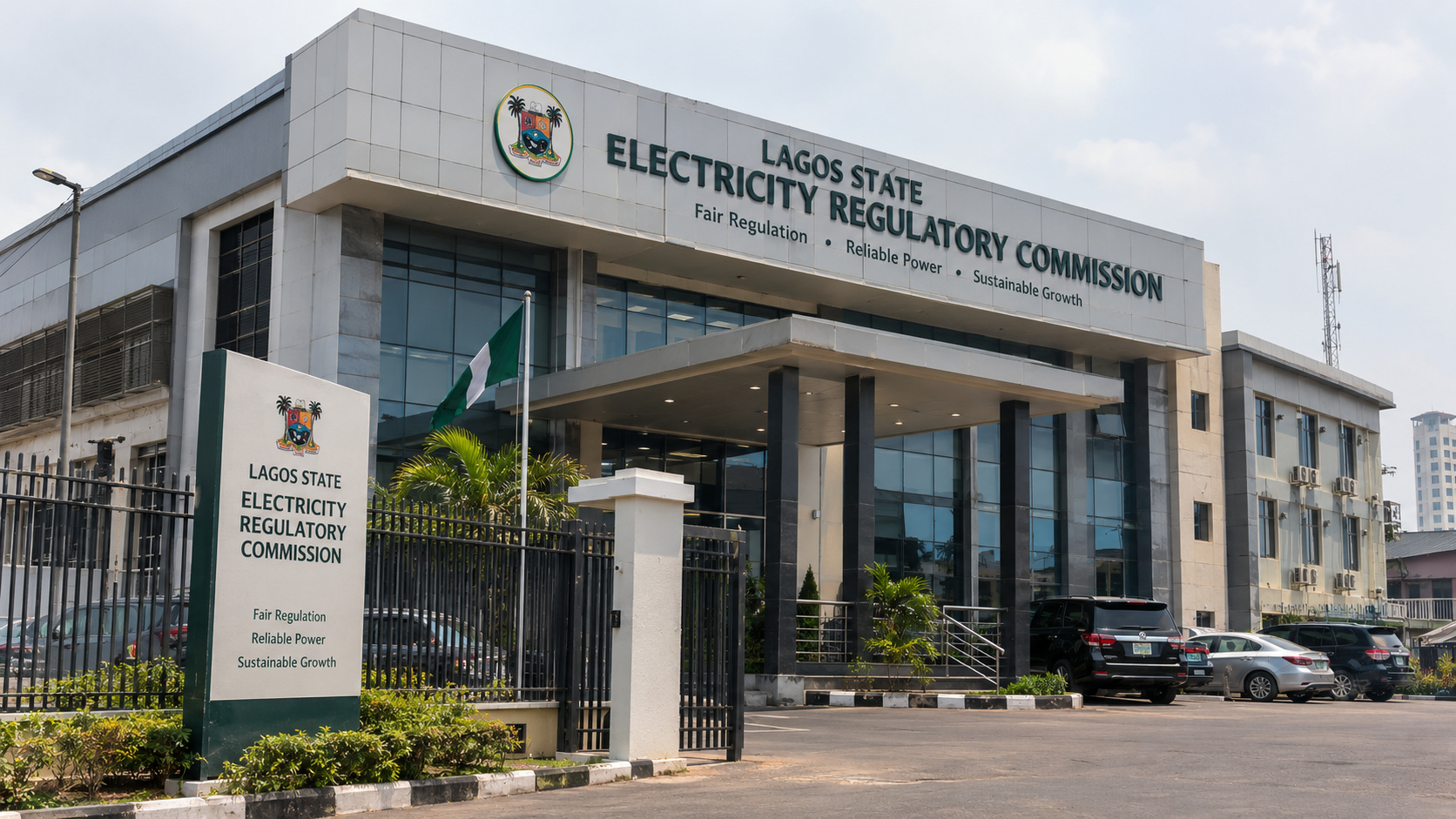
In August 2025, the Enugu State Electricity Regulatory Commission ordered MainPower Electricity Distribution to cut its Band A tariff from ₦209.50 to ₦160.40 per kilowatt-hour, freezing the bands below it. NERC objected publicly, saying that the new tariff was arrived at by reducing the assumed generation cost from ₦112.60 per kilowatt-hour to ₦45.75, a ₦66.85 gap that implied a subsidy nobody at the state level had actually committed to fund.
MainPower, which depends entirely on power generated and transmitted through the national grid, warned the order put a planned ₦33.2 billion investment in feeder automation and 350,000 new smart meters at risk, and that if the metering rollout stalled, more than 42 percent of its customers would remain unmetered past the first quarter of 2026. EERC held its ground, arguing the tariff came from a rigorous review of MainPower's own costs under state law, and that excluding Enugu's consumers from a federal subsidy funded through the constitutionally shared Federation Account would itself be unconstitutional.
Neither side was entirely wrong, which is exactly the problem. Nigeria has spent three years dismantling one of the most centralised electricity regulatory systems in Africa, and the Enugu dispute is the clearest public evidence yet that authority has moved faster than the financial and physical system beneath it.
Seventeen regulators, one grid
By July 2026, NERC's chairman, Dr Musiliu Oseni, confirmed the commission had transferred electricity market regulation to 16 states, a figure that reached 17 on 18 August when Akwa Ibom's transfer was completed; 20 states remain to transition. The legal basis is the Electricity Act 2023, which followed a constitutional amendment removing electricity from the exclusive federal list. A state that passes its own electricity law, establishes a regulator and formally notifies NERC receives an order transferring oversight of everything generated, distributed and consumed inside its borders.
NERC keeps authority over interstate transactions, the national grid, and system operation. The sequence NERC has published runs from Enugu, Ekiti and Ondo in October 2024 through Imo, Oyo, Edo, Kogi, Lagos, Ogun, Niger, Plateau and Abia, to Anambra, Nasarawa and Bayelsa, whose own transfer required the Port Harcourt distribution company to carve out a state subsidiary on the same pattern NERC first used in Lagos.
The reform logic is sound. Nigeria is too large and too economically uneven for every electricity problem to be managed identically; Lagos has industrial loads and a market larger than many African countries, while a largely rural state needs a different model entirely. Bringing tariff-setting and consumer complaints closer to the point of failure is a defensible institutional response, and it is already producing results: in July 2026, Enugu's regulator separately found that 60 of MainPower's feeders had failed their service obligations across February, March and April, ordered energy-credit compensation worth 25 percent of the affected billing caps, and imposed a symbolic ₦1 million sanction, the kind of granular enforcement a federal regulator in Abuja could never realistically perform at feeder level.
What a state cannot regulate away
The tension is that most of what a transitioned state regulates still arrives through a system it doesn't control. The Transmission Company of Nigeria owns the national grid. The Nigerian Independent System Operator dispatches generation and administers the wholesale market. The Nigerian Bulk Electricity Trading Company, the clearing house through which every generation payment flows, is federal. A state can set its own distribution tariff, but if the distributor it licenses still buys power from nationally dispatched generation, the wholesale price of that power, and who absorbs the gap between what it costs and what a state decides customers should pay, is a federal question, whether or not a state regulator agrees.
The scale of the national subsidy this implies isn't small. Federal subsidies to the sector reached roughly ₦1.9 trillion in 2024 alone, of which only about ₦371 million was actually paid out, according to NERC's own figures, against reported sector debt exceeding ₦4 trillion. Enugu's tariff cut, on NERC's reading, widens that gap: MainPower collects less from its customers while the amount NBET must still pay generation companies for the power MainPower actually consumes does not change. A state regulator can order a lower bill, but cannot make the wholesale generation cost behind that bill disappear, and if nobody at the state level funds the difference, the shortfall lands back on the same federal balance sheet the reform was partly meant to relieve.
The forum built to manage the seam
NERC hasn't been passive about the risk. In March 2026, at its first-quarter regulatory meeting with state regulators in Lagos, the commission inaugurated the Forum of Nigerian Electricity Regulators, formally established under Section 230(9) of the Electricity Act, with Oseni as chairman and Enugu's own Chijioke Okonkwo as vice-chairman, an appointment that reads as a deliberate signal given Enugu's tariff dispute was already public at the time. "We must work collaboratively to avoid regulatory arbitrage by operators," Oseni told the inaugural meeting, and the forum's stated remit, harmonising tariff methodologies, market operations and consumer protection standards across jurisdictions, is essentially an attempt to write the rules for the boundary the Enugu case exposed before more states cross it. NERC has run a parallel track of judicial seminars for state high court judges, the first held in Lagos in July, on the reasoning that the disputes a multi-level regulatory structure generates will increasingly be settled in court rather than in a regulator's boardroom.
What investors now have to ask
For a private developer, the practical question has changed from where a project sits to where its transactions actually go. A generator serving customers entirely within one state answers to that state's commission. A generator selling interstate, or selling into the national wholesale market, answers to NERC. A project that starts by supplying a state distribution company may later want to contract directly with an industrial customer across the state line, at which point the licensing basis shifts mid-project. Reporting on early implementation has already found some licences issued outside the formal framework, and some states holding a transfer order without yet operating a fully functional commission to use it, the mix of arbitrage risk and capacity gap Oseni's own warning anticipated.
Two kinds of success, not one
None of this means decentralisation was the wrong call. It means judging it by the wrong single measure would be a mistake. State regulators should be judged on local service quality, metering, consumer protection and whether they can build genuinely new intrastate generation markets; Enugu's feeder enforcement shows that capability is real even in the same commission fighting NERC over tariffs. The federal system should be judged on grid reliability, wholesale settlement and whether the generation-and-gas payment chain finally becomes self-sustaining rather than perpetually subsidised. Neither success substitutes for the other, and FONER's real test is whether it can turn the Enugu dispute into a template for resolving the next nineteen versions of it, rather than a precedent every subsequent state regulator either avoids or repeats.
Nigeria hasn't divided its electricity system. It has divided the authority to regulate one system that remains, for now, financially and physically national. The reform's success depends entirely on whether the institutions on either side of that boundary can govern the seam between them faster than new disputes appear along it.