Nigeria Is Building Solar Mini-Grids. Who Keeps Them Working?
Nigeria plans millions of mini-grid and solar home system connections, and the rules for maintaining them exist. ETA Fellow Adaku Ajaghaku asks what happens when a project's warranty or programme period ends, and who then has the responsibility, money and authority to keep the service running.
Executive Summary
Nigeria's energy transition will rely on large numbers of solar home systems, mini-grids and other distributed energy assets. Delivering infrastructure, however, is not the same as sustaining the energy services it is meant to provide. This analysis follows energy assets beyond construction and commissioning into ownership, operation, maintenance, monitoring, financing, replacement and transfer. It finds that Nigeria is not operating without lifecycle rules: NERC's Mini-Grid Regulations 2026 and REA's 2025 Harmonised Technical Standards address continuing responsibilities, maintenance and replacement. The institutional question is narrower: whether accountability for an asset stays visible, funded and actionable once the initial project, warranty or programme period ends. Using an After-Installation Test, the paper proposes a minimum post-commissioning stewardship arrangement for publicly financed assets.
Key Findings
Nigeria's least-cost path to universal access by 2030 includes about 8.9 million mini-grid and 5 million solar home system connections.
NERC's Mini-Grid Regulations 2026 and REA's 2025 Harmonised Technical Standards already address ownership changes, maintenance and component replacement.
The World Bank's 2025 completion report for the Nigeria Electrification Project found post-construction service gaps and judged one-year EPC warranties insufficient.
REA launched the Renewable Asset Management Company (RAMCO) in August 2026, in collaboration with MOFI and InfraCorp, to manage publicly financed renewable assets after commissioning.
The evidence does not show that Nigerian decentralised energy projects systematically fail after installation.
Delivery, early operation and long-term stewardship do not always operate on the same time horizon.
Every publicly financed asset should have an identified steward, a performance record, replacement finance, corrective authority and service-outcome reporting.
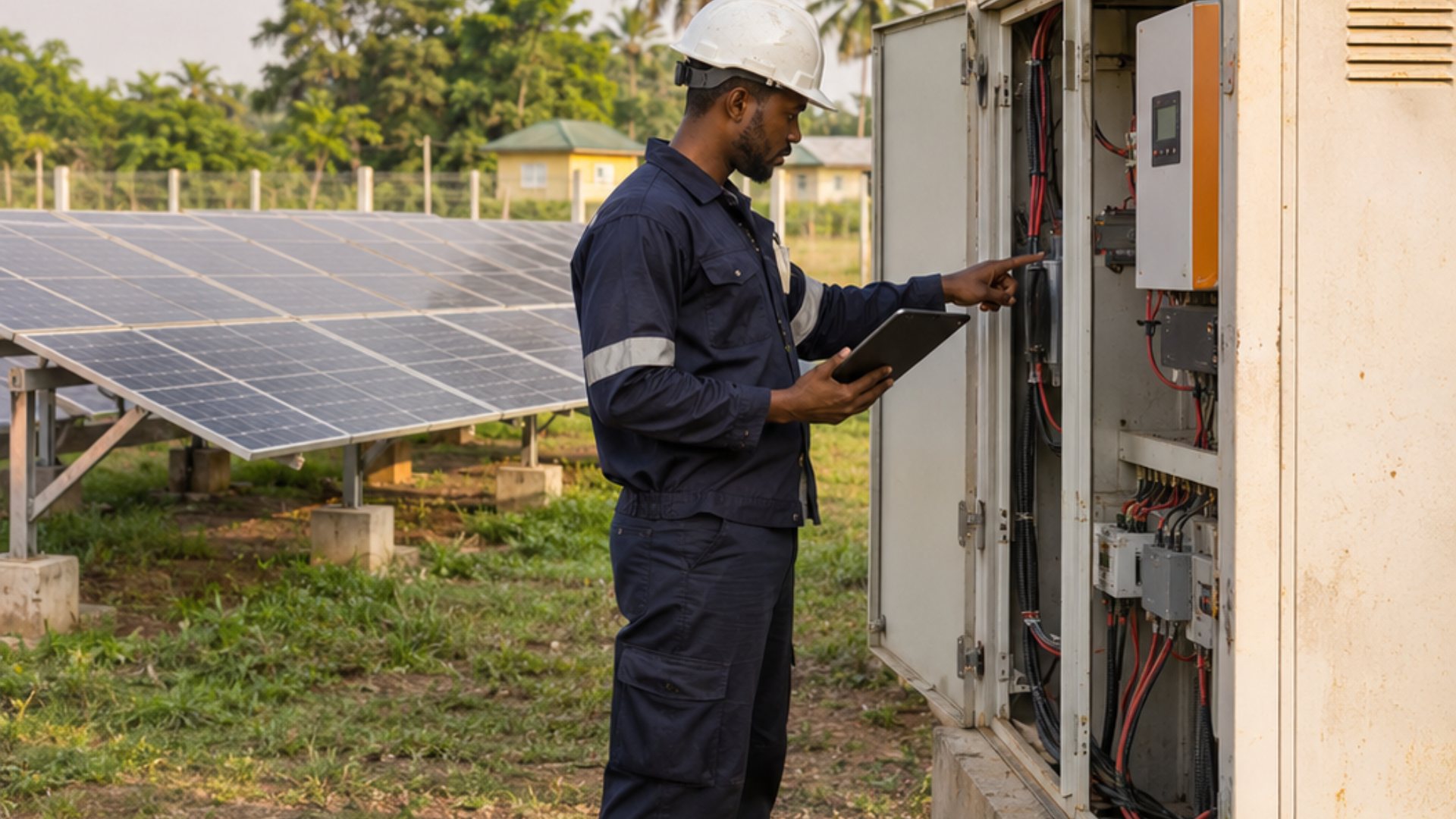
Nigeria's path to universal electricity access will be built largely from small pieces. Its least-cost electrification plan to 2030 includes about 8.9 million mini-grid connections and 5 million solar home system connections, alongside 5.4 million grid connections: 19.3 million in all. Each of those connections is an asset that will need operation, maintenance, monitoring, battery and inverter replacement and, sometimes, a change of operator.
Adaku Ajaghaku's Signature Analysis asks a question that rarely features when projects are announced: what happens after commissioning? Who remains responsible for the asset, who pays to maintain it, and who acts when the service declines?
The rules exist
The paper is careful not to overstate the problem. Nigeria is not operating without lifecycle rules. The Nigerian Electricity Regulatory Commission's Mini-Grid Regulations 2026 cover continuing regulatory responsibilities, reporting and changes of ownership. The Rural Electrification Agency's 2025 Harmonised Technical Standards go further, requiring operation and maintenance frameworks, asset lifecycle planning, component replacement timelines, performance reviews and escalation procedures.
The evidence also does not show that Nigerian decentralised energy projects systematically fail. There are viable projects, documented benefits and substantial new investment.
The gap is time
What the evidence does show, Ajaghaku argues, is a mismatch of time horizons. During implementation, responsibility is tied to procurement contracts, construction milestones and programme monitoring. After the warranty or programme period ends, the question changes: who has an enduring obligation to turn performance information into maintenance, replacement, financing or a change of operator?
The strongest evidence comes from the World Bank's 2025 completion report on the Nigeria Electrification Project. It records service gaps after construction in public institutions, particularly universities, and judges one-year EPC warranties insufficient. REA responded by exploring longer-term energy-as-a-service contracts that combine maintenance funding with performance incentives.
The government has since gone further. In August 2026, REA launched the Renewable Asset Management Company (RAMCO), in collaboration with the Ministry of Finance Incorporated and the Infrastructure Corporation of Nigeria, to manage publicly financed renewable energy assets beyond commissioning. Ajaghaku reads that as confirmation that long-term asset management has become a distinct institutional concern.
The After-Installation Test
To make the problem visible, the paper proposes a simple test with six questions: delivery, ownership, operation and maintenance, money, accountability and outcome. For any publicly financed asset, each should have a clear answer before responsibility for it is considered complete.
From that test comes a minimum stewardship arrangement with five elements: a clearly identified steward recorded in the handover documents; an asset-level performance record; a source of finance for routine maintenance and predictable component replacement; defined thresholds that trigger repair, funding or a change of operator; and reporting that keeps the link between the asset and the service its users receive.
REA and the emerging RAMCO structure provide a natural home for that arrangement for public assets, the paper argues, with NERC's framework remaining important where mini-grids fall under its regulation. The aim is not to replace existing rules, but to make the handover from project accountability to asset stewardship explicit.
A different measure of success
The paper's conclusion changes the unit of measurement. Nigeria's transition investments should be judged not only by whether assets are financed, built and commissioned, but by whether someone remains responsible for keeping them productive and their service measurable for years afterwards.
The full Signature Analysis, including the After-Installation Test, the lifecycle evidence table and the stewardship framework, is available to download.
Publication Documents & Downloads
ETA_Policy_Analysis_Ajaghaku_Beyond_Installation.pdf
Suggested Citation
Ajaghaku, A. (2026). Beyond Installation: A Lifecycle Accountability Analysis of Decentralised Renewable-Energy Infrastructure in Nigeria. ETA Fellows Programme Signature Analysis. Abuja: Energy Transition Africa.