Who Will Actually Run Africa's Energy Transition?
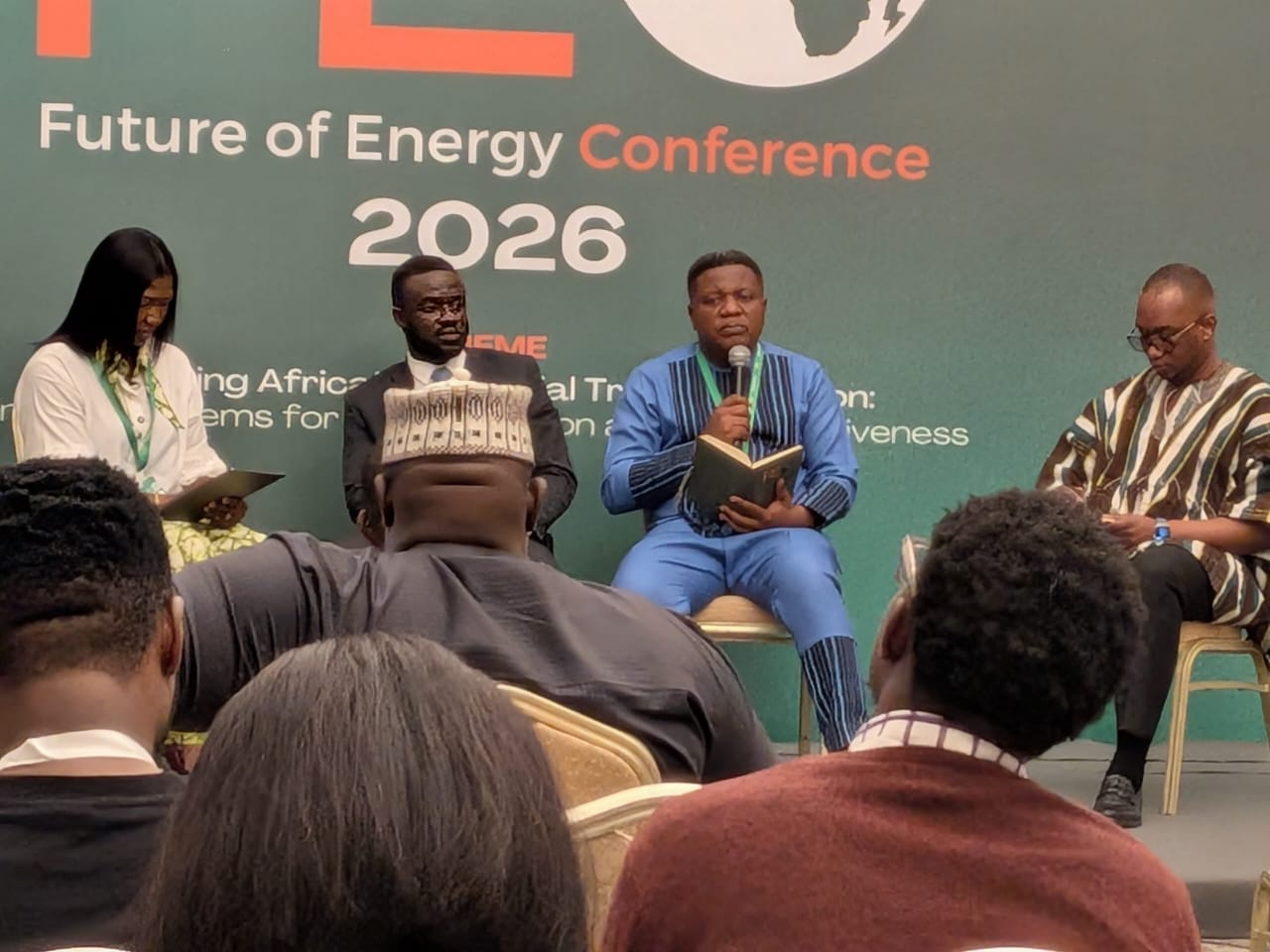
Africa's energy transition is usually discussed through three shortages: not enough capital, infrastructure, and enabling policy. At a side event convened by Energy Transition Africa on 26 August 2026, during the two-day Future of Energy Conference (25-26 August) in Accra, a fourth constraint emerged repeatedly. The continent may be setting energy ambitions faster than it is building the people, companies and institutions required to deliver them.
The panel, titled "Who Will Run Africa's Energy Transition?", brought together Dr Eric Agyemang of the Ghana Chamber for Clean Energy, Gideon Mankralo, the ILO's National Project Coordinator for Just Transition in Ghana, and ETA's Founder and Executive Director Vincent Egoro, moderated by Deborah Bonney of Ghana's Public Utilities Regulatory Commission and a member of ETA's inaugural Fellows cohort.
Mission 300 aims to connect 300 million people in sub-Saharan Africa to electricity by 2030, against a backdrop of nearly 600 million people in the region who still lack access. IRENA and the ILO's latest jobs review puts global renewable employment at 16.6 million in 2024, of which Africa accounted for roughly 344,000, just over 2%. Those numbers don't establish the size of an African skills deficit. What they expose, the panel argued, is a narrower and more useful question: what must African workers, firms and institutions become capable of doing to build, operate, regulate and eventually own an energy economy at the scale now being planned.
"Capital does not implement itself," Egoro told the room. "Technology does not deploy itself. And policy does not execute itself."
A skills gap is the wrong diagnosis
The distinction between a skills shortage and a capability constraint shaped much of the discussion. "Tell me that a country has 10,000 engineers," Egoro said. "My next question is: capable of doing what?" A shortage of electricians can be addressed, in part, by training electricians. A capability constraint asks more difficult questions: does a regulator understand the market it has been asked to govern, can a public agency structure a bankable project, can a local engineering firm execute a 100-megawatt contract rather than subcontract pieces of one, will anyone be available to operate and maintain the equipment for the next twenty years after it is switched on. Treating all of these as the same problem, the panel argued, produces the same solution, typically a training workshop, regardless of whether that solution fits.
Agyemang described what this looks like from industry's side of the classroom door. Graduates arrive with strong academic credentials and still need substantial workplace development before they can install a solar system independently, and the internships that currently bridge that gap remain largely informal: a lecturer knows a company, a project happens to be under way, a handful of students get invited on. "It should be more systematic," he said. "It should be planned, rather than just isolated cases." Ghana has begun addressing this through sector skills bodies that bring employers, government and training institutions together to define occupations and competency standards before curricula are set, rather than after graduates arrive underprepared.
The constraint sits inside firms as much as individuals
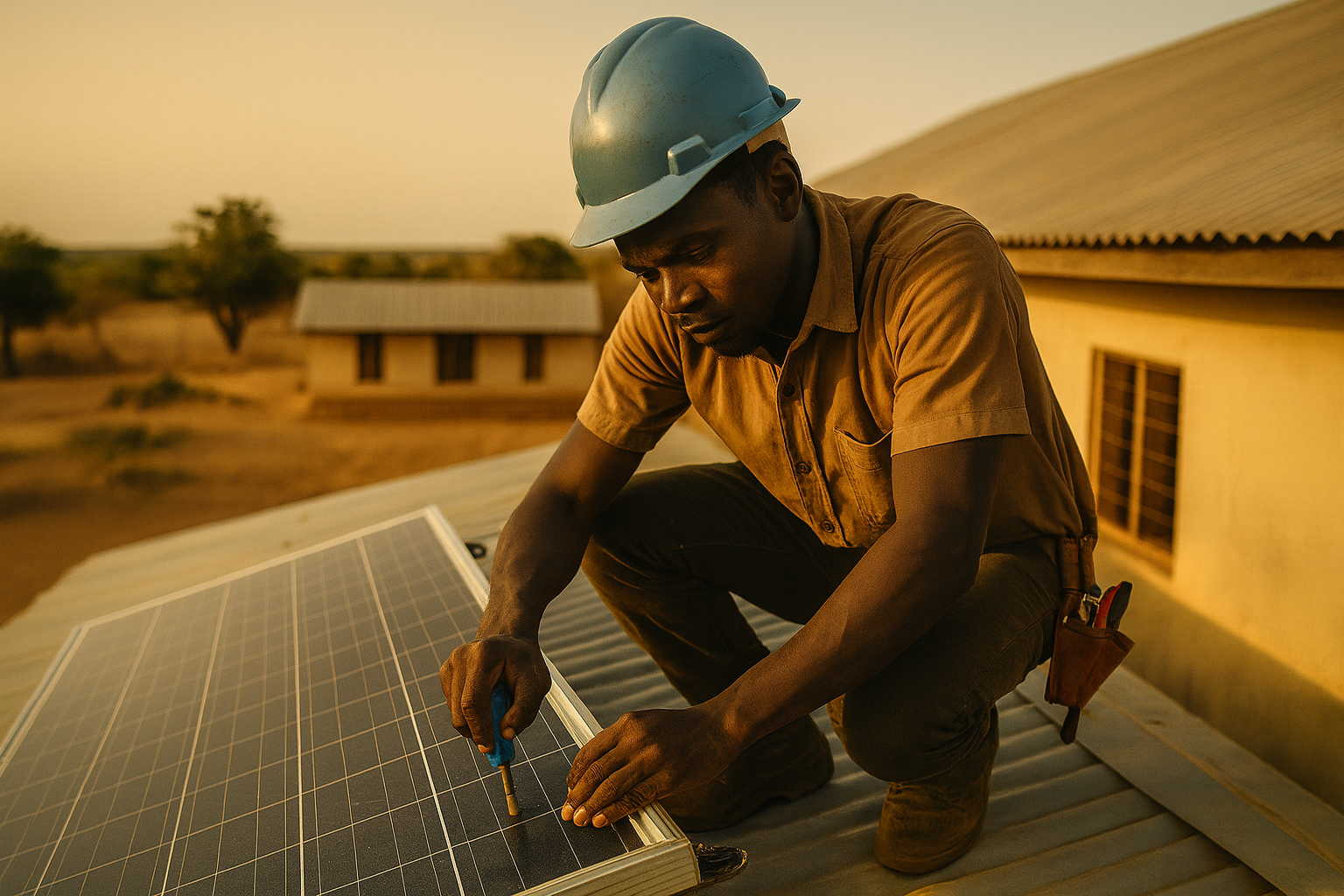
Perhaps the sharper observation from Agyemang concerned companies rather than people. Some Ghanaian clean-energy businesses, he said, could handle smaller projects but would need a foreign partner to execute a sufficiently large one, not for lack of workers but for lack of the institutional systems, project management, procurement, safety standards, balance sheet depth, that only accumulate through repeated execution. A country can train thousands of technicians and still have too few domestic firms capable of leading a major project themselves. When local companies participate mainly as junior subcontractors, Africa can install renewable infrastructure at real speed while still importing much of the engineering, project management and specialised expertise required to do it. The megawatts end up African. A considerable share of the knowledge does not.
Egoro raised Nigeria's decentralising electricity market as a parallel case at the institutional level. The Electricity Act has let states establish their own regulators, and a law can create a commission overnight, but it cannot instantly produce regulators experienced in tariff methodology, licensing and technical oversight. Some emerging state regulators, he said, are relying on informal "twinning" arrangements with the established federal regulator to build that competence in practice, a reminder that institutional creation and institutional capability move at different speeds, a distinction this desk has examined at length in its own analysis of Africa's grid skills crisis.
A vocational route, and a demand for precision
Audience questions repeatedly returned to whether every future energy worker needs a university degree. The panel's answer was no. Mankralo pointed to Ghana's technical and vocational education pathway and to Zambia's use of a critical-skills list to identify occupations where domestic capability needs deliberate development rather than permanent reliance on imported expertise, since much of what the transition needs, welders, fabricators, machine operators, sits alongside engineers and financiers rather than beneath them.
Mankralo also pushed back on capacity building as a default response; certified, industry-ready workers, he argued, are not produced by repeated short interventions that let a programme report attendance as an outcome. A three-day workshop cannot repair an organisational weakness that took years to form. What both panellists wanted instead was labour-market intelligence precise enough that a target like "one million jobs" comes with an answer to which occupations, at what competence level, hired by whom, and what has to start now if those people need to be ready in five years.
The session closed on a test rather than a target: not how many megawatts, how much capital or how many jobs a project produces, but what African people, firms and institutions can do afterwards that they couldn't do before it arrived. Africa will keep needing external capital and technology; few energy economies anywhere are fully self-contained. The distinction the panel drew was between a transition that merely happens in Africa and one that leaves the continent measurably more capable because it did.