Zambia's Electricity Market Is Being Rebuilt Around Copper Mines
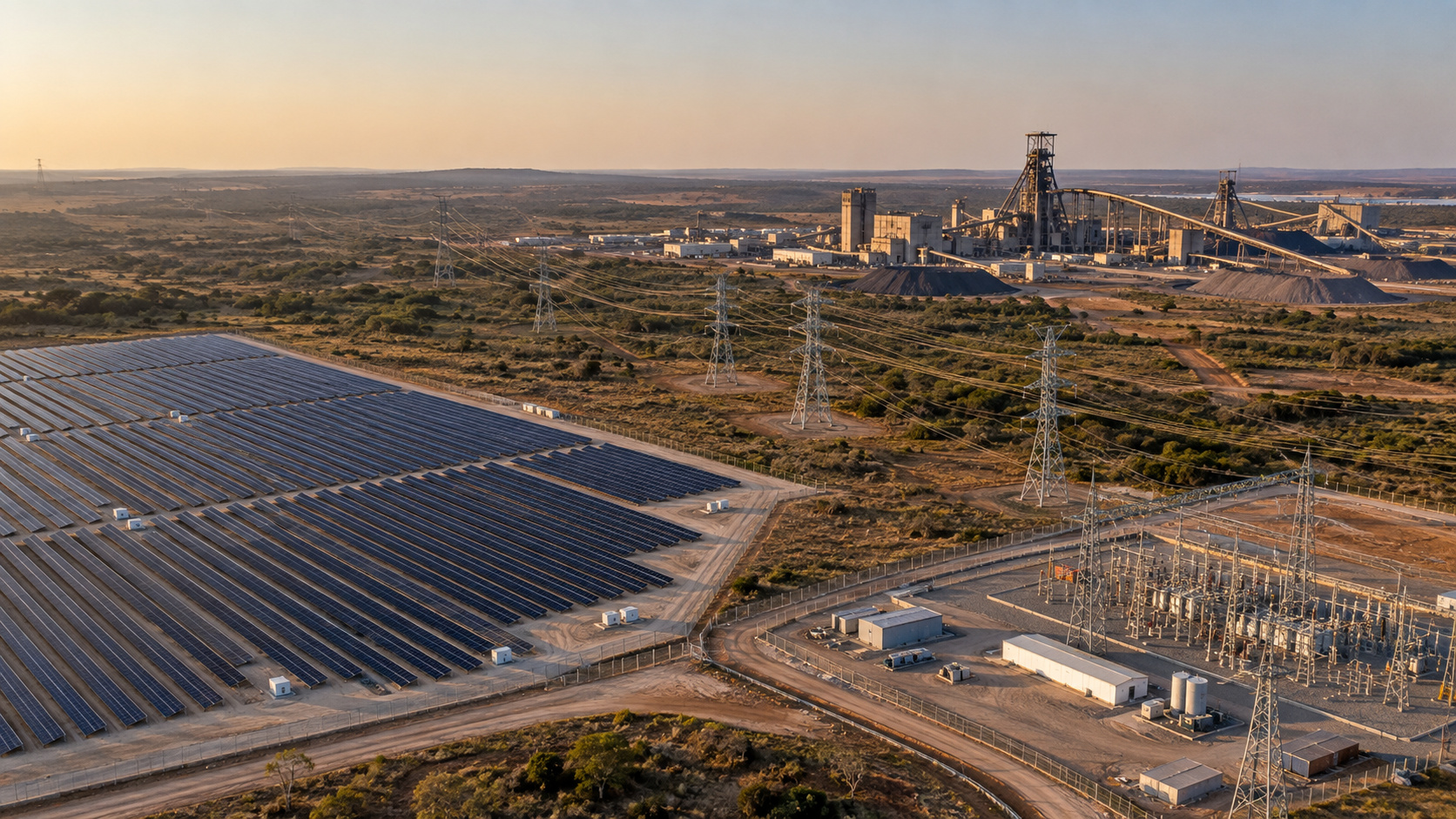
For years, Zambia's electricity system worked around a relatively simple hierarchy. ZESCO generated or bought most of the power, owned most of the national transmission network, and independent producers generally needed ZESCO as their buyer, while the copper mines, consuming enormous volumes of electricity, sat at the profitable end of that system. That architecture is changing. Under Zambia's open-access market, an independent generator can increasingly find a large customer, negotiate a commercial electricity contract, and use somebody else's transmission network to deliver the power, and the customer is often a mine.
The significance is difficult to overstate. Mining already consumes roughly half of Zambia's national electricity, remains the country's principal source of export earnings, and is the industry around which Zambia's ambition to produce three million tonnes of copper a year by 2031 is being built. Electricity reform and copper policy are becoming difficult to separate, and the real question is no longer simply whether private investment can bring more generation into Zambia. It is whether Zambia is building a competitive national electricity market, or something more specific: a mine-anchored power market whose strongest customers, most bankable contracts and newest infrastructure increasingly cluster around copper.
Open access is finally becoming a real market
Zambia's reform didn't begin this year. The Electricity Act 2019 created the legal basis, and the Electricity (Open Access) Regulations, Statutory Instrument No. 40 of 2024, followed in July of that year. The Ministry of Energy launched the actual open-access platform in February 2025, letting independent producers sell directly to eligible consumers while using the networks of ZESCO, Copperbelt Energy Corporation, or North Western Energy Corporation. By early 2026, the IMF described the regime as fully operational, which makes what has happened since less a new reform than the technical machinery a genuinely open market requires.
The Electricity (Transmission) Grid Code Regulations of 2026 established operating, connection, power-quality and technical requirements for generators and network users; June brought transmission and distribution loss-reduction guidelines; and August saw consultation on standards for inverter-based embedded generation. ZESCO has separately published final balancing, metering, outage and participation procedures.
All of this shows how an electricity market becomes real rather than notional. A generator needs to know how it will connect, a trader needs to know how imbalances will be settled, a mine needs to know whether power can be wheeled to its site, a network owner needs to know what it can charge for the use of its lines, and the system operator needs to know who is responsible when contracted electricity does not arrive. The 2024 policy opened the market. The 2026 rulebook is what determines whether anybody can actually use it.
The mines solve a problem every power developer understands
A power plant doesn't become financeable merely because Zambia needs electricity. It becomes financeable when somebody credible agrees to buy its output, which is why mining is so important here specifically. Large copper producers consume electricity continuously, can contract large volumes, often earn foreign-currency revenue, and operate on timescales lasting decades, making an international mining group a stronger commercial counterparty than a financially strained national utility. Zambia now has a working, fully documented example of this mechanism.
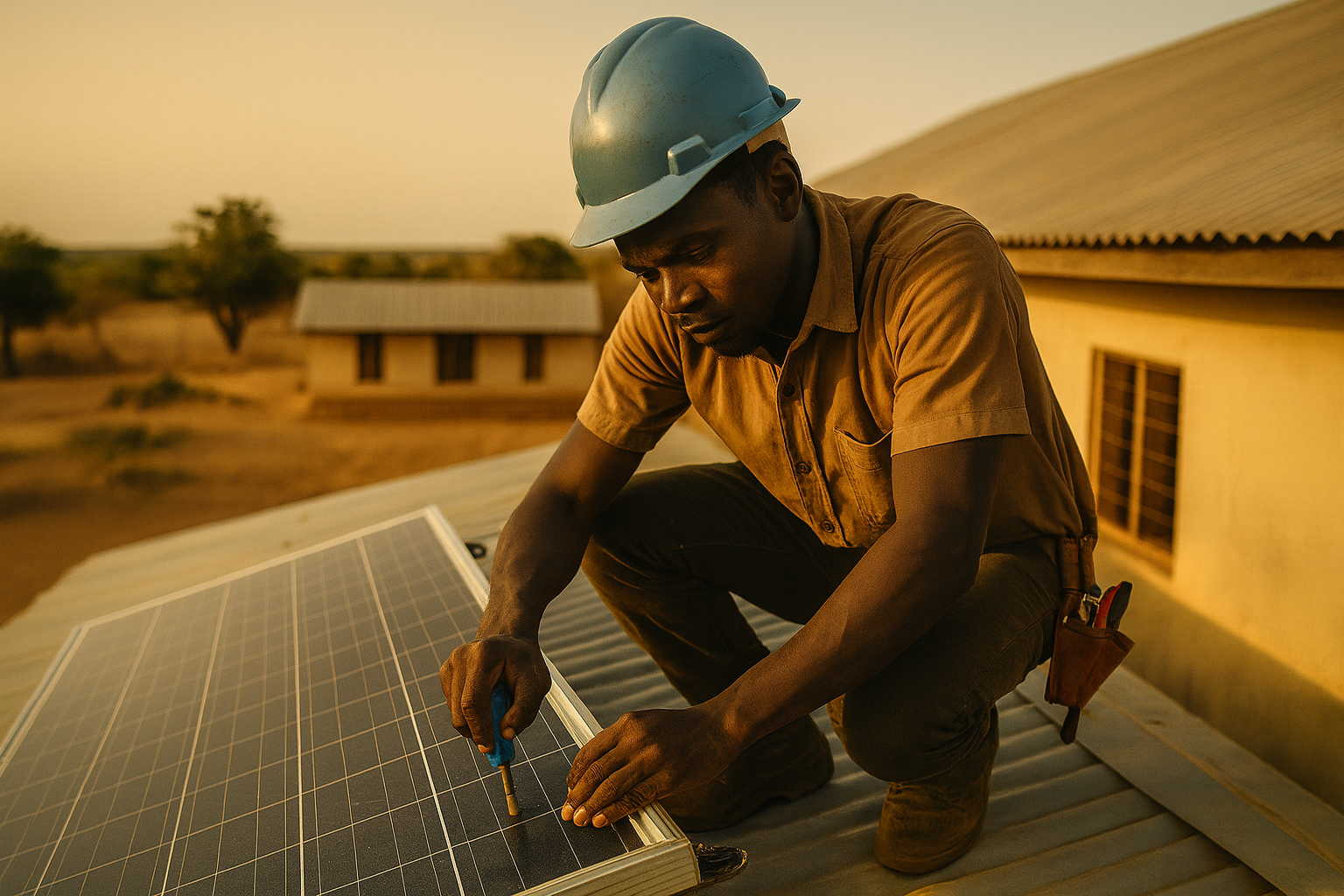
The 100-megawatt Chisamba solar plant, commissioned in June 2025, is Zambia's largest grid-connected solar facility and was developed by Kariba North Bank Extension Power Corporation, a wholly owned ZESCO subsidiary. Its financing is genuinely unusual: ZESCO and its subsidiary each contributed $30 million in equity, and Stanbic Bank Zambia provided $71.5 million in commercial debt, secured entirely against a 13-year power purchase agreement with the renewable trader GreenCo Power Services, with no sovereign guarantee attached and no recourse to ZESCO's own balance sheet.
GreenCo, in turn, supplies First Quantum Minerals under a separate power supply agreement, blending the solar output with other electricity so the mine receives firm, continuous power rather than intermittent solar generation alone. The structure lets ZESCO redirect an equivalent volume of electricity, previously committed to First Quantum, toward domestic customers instead, which is the optimistic version of how mine-anchored finance is supposed to work: a private industrial buyer makes a project bankable, the project adds real capacity to the interconnected system, and the utility gains room to serve everyone else.
Copper demand is becoming Zambia's bankability engine
First Quantum isn't an isolated case. The company has been sourcing a growing share of its electricity from imports and independent producers alongside reduced ZESCO supply, and is advancing a longer-term arrangement covering up to 430 megawatts of solar and wind capacity, alongside grid-stabilisation investment to support expanding mine loads in North-Western Province. Copperbelt Energy Corporation, which has supplied Zambia's mines for decades and operates more than 1,100 kilometres of transmission infrastructure across the Copperbelt, is expanding for the identical reason, commissioning new solar capacity in the first half of 2026 and explicitly linking its own investment strategy to rising mining-driven electricity demand.
The mechanism reinforces itself: copper investment creates electricity demand, large mining customers create credible long-term offtake, credible offtake makes generation projects financeable, new generators create demand for transmission, and transmission investment makes further mining expansion possible. ETA has examined the mining side of this cycle in detail in its earlier analysis of Zambia's copper strategy. The open-access regime now gives that relationship a formal market structure to run through.
The drought accelerated a reform already underway
Zambia might have reached this point more slowly without the severe 2024 drought. Hydropower has historically dominated the country's system, and when reservoir levels collapsed, available generation fell sharply, producing daily load shedding that at points ran as long as 17 hours. The mines were treated differently: government prioritised mining and other large corporate users for electricity during the crisis, while households absorbed most of the shedding, and large consumers used premium bilateral arrangements, power traders and imported electricity to keep operating.
The logic was straightforward. Switching off a household is damaging; switching off a copper mine can halt export production, cut tax revenue, cost jobs and damage underground operations that depend on continuous ventilation and pumping. But that experience also exposed the political economy now embedded in Zambia's electricity allocation. When power is scarce, customers aren't treated equally, and when the market liberalises, the customers best able to pay simply gain more options than those who cannot.
What ordinary Zambians are actually experiencing
The scale of the gap between mine-grade and household-grade electricity access is now documented. Afrobarometer's most recent nationally representative survey found that while 55 percent of Zambians live in areas nominally served by the ZESCO grid, only 28 percent of households report an actual connection, and among those connected, just 15 percent say electricity works most or all of the time. Combining connection and reliability rates, only about 4 percent of all Zambians enjoy what could reasonably be called a reliable grid supply. Nearly half of citizens, 47 percent, now rely on a source other than the ZESCO grid entirely, overwhelmingly solar panels.
Public opinion has moved accordingly: 78 percent of Zambians now support ending the government's electricity monopoly to let other actors generate and distribute power, even as 73 percent oppose outright privatising ZESCO itself, a distinction that suggests Zambians want competition introduced without abandoning the idea of a public utility altogether.
That reliability gap sits awkwardly beside a rapidly improving electricity market for mines. Large industrial consumers can negotiate PPAs, buy through traders, import via the Southern African Power Pool, anchor dedicated solar projects like Chisamba, and pay premium tariffs to secure firm supply. A rural household cannot do any of that. The danger isn't that mines receive reliable electricity, Zambia cannot expand copper production without it, but that liberalisation produces two markets with fundamentally different levels of investment, reliability and bargaining power: one built around the customers financiers actively want, and another left carrying the customers public policy is still obligated to serve.
Why the system operator question matters as much as the market rules
Competition requires a referee, and ZESCO has historically been generator, network owner, supplier, buyer and system operator simultaneously across most of the market, creating an obvious conflict once open access lets competitors challenge ZESCO's own commercial position. At the same time, ZESCO still controls their access to the grid. Zambia's implementation roadmap envisages establishing a genuinely Independent System and Market Operator, alongside a separate Public Service Trader. However, ZESCO's own project documentation still describes the ISMO as a work in progress rather than an operating institution.
That institutional separation may ultimately matter as much as the Open Access Regulations themselves, because a market is not genuinely open simply because legislation says competitors can use the grid. It is open when access rules, congestion decisions, metering, balancing and charges are administered predictably enough that generators actually believe they will be treated fairly, which is what the 2026 Grid Code and its associated technical procedures are meant to establish rather than merely gesture toward.
What would actually keep this from becoming two electricity systems
The temptation is to frame this as mines versus households, and that framing is too simple. Without mining demand, Zambia would lose one of the strongest commercial anchors available anywhere on the continent for financing new generation, and a country seeking to triple copper output while supplying an increasingly electricity-intensive regional economy needs private capital at a scale ZESCO cannot provide alone.
The mines can help unlock that capital. But mine-backed bankability should be used to deepen the national system rather than bypass it entirely, which means transparent wheeling charges, a genuinely independent system operator rather than one still embedded inside ZESCO, transmission investment that serves industrial corridors without neglecting the wider grid, explicit and funded social tariffs rather than a hidden dependence on cross-subsidy that is steadily disappearing as mines migrate to private supply, and market rules that reward a generator for serving a mine without making households the residual customers of a utility whose best-paying accounts have all moved elsewhere.
Copper is giving Zambia what many African electricity markets lack entirely: customers large enough and creditworthy enough to make new generation bankable. That is a genuine advantage. It should not become the organising principle for who gets to depend on reliable electricity.