Africa’s Energy Crisis Is Not the Grid It Is the Kitchen
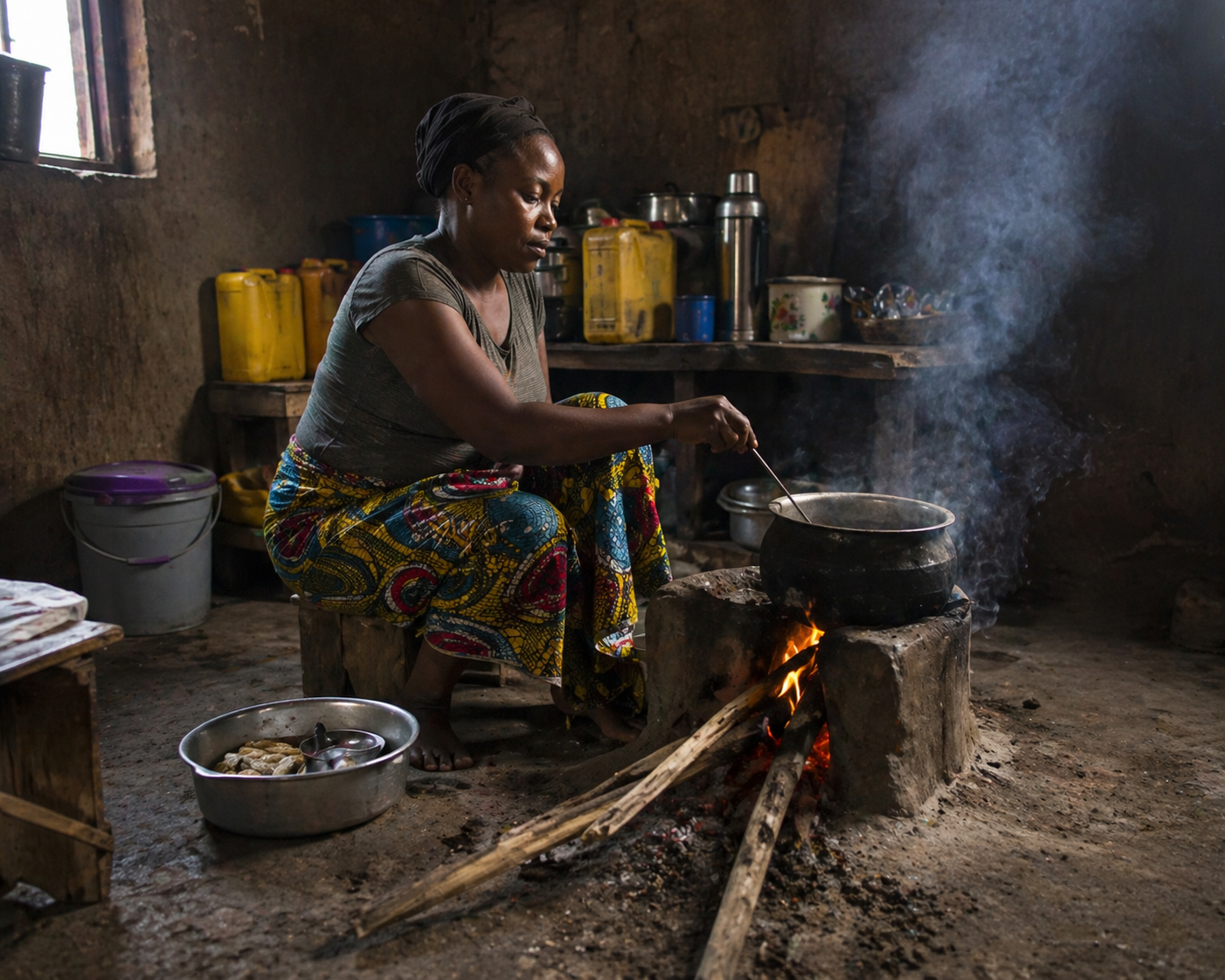
Today, nearly one billion people across Africa, roughly four in every five households, rely on highly polluting cooking fuels used in open fires or basic stoves. The fuels in question are wood, charcoal, agricultural residue, and animal dung. These are not fuels associated with energy poverty in the way that a lack of electricity is. They are the ordinary, daily cooking reality for the majority of the continent's population.
The problem is what burning these fuels indoors does to the people around them. The lack of clean cooking contributes to 815,000 premature deaths annually in Africa alone, due to the health impacts of household air pollution. To put that in context, there are more deaths each year than malaria causes across the continent.
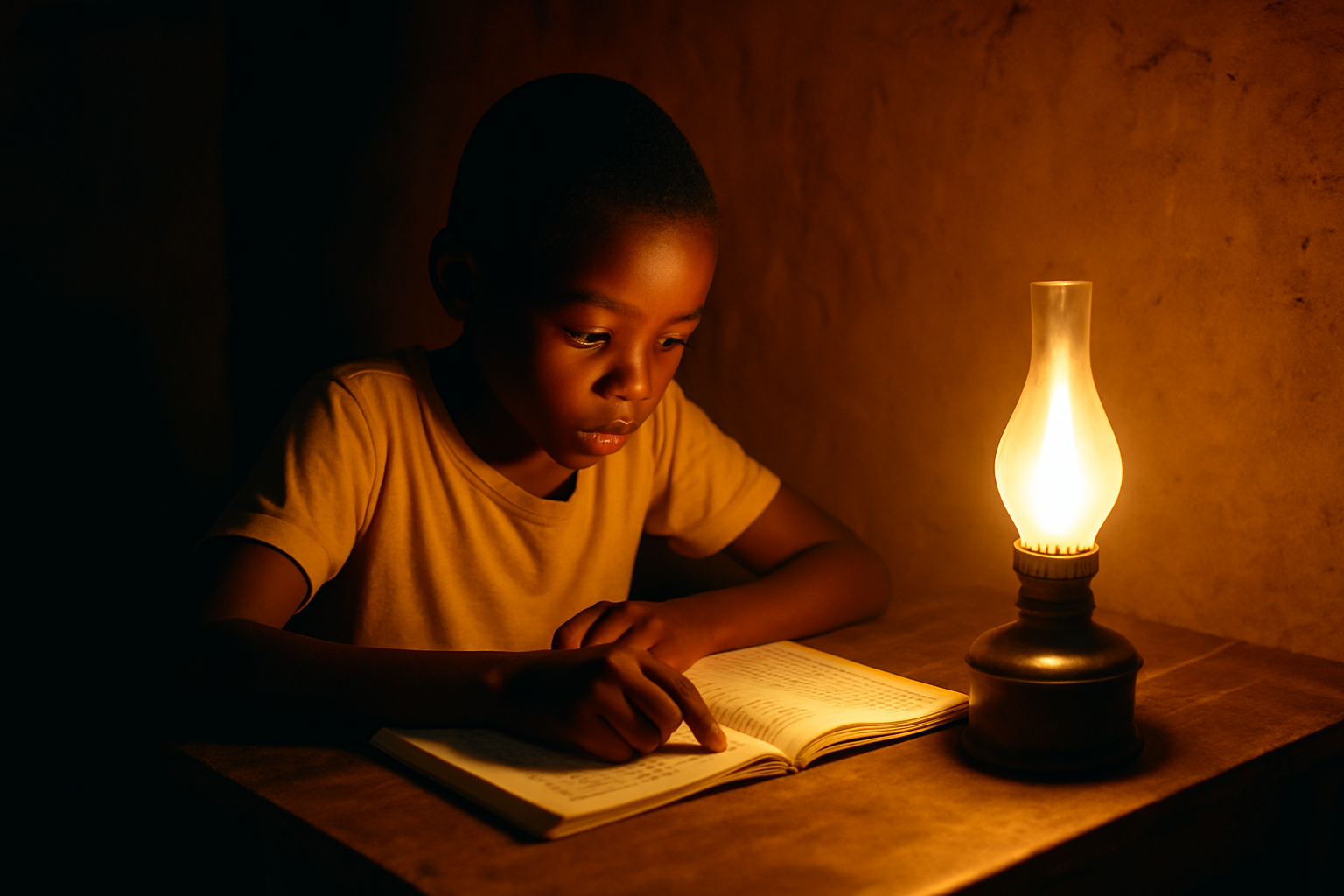
The smoke from open fires and basic stoves contains fine particles that penetrate deep into the lungs, causing respiratory disease, cardiovascular complications, and long-term organ damage. In Africa, women and children account for 60 percent of early deaths related to smoke inhalation and indoor air pollution because they are the people who spend the most time near the fire.
Beyond the health toll, the time cost is enormous. Women and girls in Africa spend an average of four hours a day gathering fuel and cooking. Those are four hours not spent in school, in paid work, or in economic activity of any kind. The clean cooking deficit is simultaneously a health crisis, a gender equity crisis, and an economic productivity crisis, and it sits almost entirely outside the metrics that the energy transition uses to measure its own progress.
Why has the number of people affected kept growing?
This is the aspect of the clean cooking crisis that is least intuitive, given two decades of energy transition investment across the continent.
Since 2010, almost 1.5 billion people in Asia and Latin America gained access to modern cooking stoves and fuels, halving the number of people without clean cooking in just fifteen years. In sub-Saharan Africa, the number without access has never stopped growing.
The reason is primarily demographic. Africa's population is growing faster than clean cooking programmes are expanding. Even where progress is being made, and it is being made in some markets, it isn't keeping pace with the additional households forming every year. Under current policies, Africa won't reach full clean cooking access even in the 2050s. The trajectory, absent a significant change in investment and policy ambition, is one of a problem growing larger every year, in absolute terms, for at least three more decades.
The contrast with Asia is instructive and uncomfortable. China, India, and Indonesia each halved their populations without clean cooking access between 2010 and 2025, primarily through large government programmes that provided free stoves and subsidised LPG canisters. Around three-quarters of those who gained clean cooking access globally during that period did so through liquefied petroleum gas. Africa hasn't yet produced a comparable policy response at a comparable scale.
What does it cost, and who should be paying?
The financing picture for clean cooking in Africa has two elements that, placed alongside each other, make the persistence of the crisis difficult to defend.
The first is what it would cost to solve it. The IEA estimates that universal clean cooking access across Africa could be achieved by 2040 at a cost of approximately $2 billion per year. In a global energy investment landscape where annual flows reached $3.3 trillion in 2025, $2 billion is 0.1 percent of the total. It is less than some individual energy infrastructure projects. IEA Executive Director Fatih Birol has called it "nothing compared to the lives that could be saved."
The second is what is currently being spent. Investment in Africa's cooking sector reached approximately $675 million in 2023, about a third of what is needed annually. The 2024 IEA Summit on Clean Cooking in Africa, held in Paris, raised $2.2 billion in public and private commitments. By mid-2025, $470 million had been disbursed, a delivery rate of approximately 21 percent against the total committed. Concrete progress has been made: a stove factory under construction in Malawi, affordable stove programmes in Uganda and Côte d'Ivoire. But the gap between what was pledged and what was delivered follows the familiar pattern of climate finance commitments to Africa more broadly.
The July 2026 Second IEA Summit on Clean Cooking in Africa, confirmed for Nairobi, is the next significant mobilisation opportunity. What it produces in disbursable, accountable commitments will determine whether the trajectory shifts.
What does clean cooking have to do with climate change?
More than the energy transition's accounting usually acknowledges.
The combined impact of direct emissions from cooking and the deforestation driven by biomass demand is equivalent to a quarter of Africa's total energy-related CO₂ emissions today. The annual greenhouse gas emissions from cooking with biomass across the continent are comparable, according to the IEA, to the output of the entire global aviation sector. The clean cooking deficit is directly linked to the loss of 1.3 million hectares of African forest each year, forest that would otherwise be absorbing carbon.
Africa's nationally determined contributions and its renewable capacity targets are built predominantly around the electricity sector. The cooking sector's emissions, significant in scale and directly addressable, are tracked separately and integrated into climate commitments less systematically. A country can hit its electricity-sector renewable targets in full whilst its cooking sector continues producing emissions at a scale that materially affects its overall climate profile.
The IEA's modelling shows that achieving universal clean cooking access by 2040 would prevent 4.7 million premature deaths in sub-Saharan Africa and reduce the continent's greenhouse gas emissions by 540 million tonnes per year. That is the climate and health return on $2 billion annually. It is one of the most cost-effective interventions available to Africa's energy transition, and it is currently underfunded by approximately two-thirds.
Why does this sit outside the energy transition's main architecture?
Understanding why clean cooking is underprioritised requires understanding how the energy transition is structured rather than simply how it is communicated.
The dominant financing instruments for energy transition investment are designed for infrastructure at scale. Solar farms, transmission lines, grid extension programmes, and utility-scale storage can be financed through project finance structures, development finance institution lending, and institutional capital looking for long-term, asset-backed returns. These instruments work because the assets are large, identifiable, and produce revenue streams that can service debt.
Clean cooking doesn't fit this model. It operates at the household level, in the most economically constrained and geographically dispersed markets on the continent. The revenue from a cookstove sale or an LPG canister is small; distribution logistics in rural areas are expensive relative to the transaction size. And from a development finance perspective, clean cooking is structurally harder to structure than a solar plant, even though it is more urgent, and cheaper to solve at the system level.
The result is that the transition's financing architecture consistently underserves it. What clean cooking requires, blended finance, results-based financing, subsidised distribution, and government procurement programmes, is available in principle but not deployed at anything close to the required scale. Until the architecture adapts to the nature of the problem rather than requiring the problem to adapt to the architecture, the gap will persist.
What would need to happen for this to change?
Three things, specifically.
Clean cooking needs to be integrated into the core metrics of Africa's energy transition rather than reported as a separate development indicator. If access to clean cooking isn't in the same dashboard as electricity access and renewable capacity, it will continue to be optimised last by the institutions controlling capital.
New financing instruments designed for household-level energy transitions need to be deployed at scale alongside infrastructure financing. Blended finance structures, results-based disbursement mechanisms, and subsidised distribution systems exist in prototype form. They need to be the standard, not the exception, for clean cooking investment.
And accountability for the $2.2 billion committed at the 2024 Summit needs to improve before new commitments are made at the 2026 Nairobi Summit. A 21 percent disbursement rate on a clean cooking commitment isn't a funding shortfall. It is a governance failure, and it will repeat itself if the disbursement architecture for 2026 commitments isn't designed differently from the one that produced it.
The problem is solvable, the cost is known, and the technology exists. What is required is the institutional decision to treat 815,000 deaths a year as a first-order priority rather than a complement to the electricity agenda.