Africa's Critical Minerals Strategies Are Becoming Investment Strategies. But Are They Development Strategies?
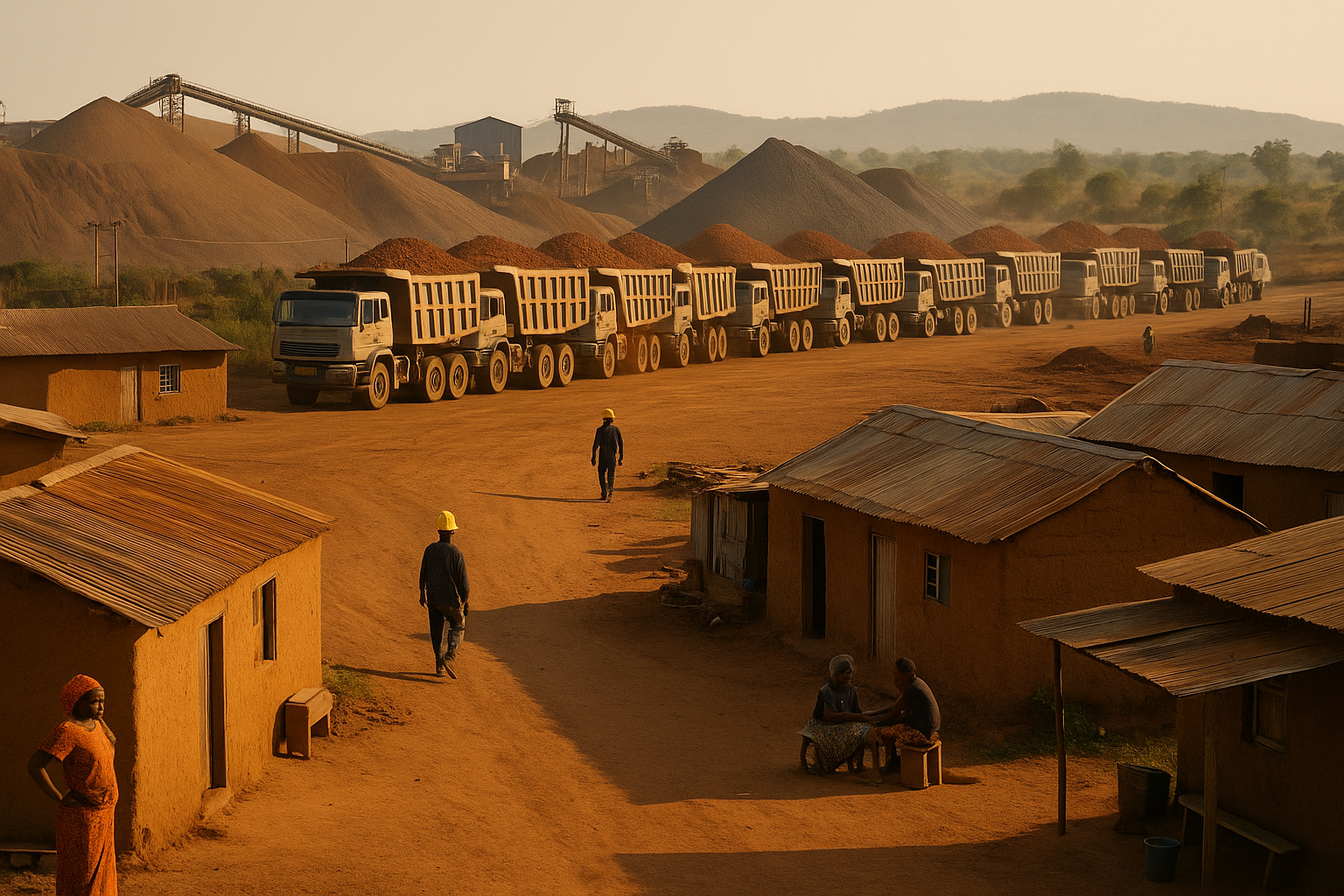
I am starting with a number, not an event: 34 years, the average time it takes a mining project in Zambia to go from discovery to initial production, the highest lead time in the world, according to a 2024 S&P Global review of 268 mines. The US comes next at 29 years; the global average is 16. The gap between the urgency of securing investment and the time it takes to build the systems that investment depends on is the real subject of this piece.
Across Africa, governments are closing that gap through policy and reform, and the record on attracting capital is genuinely encouraging. Nigeria has spent two years assembling its most structured minerals reform agenda since independence: a Critical Minerals Roadmap aligned with the EU's Critical Raw Materials Act, a state investment vehicle in the Nigeria Solid Minerals Company, and an enforcement unit, the Mining Marshals set up in 2024 to confront illegal mining. Financing has followed, including a $1.3 billion deal with the African Finance Corporation for an alumina refinery and exploration, and Nigeria's first lithium processing plant, opened in Nasarawa State in 2024.
These are not isolated examples. Zambia wants to more than triple copper output to three million tonnes annually by 2031 and has brought online what is described as Africa's first cobalt sulphate refinery. Namibia holds close to 600 active exploration licences and has just signed nine cooperation agreements with China covering uranium, lithium, and rare earths, a deal ETA has already examined alongside the wider question of why the continent captures so little of the value in minerals it controls in such abundance. But when a minister celebrates a licence, a groundbreaking, or a signing ceremony, what is actually being claimed as success: attracting capital, or building something that outlasts it? These are not the same achievement, and investment, while necessary, is not sufficient on its own. A country can be very good at pulling in investors while failing to turn that money into institutions, industry, or benefits reaching ordinary people, and where that happens, the people who profit from the coming minerals boom will look a lot like the people who profited from the oil boom before it, in several of these same countries.
So here is the argument underneath the more comfortable one about capital inflows: governments across Africa are redesigning critical minerals policy to attract investment, but its long-term success should be measured not only by how much capital it pulls in, but by whether it strengthens institutions, builds industrial capacity, and generates broad-based development.
Institutions first, because this is where the gap is sharpest
I want to start with Nigeria's own reform story, not because it has failed, but because of what its own institutions admit about it in public. When the current Minister of Solid Minerals took over in 2023, Nigeria was spending only about $2 million a year on mineral exploration, against well over $100 million in Côte d'Ivoire and South Africa. That gap is why government has since set aside roughly N1 trillion, about $630 million, for exploration funding. The Mining Marshals show the same pattern from the implementation side: two years after launch, the unit's own commander told a National Assembly workshop that despite hundreds of arrests, inadequate logistics, insufficient manpower, and judicial delays remain major obstacles. That is not a weakness in the reform. It is the reform being honest about itself, and that honesty is exactly what should count in any real test of whether a country is development-ready, not just investment-ready.
The Democratic Republic of Congo tells a similar story at a different scale, and ETA has already given the export-ban and beneficiation side of that story a full treatment elsewhere, so I will not repeat it here. Worth restating is the institutional headline: the DRC mines roughly three-quarters of the world's cobalt, yet around 80 percent of that output is controlled by Chinese state enterprises once it leaves the ground. A recent assessment from the UN University's Institute for Natural Resources in Africa puts the cause plainly: weak institutions and fragmented policy, not geology. This is not really a mining problem. It is a governance problem, the clearest example of why investment without strong institutions repeats the extraction pattern it was supposed to fix.
Botswana makes the same point from the opposite direction. Its diamond partnership with De Beers gives government a 50 percent stake in Debswana and a direct shareholding in De Beers itself, renegotiated in 2025 to extend the arrangement to 2054 on improved terms. Decades of that revenue built the Pula Fund; a new Diamonds for Development Fund was set up this year so citizens can see the benefit directly. Diamond output has still fallen sharply as lab-grown stones erode demand, and unemployment has climbed with it, but that is close to the point: institutions built decades ago are being tested now, not discovered to have never existed. Governments need to decide early how they will capture and use the value their resources create, and the steadiest growth tends to come where taxation of the sector stays firmly in their own hands. Attracting investment is only part of the challenge; capturing and managing the value it creates is equally important.
Industry: the missing middle
ETA has already covered how wide Africa's refining gap is, and separately, what capturing more of the value chain would require, so those numbers will not be repeated here. Take copper: 93 percent of the copper alloy Africa exports leaves as raw material, and a fair share of what comes back later arrives as finished cars African buyers pay for in hard currency. Whoever processes it in between captures most of the value Africa's own mines helped create, and right now that is mostly happening elsewhere.
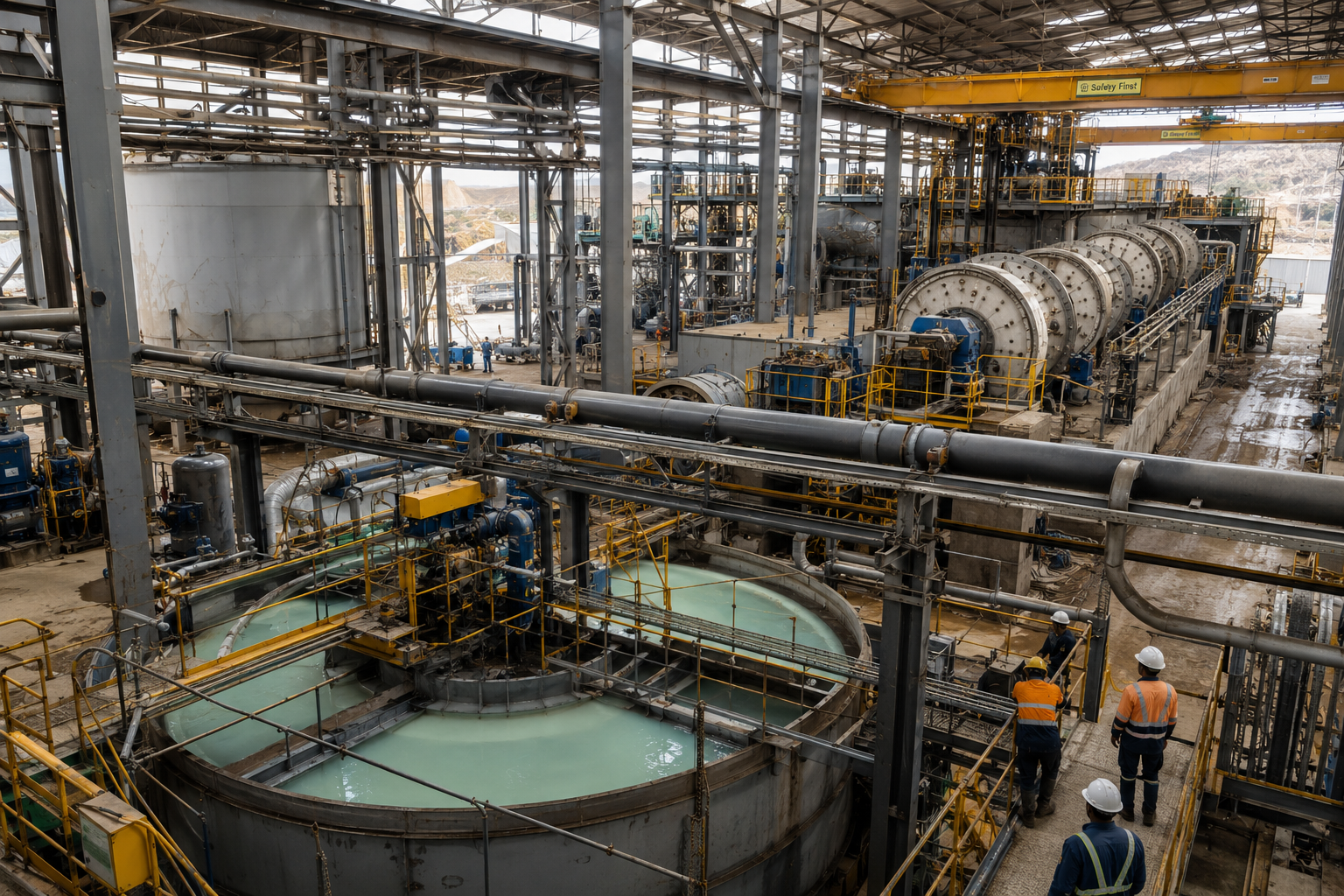
Zimbabwe illustrates why banning raw exports is not enough on its own. After restricting raw lithium ore exports in 2022, government moved toward a wider ban on unprocessed concentrate, planned for 2027 but brought forward to February 2026. Processing capacity has not kept pace: by mid-2026, only one lithium sulphate plant was confirmed fully operational. Banning raw exports can create the right incentive, but without the investment and institutions to support processing, the policy may struggle to deliver the outcomes it was written for.
Development outcomes and strategic resilience
Strong institutions and a growing mineral industry matter, but neither automatically means the benefits reach people. Scale matters too: a billion dollars invested in mining and processing can create thousands of jobs and add meaningfully to GDP, yet these gains can still look small against the value of the minerals themselves. Africa produces a large share of the world's manganese and cobalt but processes only a small share domestically, and most of the potential for jobs, skills, and revenue sits further along the value chain than the mine itself. The real question is not only how much Africa can extract, but how much value it can retain and build around what it extracts.
Namibia is currently working with the EU on its own critical minerals strategy while deepening cooperation with China on uranium, lithium, and rare earths, the same relationship ETA examined when it asked why a continent holding roughly 30 percent of global critical mineral reserves captures less than 5 percent of the value those minerals eventually create. This dual-track approach can be read as an attempt to work with different partners while pursuing its own interests; the real question is whether Namibia can convert those partnerships into technology transfer and local processing rather than simply more exports. China, the EU, Gulf states, Japan, South Korea, and India are all competing for the same minerals, giving governments leverage only where they have the institutions to use it. Partnerships bring capital and infrastructure. They do not automatically bring local value.
Investment is the beginning, not the destination
One thing needs to be said plainly, because a piece with this title risks being read as anti-investment: it is not. Without capital, none of Nigeria's roadmap, Zambia's copper strategy, or Namibia's processing ambitions get built. The argument is narrower and more useful: investment is the beginning of the development journey, not its final measure of success. The current wave of ministerial statements and roadmap launches is easy to mistake for the destination precisely because it is so visible, while the harder, slower work of building institutions capable of governing that investment happens with almost no ceremony.
Africa's critical minerals growth will not be decided by how much investment arrives over the next five years. Enough will arrive; global demand guarantees that much. It will be decided by something closer to what Nigeria's own reformers concede about the Mining Marshals, what UNU-INRA concludes about the DRC, and what Zimbabwe is discovering about the distance between a policy announcement and an operating plant: whether the institutions built to receive that capital are strong enough, by the time it arrives, to make sure it stays where it lands.