Africa's Energy Transition Has a Gender Design Gap. The Data Shows Where.
That fact is striking, but it doesn't mean governments or African energy strategies never consider women; increasingly, they do. Nor does it prove every inequality in the energy system traces to one flaw in the global monitoring framework. It reveals something more precise: the world measures progress towards universal energy access without requiring countries to show whether that progress produces different outcomes for women and men.
Electricity-access indicators count connections, clean cooking indicators count the population using clean fuels, and renewable-energy indicators track consumption and capacity. But none asks how much unpaid labour an energy intervention eliminates, whether women enter technical occupations, or who owns the businesses delivering energy services. The UN has identified that gap: a 2026 policy brief on gender indicators for sustainable energy calls for stronger measurement under SDG7, and UN Women confirms Goal 7 remains one of only six SDGs without them. For Africa, this is more than a statistical problem, because it affects what counts as success.
Clean cooking shows why the metric matters
The latest data complicate a common description of Africa's clean cooking crisis. Access isn't declining in sub-Saharan Africa. The IEA's Clean Cooking in Africa 2026 report finds 23% of the region's population had access in 2024, almost a point higher than the year before, with nearly 12 million gaining access, three times the 2010 pace. Yet population growth still outpaced new access, so the number without clean cooking rose by roughly 14 million in 2024. Both are true at once: the access rate is improving while the absolute number without it keeps rising.
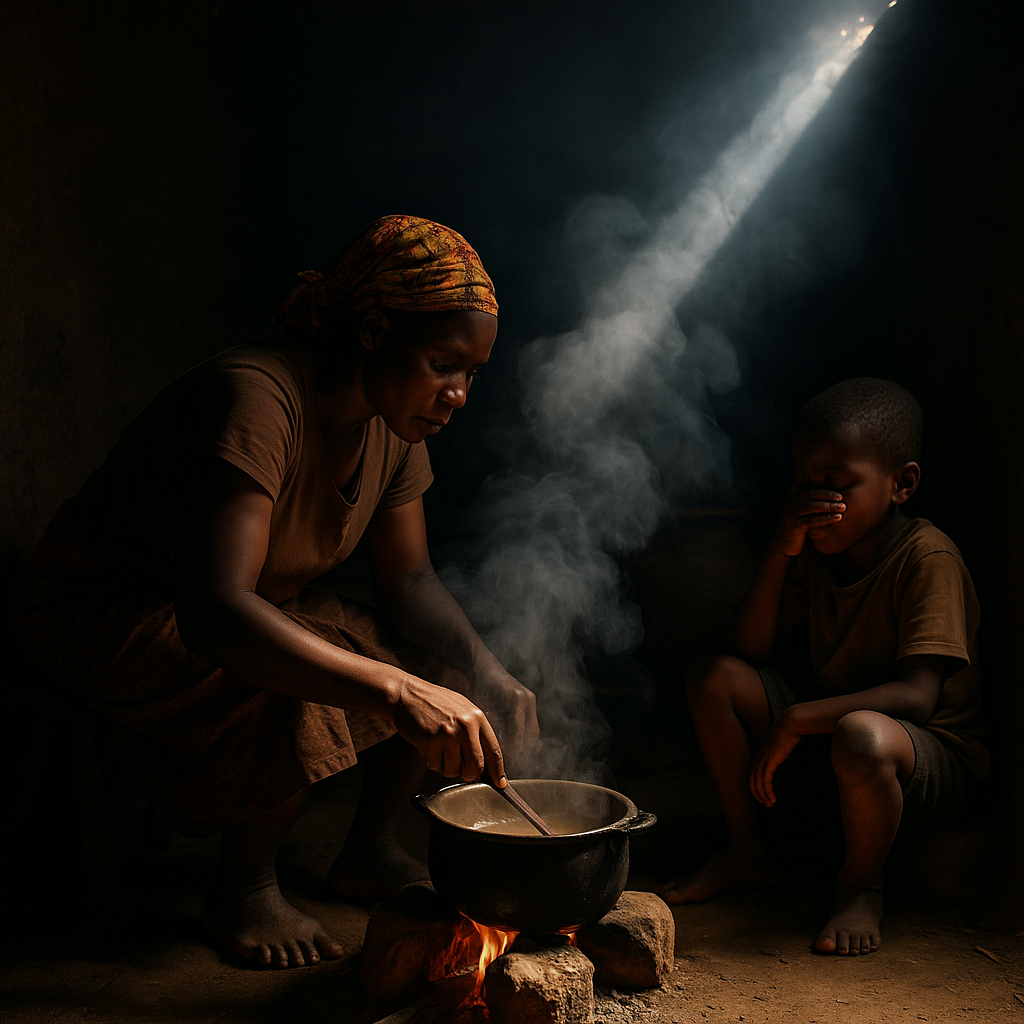
The gender dimension appears once the analysis moves beyond counting stoves. The IEA estimates households without clean cooking spend an average of four hours a day collecting fuel and cooking, with women and children bearing the greatest burden; almost half of the roughly two billion people worldwide still lacking clean cooking live in Africa. That time cannot simultaneously be spent in employment, education, or rest. A household can move from one cooking technology to another while conventional monitoring tells policymakers little about who recovered that time, the difference between measuring energy delivery and measuring development outcomes.
Progress on finance is real, but scale still matters
The same need for precision applies to financing. The 2024 Summit on Clean Cooking in Africa generated $2.2 billion in commitments; by May 2026, almost $740 million had been disbursed across nearly 30 countries, roughly a third of the total, which shouldn't read as failure to deliver, since the IEA says the package remains on track for full delivery by 2030.
The more useful gender question is what these investments measure. Around two-thirds of disbursed funds went to end-use equipment such as cookstoves and cylinders, real benefits, but a gender-responsive assessment would also track affordability after subsidies expire, sustained use, time actually saved, and women's participation in supply chains. A stove distributed is an output, but a measurable reduction in time poverty is an outcome.
The 38% solar statistic needs a second number
Africa's renewable energy workforce presents a similar problem. An IRENA estimate widely reported in 2024 put women at 38% of employment across Africa's solar PV sector, encouraging against the historically male composition of the industry. But 38% isn't evidence that women hold 38% of the sector's technical and decision-making power. Current IRENA data show that women account for 32% of full-time renewable energy employment globally, ahead of 23% in oil and gas, yet participation falls sharply by occupation, to 28% in STEM roles and 22% in medium-skilled work such as installation, widening further at the top to 26% of middle management and only 19% of senior management and boards. UNECA reported in May 2026 that women hold only about a fifth of jobs in African energy utilities, an even smaller share in technical roles.
The relevant question isn't how many women work in energy, but where. A sector can show strong overall participation while engineering and senior management stay substantially more male, and those are the roles that decide which projects get designed and where capital goes.
Gender has entered climate policy. Implementation is now the test
It is no longer accurate to suggest gender is largely absent from Africa's climate plans. UNDP's review of the latest NDCs submitted by the end of 2025 found 95% embedded gender equality and social inclusion. That is significant progress, but inclusion in a document isn't comprehensive implementation. UN Women's 2026 Gender Equality and Climate Policy Scorecard finds more than three-quarters of NDCs acknowledge gender-specific climate risks, yet fewer than a third address gender comprehensively across the dimensions the scorecard assesses, including economic security, unpaid care, and leadership. That gives African policymakers a sharper benchmark than counting keywords. So it's not whether an NDC contains the word "gender," but whether its commitments carry a target, a budget, an implementing institution, and an indicator capable of showing the outcome occurred.
Nigeria illustrates why the distinction matters
Nigeria is a useful case because the evidence corrects an easy criticism. The country's Energy Transition Plan doesn't ignore clean cooking; it is one of the plan's five core transition sectors alongside power, transport, industry, and oil and gas, and identifies the clean cooking gap as a major national challenge with recognised, disproportionate consequences for women and children. Its pathway leans on LPG in the near term alongside efficient biomass and electrification, with growing emphasis on electric cooking after 2030, and the Energy Transition Office has convened a Women in Energy Dialogue.
The useful critique, then, isn't that women or clean cooking are missing from the plan, but what Nigeria will be able to report as implementation proceeds: how many women gained sustained access, how much household time was saved, how many moved into installation or engineering roles, and how many sit in the institutions allocating transition capital.
Finance requires the same discipline
Gender-finance statistics need the same care. There is no sufficiently robust primary evidence for the often-repeated claim that women-owned businesses receive less than 5% of clean energy investment in Africa, and it shouldn't be treated as established fact. What can be substantiated is broader: AfDB's AFAWA programme estimates a $49 billion financing gap for women-owned and women-led SMEs across Africa, a figure covering the wider economy rather than clean energy specifically.
Within clean energy itself, UNECA reports women-led enterprises face real obstacles accessing credit and business-development support, and recommends dedicated financing facilities and reduced collateral barriers. The constraint is real; its measurement should be equally rigorous, rather than borrowing a precise-sounding number from a different part of the economy.
African governments are already testing better design
Several African examples make a blanket narrative of exclusion difficult to sustain. Ghana's 2019 Gender and Energy Policy connects gender analysis and sex-disaggregated data to programmes including rural LPG distribution. Kenya has established a Gender Unit within its Ministry of Energy, bringing women into off-grid solar and geothermal development through employment quotas and support for women-led businesses.
Zambia has built gender-and-energy networks to broaden women's participation in clean energy markets and governance. None of this proves the gap has closed, but it shows the policy instruments are identifiable and already translated, in specific countries, into institutional units, budgets, workforce targets, and disaggregated reporting, a more concrete standard than inclusive language alone.
What Africa should measure next
SDG7 needs gender-specific indicators showing who benefits from energy progress, a debate the UN is already having, but African energy systems don't need to wait for it. Clean cooking programmes can measure changes in time use rather than appliances distributed. Renewable workforce statistics can separate roles by sex, from installation to senior management. Procurement and development-finance programmes can report how much capital reaches women-led energy businesses. National transition plans can connect gender commitments to budgets, institutions, and measurable outcomes.
This isn't an argument for a separate energy transition for women, but a call for measuring whether the transition already being financed produces materially different opportunities and burdens across the population it serves. Africa has moved past the point where women are absent from the language of energy policy; clean cooking is getting more political attention, gender appears in climate commitments, and women have a visible presence in growing sectors like solar.
The remaining problem is beyond exclusion, because gender is increasingly present in the language of Africa's energy transition, but still too often absent from the metrics that would show whether the transition has actually worked, and what governments choose to measure will eventually shape what their institutions are required to deliver.