France Came to Nairobi With €23 Billion. Africa Came With Bargaining Power
By Vincent Egoro|
I have been reading the Nairobi Declaration carefully, and I want to start with the sentence that most coverage has not led with.
"We cannot accept a future in which Africa simply exports raw green minerals while industrial value addition, advancement of manufacturing and technology innovation take place elsewhere. That model belongs to the past."
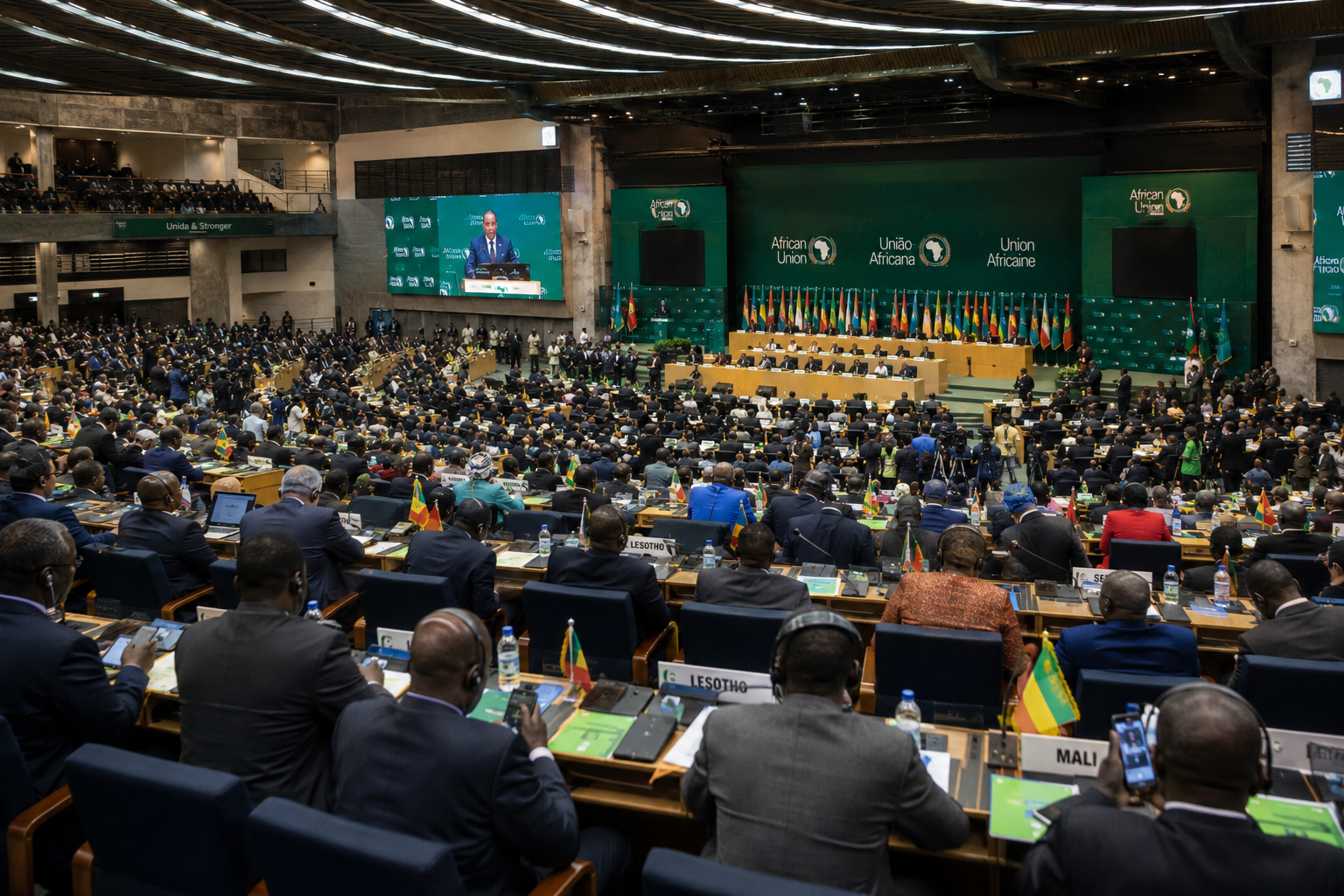
That was Kenyan President William Ruto, speaking at the Africa Forward Summit on 12 May. It was a direct rejection, stated publicly, of the economic structure that has governed the Africa-Europe relationship for most of the period since independence. The fact that it was said at a summit co-hosted with France, in the presence of more than thirty African heads of state, and subsequently embedded in a signed declaration, is worth pausing on.
Not because declarations transform systems. They rarely do. But because of where this one lands, five weeks before the G7 summit in Évian, where the architecture governing Africa's critical minerals will take more concrete institutional form.
What the €23 billion actually is
The headline from Nairobi was the money. Emmanuel Macron announced €23 billion in combined investment commitments, €14 billion from French public and private companies, and €9 billion from African investors and entrepreneurs, directed at energy transition, agriculture, and artificial intelligence. The investments, Macron said, woCost of capital Africauld create 250,000 jobs across France and Africa.
I am not dismissing the figure, but I think it deserves additional context.
France's official development assistance budget has faced five consecutive cuts in less than two years, with parliament approving €3.5 billion in payment appropriations for 2026, down 18 percent from 2025 levels. Total French development aid is projected to fall to 0.38 percent of gross national income in 2026, well below the 0.7 percent target France set in 2021 and has since effectively abandoned. The investment commitments announced in Nairobi are largely private sector pledges rather than public funding, which shifts both the credit and the execution risk away from the French state.
France came to Nairobi in a moment of declining public financial capacity and significant geopolitical retreat. Its military forces have been expelled from Mali, Burkina Faso, and Niger in quick succession. A month before the summit, approximately 800 French soldiers arrived in Kenya on a navy ship, a visible repositioning of French military engagement toward East Africa as its West African presence collapses.
The decision to hold the summit in Nairobi, France's first co-hosted with an English-speaking African country, was a statement about which Africa France needs to engage now that its traditional Francophone architecture no longer holds. Macron's framing of a "partnership of equals" was the diplomatic language of a country that understands its Africa strategy requires rebuilding from a weaker position than it held a decade ago.
That context doesn't invalidate what happened in Nairobi. But it shapes how the commitments should be read and what accountability for them should look like.
The sentences that matter were not in the headlines
What I kept returning to in the Declaration was the language around what Africa is insisting on in exchange.
The declaration committed governments to "respect national sovereignty over natural resources, including critical minerals; promote local beneficiation, value addition and sustainable processing of Africa's critical minerals." Leaders backed "technology transfer of green technologies on fair and mutually beneficial terms." The Declaration commits to moving away "from extractive economic models toward value addition, manufacturing and sustainable production systems," and makes an explicit call for African countries to be fully included in "global decision-making, governance, standard-setting and rule-making."
I want to be precise about why this language matters and where it doesn't go far enough.
It matters because it is on record. African governments have publicly stated conditions for local processing, technology transfer on fair terms, sovereignty over resources, in a signed document that feeds directly into G7 preparation. That record will be referenced when mineral contracts are negotiated. It creates political accountability that is harder to abandon than positions taken only in private negotiation rooms.
Across energy, industrial policy, digital infrastructure, agriculture, climate negotiations, debt restructuring, and critical minerals, what is emerging is a continental posture that may increasingly be described as Africa's doctrine of development sovereignty, the belief that Africa must regain greater sovereign control over the developmental pathways that shape its economic future. Nairobi gave that doctrine its clearest public articulation yet in the context of a partnership with Europe.
But I have spent enough time watching declarations encounter implementation to know where the gaps are. Civil society voices were left out of key negotiations at the summit itself. Whether the Declaration will translate into concrete mineral policies rather than remaining a framework document will depend on who is around the table when the G7 summit in Évian in June begins converting principles into architecture. And African governments, for all the public confidence in the Nairobi language, aren't currently at that table in the way that would make those principles binding on the institutions designing the rules.
The finance argument is the most important one and received the least coverage
The second day of the summit was when Africa's most structurally significant argument was made, and it received considerably less coverage than the €23 billion announcement.
African leaders pushed for easier access to credit and for reforms to reduce borrowing costs. Macron said he supported creating a first-loss guarantee mechanism to de-risk investments on the continent and would lobby for the idea at the G7 summit. The Declaration recognised that Africa faces "a specific constraint on allocation and pricing of risk" which continues to raise borrowing costs and limit long-term development finance. It called for stronger debt transparency, improved restructuring mechanisms, and innovative financing tools linked to climate and development goals.
Kenyan President Ruto framed this as a problem of "risk architecture." I think that framing is right, and it connects everything else on the summit agenda.
Africa doesn't lack solar resources, critical minerals, or investable projects. What it consistently lacks is capital at a price that makes those projects economically coherent, because the cost-of-capital premium assigned to African economies by international ratings and lending institutions is structurally elevated beyond what project fundamentals justify.
I have written about this before. But hearing it said publicly by Ruto in Nairobi, in the same week that France is positioning itself as Africa's preferred partner, matters differently. Because it means Africa is now naming the financing asymmetry as a precondition for partnership rather than an afterthought. The first-loss guarantee mechanism Macron offered to champion at Évian is one operational response to this problem. Whether it gets embedded in G7 architecture, and on what terms, is the Évian test.
What Nairobi means for the next conversation
The G7 summit in Évian in June is now the right frame for assessing what happened in Nairobi. The Nairobi Declaration is expected to feed into preparations for the G7 Summit in Évian, France. That linkage gives the Nairobi language a forward-facing function: it is not just a record of what African governments agreed with France, it is a statement of what Africa expects to carry into the broader institutional conversation.
This is where I think the shift in political confidence becomes consequential rather than merely symbolic.
African governments have attended enough partnership summits to know that large investment figures at the announcement stage frequently diminish in the implementation stage. The NRGI analysis published this week, drawing on Nairobi, stated it directly: the Declaration's value depends on who shapes the next round of commitments. The Évian summit will be defining not because of the investment pledges France has made, but because of whether the minerals governance architecture being built there treats Africa as a rule-shaper or continues to treat it as a resource provider to rules designed elsewhere.
Ruto's attendance at Évian, confirmed at Macron's invitation on the summit's second day, gives Africa at least one direct voice in that room. The Nairobi Declaration gives that voice a public position to defend.
Whether those conditions become enforceable is a different question. But I notice something has changed.
For years, Africa's position at partnership summits was defined primarily by what it was requesting. In Nairobi this week, it was defined at least partly by what it was insisting on.
France arrived with capital commitments. Africa arrived with conditions.
That isn't the same as structural transformation. But it is a different starting point for the next negotiation than Africa has typically brought to these conversations. And the next negotiation is in Évian in six weeks.