Africa’s Green Skills Gap: Is It Real Or Misdiagnosed?

Africa is often told it has a “green skills gap.”
The phrase appears in reports, conference panels, and ministerial speeches. It suggests a shortage of engineers, technicians, and renewable energy installers, or a pipeline problem. The prescription that follows is predictable: more training programmes, more vocational courses, more solar technician certifications.
That distinction matters. Because if the problem is misdiagnosed, policy will target the wrong constraint, and billions in transition finance could be misallocated.
The real question is not whether Africa has enough solar installers, but whether Africa has enough professionals who understand how power systems, finance, regulation and industrial policy fit together.
Problem framing: The green skills narrative and its assumptions
The “green skills gap” framing assumes that Africa’s transition is constrained by insufficient technical manpower. It implies that if we train more engineers and technicians, renewable deployment will accelerate and energy systems will modernise.
There is truth in this, as shown by the International Energy Agency’s recent electricity outlooks, which highlight that global grid expansion and renewable integration require significant workforce expansion.
Across sub-Saharan Africa, grid engineers, dispatch planners and high-voltage technicians remain in short supply relative to projected infrastructure needs. But Africa’s energy transition is not being delayed primarily by a lack of photovoltaic installers, but by institutional bottlenecks:
Utilities are often financially insolvent.
Tariff regimes remain politically constrained.
Currency risk deters private capital.
Transmission planning lags generation ambition.
Regulatory frameworks remain fragmented.
These are system failures, not technician failures.
When renewable projects stall, it is frequently because of grid readiness, payment risk, procurement delays or policy uncertainty, and merely not because a country lacks someone who can mount panels on a rooftop.
This suggests the core deficit may not be engineering numbers; it may be system literacy, the capacity to manage complexity across finance, governance, infrastructure and markets.
Policy critique: Where current frameworks fall short
Across the continent, skills policy for the energy transition tends to cluster around vocational expansion and renewable technology training.
This is understandable, visible, and produces measurable outputs: number of trainees certified, number of technicians graduated. But it leaves a gap.
Few programmes are focused on building:
Utility financial restructuring expertise
Grid market design capability
Sovereign guarantee structuring competence
Carbon accounting systems management
Transmission planning analytics
Integrated resource planning skills
The African Development Bank’s African Economic Outlook 2025 underscores that infrastructure financing constraints remain central to the continent’s energy challenge.
Yet skills policy rarely addresses financial engineering and risk allocation capacity inside ministries and utilities, so this creates a paradox.
We may successfully train thousands of renewable technicians while still lacking the institutional capacity to absorb private capital, negotiate complex power purchase agreements, or design dispatch systems for high-renewable penetration.
In effect, we risk building supply-side labour while neglecting governance-side competence.
Trade-offs: Engineers versus integrators
There is an economic trade-off at the heart of this debate. Training technical specialists is politically attractive. It generates visible employment narratives and aligns with youth development agendas.
Training system integrator professionals who understand power markets, carbon finance, fiscal risk and grid architecture, on the other hand, is less visible and more complex.
Yet the latter may deliver higher systemic returns.
Consider this: a single poorly structured power purchase agreement can undermine utility solvency for years, a poorly designed tariff reform can trigger political backlash, and a mispriced sovereign guarantee can distort fiscal exposure. These are institutional design failures.
The IMF’s climate-related fiscal risk assessments increasingly highlight transition risk management as a macroeconomic competence issue. This reinforces a truth that Africa’s energy transition is as much about public financial management and regulatory architecture as it is about generation technology.
The trade-off is not between training engineers and not training engineers. It is between training narrowly and training systemically.
The institutional dimension: Utilities as the weak link
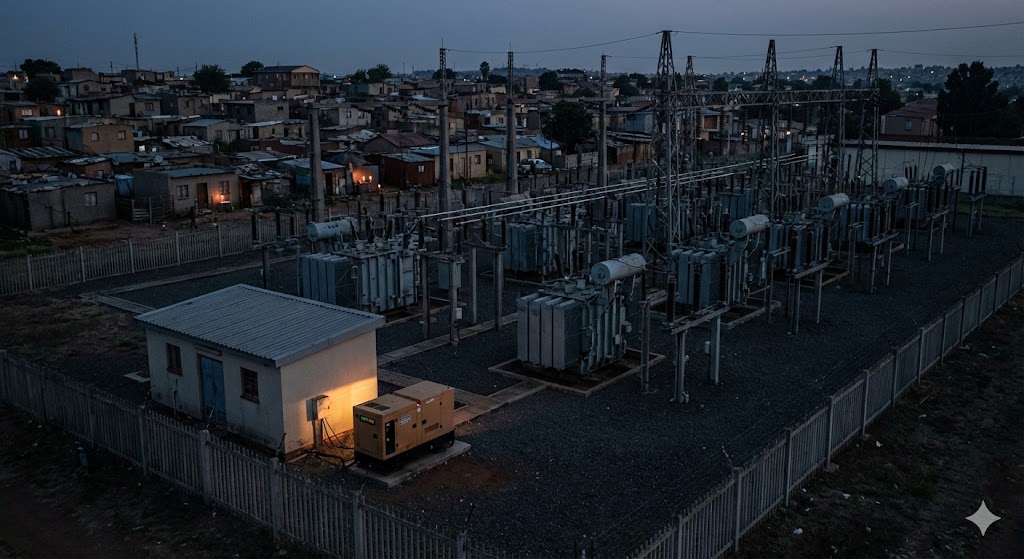
To understand why system literacy matters, we must examine the quiet centre of Africa’s power sector, the utility.
Utilities are not glamorous institutions. But they determine whether every megawatt generated translates into economic productivity.
Technical and commercial losses remain high in several markets, eroding revenue and undermining financial stability.
Political pressure often suppresses tariff adjustments, creating chronic under-recovery of costs.
Foreign exchange exposure complicates procurement of fuel and equipment, particularly where generation inputs are dollar-denominated.
Creditworthiness remains weak, raising the cost of capital and deterring private investment.
When utilities are financially fragile, renewable integration becomes difficult regardless of installed capacity. Developers hesitate because payment risk rises, lenders demand guarantees, and grid expansion slows because transmission investment depends on balance-sheet strength.
You can install gigawatts of solar capacity. But if the utility cannot settle invoices on time, cannot invest in transmission upgrades, and cannot implement cost-reflective tariffs, the system stalls. This is where the green skills narrative begins to blur reality.
Skills programmes tend to focus on technology deployment, installation, maintenance, and technical certification. Those are important. But they rarely prioritise utility reform competence: financial restructuring expertise, loss reduction modelling, tariff design capability, regulatory enforcement depth, and integrated resource planning.
The result is a structural mismatch, where infrastructure ambition accelerates, but institutional readiness lags. Yet the conversation continues to describe the problem as a shortage of engineers, when in truth it is often a shortage of institutional competence.
The utility is not just a technical operator. It is a financial intermediary, a regulatory interface, and a system integrator. Weakness at that node reverberates across the entire transition.
Until we address that institutional core, we will continue mistaking symptoms for causes.
Implications for policymakers: Redefining the skills agenda
If Africa’s energy transition challenge is misdiagnosed as primarily an engineering shortage, policymakers will understandably respond by expanding vocational programmes and renewable technology training.
But that approach risks overproducing technical labour while underinvesting in governance architecture. A recalibrated skills agenda must widen the lens.
First, power market design expertise must be developed domestically. Many African electricity systems are evolving toward more complex market structures, incorporating independent power producers, ancillary service pricing, and grid balancing mechanisms. Without in-country competence in dispatch rules, tariff structuring and market-clearing systems, external consultants will continue to shape foundational decisions.
Second, public finance and energy integration must be strengthened. Transition projects often rely on sovereign guarantees, blended finance instruments and concessional capital. Policymakers and regulators need professionals who understand debt exposure, contingent liabilities and risk allocation frameworks. Without this competence, well-intentioned financing packages can distort fiscal balance sheets.
Third, carbon accounting systems management is no longer optional. As export markets integrate carbon standards and voluntary carbon markets expand, governments require registry systems, emissions tracking capability and compliance architecture. This is economic infrastructure.
Fourth, transmission planning and system modelling capacity must expand. Renewable integration requires load forecasting, grid stability modelling and infrastructure sequencing decisions. Without analytical depth, overinvestment in generation can occur alongside underinvestment in transmission.
Fifth, regulatory independence and enforcement capability must be strengthened. Tariff reform, procurement oversight and contract enforcement require technical depth inside regulatory bodies. Weak regulators cannot anchor investor confidence.
None of this diminishes the importance of vocational training; instead, it broadens the definition of green skills from technology-specific proficiency to system-level competence. That is the pivot policymakers must make.
The economic stakes: Competitiveness and credibility
The implications of misdiagnosing the green skills gap extend far beyond electricity supply.
Industrial competitiveness increasingly depends on reliable, affordable and low-carbon energy systems. And manufacturers evaluating investment destinations consider grid stability, tariff predictability and emissions transparency alongside labour costs.
If African economies fail to build system-level competence, they risk paying higher risk premiums on energy projects. Capital becomes more expensive when institutional risk is elevated, grid instability discourages energy-intensive industries from locating locally, and mineral beneficiation ambitions falter when transmission infrastructure cannot support processing facilities.
Consider the growing importance of carbon disclosure in global trade. Export markets are integrating carbon metrics into regulatory frameworks and border adjustment mechanisms. Compliance requires coordinated data systems, verification protocols and institutional credibility.
Without system literacy, the capacity to navigate energy markets, public finance and carbon governance simultaneously, even abundant renewable resources will not automatically translate into economic advantage.
This isn't speculative. Global capital flows increasingly reward jurisdictions that demonstrate regulatory clarity, financial discipline and emissions transparency.
Competitiveness in the energy transition era is therefore not defined solely by natural resource endowment; it also requires institutional maturity. And institutional maturity depends on the right skills in the right places.
Conclusion: The gap beneath the gap
Africa does face a green skills gap. But the deeper deficit may lie beneath it.
It isn't only a shortage of engineers. There is a shortage of integrators.
A shortage of professionals who can connect megawatts to markets, tariffs to fiscal policy, carbon accounting to export competitiveness, and grid planning to industrial strategy.
If policymakers continue to treat the green skills gap as a technician deficit alone, they risk solving the wrong problem.
If they redefine it as a system literacy challenge, they can align training with structural bottlenecks.
Africa’s energy transition will not fail because we lack people who can install panels. But it will falter if we lack people who understand how the entire system works.