Africa’s Pension Funds Can Invest in Energy. Few Assets Qualify
Nigeria's pension industry held N29.52 trillion at the end of March 2026, and 58.07 percent of it, about N17.1 trillion, sat in federal government securities, according to PenCom data cited by The Rio Times. On 24 September, the regulator's Director-General, Omolola Oloworaran, said the industry had committed N241 billion to a new infrastructure consortium, with almost N300 billion expected. That is about 0.8 percent of the total. None of it has been invested. A memorandum of understanding with FSD Africa and a fund manager is still to come; projects have not been chosen, and the first tranche is not due before the second quarter of 2027.
The question is not whether African savings exist. It is which stages of an energy project those savings can prudently hold, and whether enough assets are being built to fit them. Rules on infrastructure investment have loosened across the continent, but allocations haven't followed. The evidence points to a shortage of operating, local-currency, creditworthy energy assets of workable size, not a ban on buying them.
The savings exist, and most of them lend to governments
African pension funds and insurers hold about $775 billion, of which $455 billion is in pensions and $320 billion in insurance, according to the Africa Finance Corporation's State of Africa's Infrastructure Report 2025. In some countries, the same report says 70 to 80 percent of institutional portfolios sit in government debt. Kenyan pension schemes held 47.5 percent of their assets in government securities in 2023, the OECD reports.
Nigeria's infrastructure funds held N162.49 billion at the end of June 2024, or 0.79 percent of assets, PenCom's second-quarter report shows. By March 2026, the figure was N224.23 billion, about 0.76 percent. Total assets grew by more than 40 percent in between. The new N241 billion pledge exceeds everything held in infrastructure funds today, which shows how low the starting point is.
A project has several lives, and each suits a different buyer
Development needs risk equity and grants. Most projects stall here, and ETA's financial close explainer traces why: McKinsey finds that 80 percent of the attrition in African infrastructure pipelines happens at feasibility. Construction suits development finance institutions, sponsors and banks, usually with guarantees, because cash flows are unproven. Early operation carries performance risk while the plant proves its output. Stabilised operation, with a track record and contracted revenue, is when refinancing becomes possible.
Banks fund against short deposits, which fits construction bridges and working capital only when guaranteed. Pension funds and life insurers owe money decades from now, so their liabilities match stabilised, cash-generating assets, and not a half-built plant.
The gap between those lives is the opportunity. Early lenders want their capital back once a plant has run for a few years, and long-term savers want an asset that pays steadily. A refinancing connects them, if the plant was structured for one.
The rules already permit infrastructure, with conditions
PenCom's Revised Regulation on Investment of Pension Fund Assets, issued in September 2025, opens two routes. Infrastructure bonds must finance core projects worth at least N10 billion, carry a rating of at least BBB, and be guaranteed by the federal government, an approved multilateral lender or an AA-rated agency backed by a sovereign or development finance institution. The bond must mature before any concession expires.
Infrastructure funds must be at least N20 billion, invest at least half in Nigeria, publish audited accounts and be run by Securities and Exchange Commission-registered managers whose chief executive and chief investment officer each have ten years' experience. Limits fall with age: infrastructure funds may reach 25 percent of Fund I and 20 percent of Fund II, but nothing in Fund III or Fund IV, which hold older contributors and retirees. These are fiduciary safeguards for workers' deferred wages, not obstacles to remove.
Elsewhere, the ceilings are higher still
Kenya's Retirement Benefits Authority lets schemes place up to 10 percent of assets in infrastructure debt. South Africa's Regulation 28, amended in 2022 and in force from January 2023, allows up to 45 percent in infrastructure, caps exposure to any single entity at 25 percent and exempts debt issued or guaranteed by the government.
Few funds approach these limits. Ghana allows up to 25 percent in private funds, yet actual allocations to alternatives stand at 0.58 percent, African Arguments reports.
Permission has not produced purchases
If rules were the barrier, raising ceilings would help, but African Arguments argues the opposite. Headroom goes unused, it says, because trustees prefer Treasury bills, which pay well and have never cost anyone a job, and because most funds lack teams able to price infrastructure risk. PenCom itself points to a shortage of qualifying, investable funds, the same article notes.
Kenya's consortium, KEPFIC, was built around those obstacles. Its pitch deck lists limited expertise, large ticket sizes, regulatory uncertainty and low awareness. By 2022 it said it had mobilised $113.1 million across three deals: a student housing trust, a mortgage-refinance bond and a road annuity bond. None was power. The road issue drew $50 million against a $20 million need. Demand appeared when a product fitted.
The strongest objection is capture, and Ghana supports it
The counterargument is that structuring more assets will not help while governments can reach into captive savings. Ghana supplies evidence. When it launched its domestic debt exchange in December 2022, pension funds were inside the perimeter. They were exempted on 22 December only after unions threatened an indefinite strike, Bloomberg reported. In 2023, the government offered the funds a separate restructuring of about GH₵30 billion, replacing bonds with coupons averaging 18.5 percent with longer bonds yielding an average of 21 percent, Reuters reported.
Nothing in the evidence reviewed suggests Nigerian trustees face a comparable threat today. Even so, trustees across the region have watched that episode. The two explanations are complements, not rivals. Without protection from capture, trustees will not buy even well-structured assets. Without fitting assets, protection has little to hold.
A guaranteed hydropower bond that pension funds bought
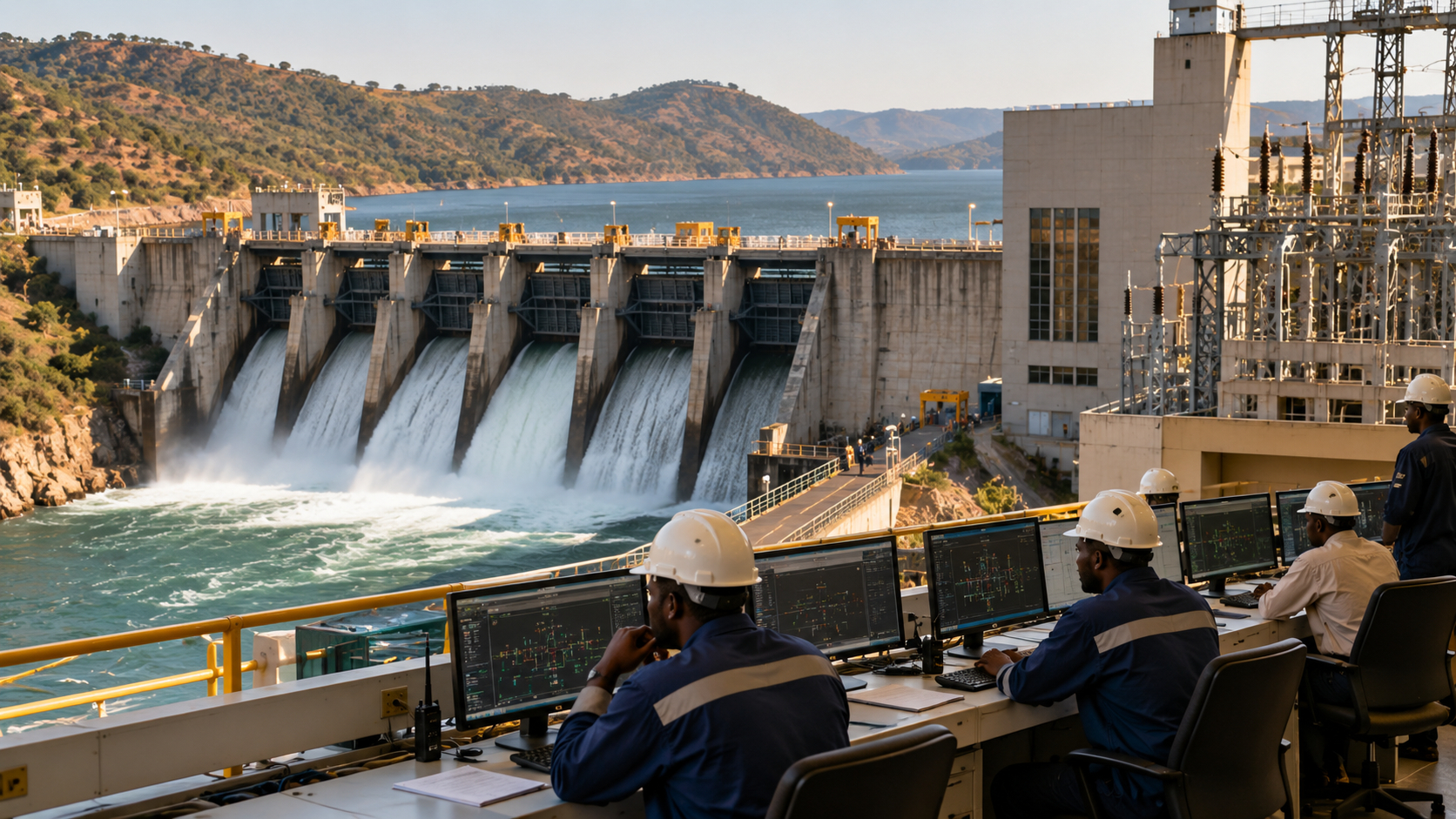
In February 2019, North South Power, which runs the Shiroro hydropower plant under a 30-year concession, issued a N8.5 billion, 15-year bond with a 15.60 percent coupon. The local guarantor InfraCredit wrapped it, and the guaranteed bond was rated AAA. InfraCredit says it priced 70 basis points over the 15-year sovereign benchmark and was 160 percent subscribed. Proceeds funded a unit overhaul, 30 MW of added capacity and the refinancing of short-term bank debt.
The guarantee did not have to stay. In 2020 the company issued a further N6.2 billion bond without one, attracting seven pension funds, according to a World Economic Forum paper cited by The Guardian. A track record replaced credit enhancement.
South Africa shows the refinancing route
The 44 MWp Touwsrivier solar plant was first financed in 2013 through a R1 billion listed bond. Pele Green Energy's managing director said the listing opened a channel to funders whose mandates restrict them to listed investments. After seven and a half years of operation, the bond was delisted in 2022 and replaced by limited-recourse project finance, Investec and Engineering News reported. Investec was the initial lead arranger, RMB the current one, and Stanlib, Mergence and Aluwani were among the lenders.
Early capital left. A long-term lender group stepped in. The plant was already earning revenue.
Guarantee capacity is the scarce input
Nigeria's rules require credit enhancement on infrastructure bonds, so guarantee capacity becomes the constraint. InfraCredit had guaranteed 24 transactions mobilising more than N200 billion by the end of 2024, the OECD reports, with pension funds taking 56.16 percent. That is under 1 percent of today's pension assets.
The benchmark is demanding. Nigeria's third sovereign green bond, listed in May 2026, carries a coupon of 18.95 percent, as ETA reported in its climate finance analysis. An energy asset must offer a sensible return against that, with comparable risk.
Currency and size are design choices
Local savers hold liabilities in local currency, so naira or rand revenue can service naira or rand debt without the dollar mismatch ETA identifies in its clean energy investment analysis. That does not make money cheap, as the sovereign coupon shows.
Size is the other choice. A pension fund cannot diligence hundreds of small solar systems. Bundling mini-grids into portfolios with common contracts and reporting can clear floors such as N10 billion. Aggregation solves ticket size. It does not remove project risk, which must be worked through before assets reach institutional balance sheets.
What would make assets fit
Five changes would raise the supply. Aggregation vehicles for small projects. Local-currency revenue or hedging, which Energy for Growth Hub analysis finds can cut capital costs by up to 31 percent. Credit enhancement that falls away after construction and early operation, as at Shiroro. Refinancing windows written into project documents at commercial operation, as at Touwsrivier, so development lenders can recycle capital. Statutory protection of pension assets from sovereign restructurings, the fifth and the one African Arguments presses hardest.
The new consortium will test some of this. It has no manager and no projects yet. The test for the next two years is whether African energy assets are being built to be held by African savers. A pension fund should not take development risk. It can buy the same plant three years after commissioning, if someone has built it to be bought.