Africa's Energy Problem Is Institutions. Bloomberg Just Bet $285 Million.
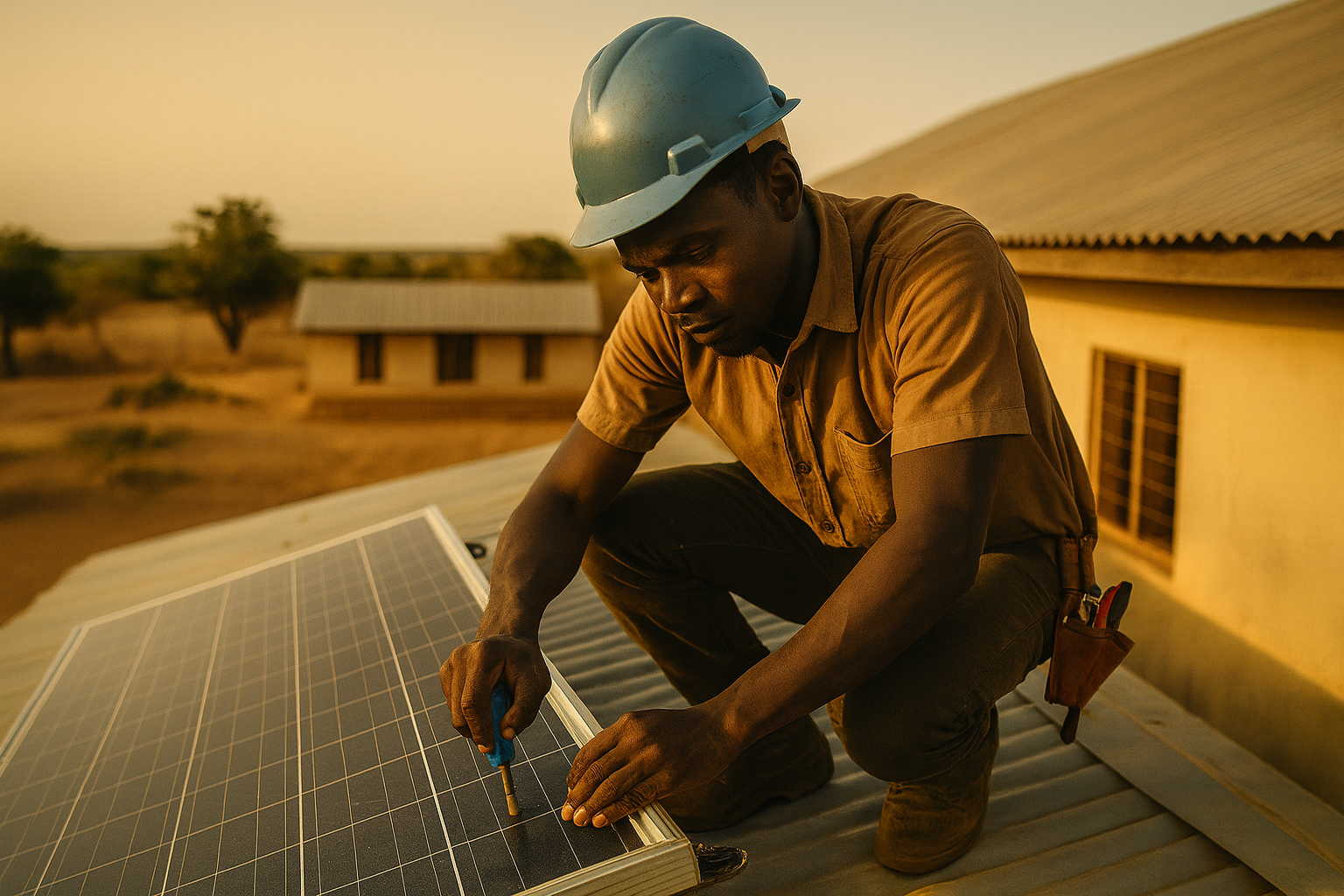
I grew up in Cross River State, in a part of Nigeria where electricity arrived intermittently and left without explanation. The lesson I absorbed early was about the gap between announcement and delivery. In Nigeria, that gap has its own sound: the sound of a generator starting.
So, when a large commitment is announced, a new fund, initiative, or new pledge, I don't immediately ask how much. I ask who, specifically, will do the work. Whether the money will reach the person writing the regulation, designing the market, running the grid, or negotiating the contract. Whether it will reach them directly, or whether it will move through layers of intermediation and arrive, if it arrives at all, as a report.
On 26 June 2026, Bloomberg Philanthropies announced a $285 million commitment to strengthen market design, regulatory capacity, technical expertise, and industry institutions in emerging and developing economies. On 12 July, the Associated Press carried the story on its international wire, datelined Nairobi. Its headline: "Focus turns to building stronger institutions in Africa to speed shift to renewable energy."
What the evidence actually says
Africa doesn't have a solar problem. Since IRENA confirmed in June 2026 that Africa achieved the world's largest regional solar cost reduction of any region between 2015 and 2025, 76 percent lower installation costs, and 77 percent lower electricity cost per unit, nobody argues that the hardware is the constraint. The constraint is what happens after the hardware arrives.
Only two of Africa's 54 countries, Botswana and Mauritius, currently hold investment-grade credit ratings. Every other country on the continent is rated speculative-grade or below. A rule called the sovereign ceiling ties the creditworthiness of energy projects to the sovereign rating of the country where they operate. A commercially sound solar project in Mozambique, Zambia or Côte d'Ivoire cannot access affordable capital, not because the project is risky, but because the rule treats the country's rating as the project's rating. The Stockholm Environment Institute's Maria Nkhonjera described this to the AP in June 2026 as "an outdated credit rule that penalises commercially viable clean energy projects for sovereign risks." She is correct. Correcting it requires institutional change. Cheaper panels do not change it.
IRENA's 2025 cost report gives this a number I find more important than almost any other data point in the current debate: country-level macroeconomic conditions, sovereign risk, interest rates, and inflation explain 56 percent of the variation in financing costs across renewable energy markets globally, and technology characteristics explain 24 percent. The solar panel costs the same to produce in Nairobi as in Oslo, but the loan to build the solar farm doesn't. That 56 percent gap is entirely institutional, and Bloomberg Philanthropies has pointed $285 million at.
I have sat in energy ministry offices where this gap is physically present in the room. A government official is designing the rules for a competitive renewable energy procurement round, the first one the ministry has ever run. The developer sitting across the table has done this in thirty countries. Every term in the draft power purchase agreement that the official accepts without fully understanding is a cost the government will carry for 25 years. The asymmetry in that room isn't a technology gap, but a human infrastructure gap. No solar panel corrects it.
The IEA's Renewables 2025 analysis confirms permitting as a major bottleneck in African renewable energy deployment. The AP wire found African projects delayed by "weak market design, limited grid planning, slow permitting processes and fragmented regulatory systems." This matches what I documented in Nigeria's grid collapse pattern, a system that collapsed twelve times in 2024 not because it lacks hardware, but because the operational human layer required to run the hardware reliably was never built at the same pace. It matches what ETA found in Africa's green skills gap, that the acute shortage isn't in installation technicians. It is in the people who connect megawatts to markets, translate tariff decisions into fiscal outcomes, and understand enough of the whole system to make the pieces work together.
What Bloomberg is betting on, and who said it
The Bloomberg commitment targets countries responsible for nearly 70 percent of global power-sector emissions. Its four investment areas are strengthening clean energy industry associations, supporting data and economic analysis, providing technical assistance to governments and regulators, and helping unlock private capital.
Saliem Fakir, Executive Director of the African Climate Foundation, said to the AP: "What has been missing is not the potential, but the institutional infrastructure and capabilities to unlock it. Philanthropy that targets those gaps directly is the kind of intervention that can shift the trajectory of a continent's energy system." Wangari Muchiri, Founder and CEO of RE.Think Energy, said the next chapter of Africa's renewable energy story "will not be only by the projects it builds, but the institutions that make these projects possible." Barbara Buchner of the Climate Policy Initiative named the same thing from the finance side: markets with great potential are precisely those where the foundational prerequisites, policy frameworks, institutional capacity, industry coordination, and reliable data, "are still being established."
I grew up in a country where the diagnosis of what was wrong with the electricity system was always correct, and the response was always undersized. So I notice when the African Climate Foundation, a Nairobi-based energy consultancy, and a global climate finance institution independently arrive at the same diagnosis in the same week as a major philanthropist. That convergence is the actual signal. It means the institutional argument has crossed from the places where it has been made for years, African think tanks, practitioner networks, and the offices of the energy ministers who know what is actually failing, into the discourse where capital decisions get made.
That crossing matters, but it doesn't however, answer an important question.
The question $285 million has not yet answered
Institutional capacity building has a pattern I have observed across more than a decade of working in African development. It tends to fund analysis rather than analysts. Reports, indices, and technical assistance contracts routed through international consultancies. These products aren't worthless. Some have been genuinely consequential. But they aren't the same as funding the person.
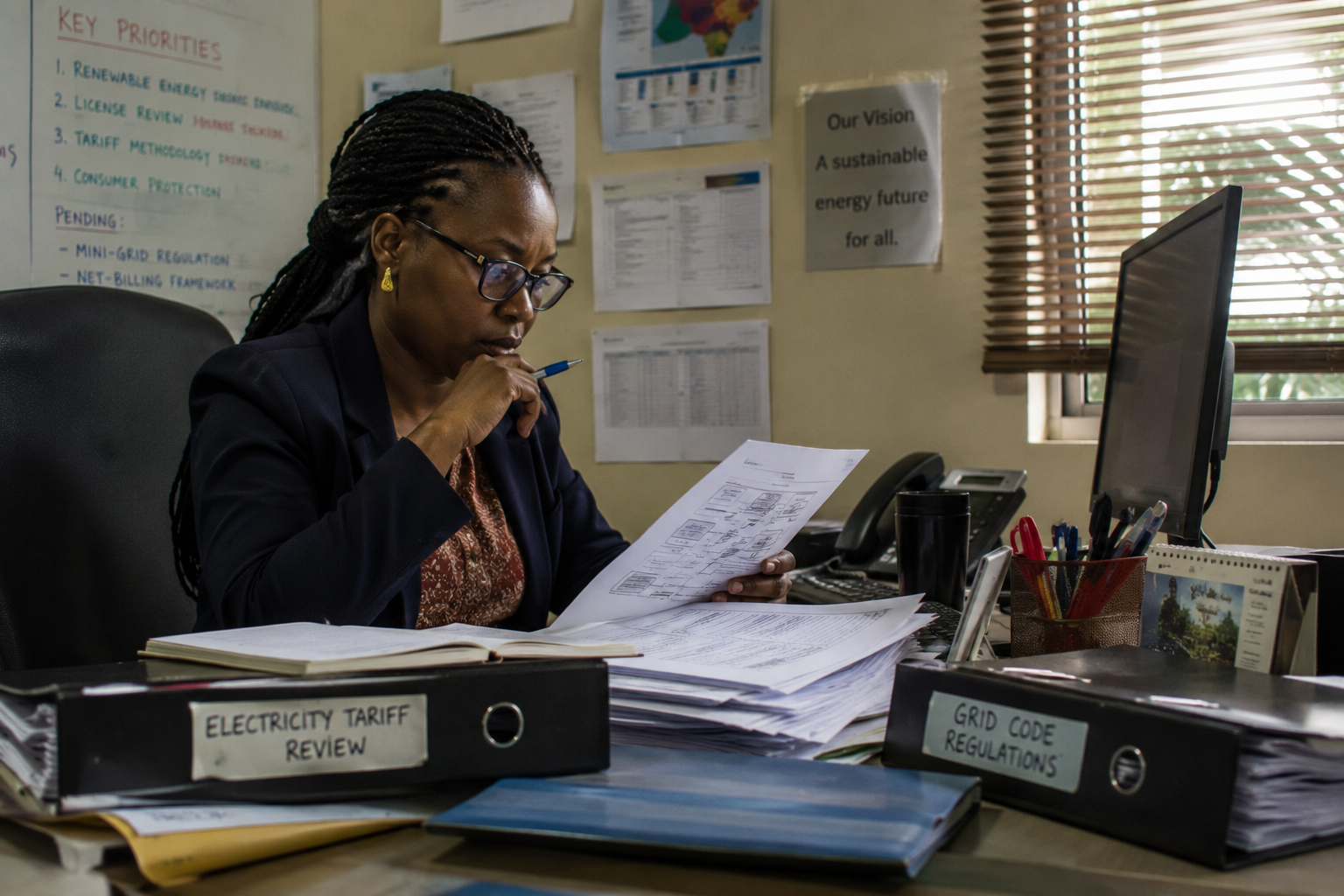
The person I am thinking about is specific, for example, she is the economist at the Ugandan Electricity Regulatory Authority writing the rules for the country's first competitive generation auction, the grid planner at the West African Power Pool modelling the integration of variable renewables into a system that was not designed for them, or the procurement officer in a southern African energy ministry reviewing a power purchase agreement on behalf of a government that will live with its terms for a generation. These are the people through whom institutions work. And "institutional strengthening" money has a way of building around them without reaching them, without funding their salary, their training, retention, or the mentorship that keeps them in the job long enough to become indispensable.
Bloomberg Philanthropies' four investment areas are legitimate and necessary, but whether the $285 million will reach those individuals described earlier directly, rather than through intermediaries who absorb a significant portion of the value in transit, is the question on which the commitment's long-term impact will turn.
I raise this not to diminish the announcement, but because ETA's founding argument, the one I have made in this publication, at TED Global Conference in April, and in the thirty-plus countries I have worked in over the past decade, is not that institutions matter. It is that the person inside the institution who matters. The regulator who stays in post long enough to understand the market she is regulating, the planner who has seen one full project cycle and can now teach what that looks like to the person behind him, or the lawyer who has negotiated enough contracts to know which terms expose the government and which protect it.
Africa's energy transition has been promised many things. Hardware, finance, political will, and technical assistance from people who flew in and flew out. What has not been given, in sufficient quantity or with sufficient deliberateness, is the thing my TED talk in April called the real power plant: the trained, retained, supported African professional who understands the whole system and stays long enough to make it work.
Bloomberg Philanthropies has now put $285 million behind the argument that the system is the constraint. The AP has put that argument on the international wire. A UN special envoy, two African practitioners, and a global finance institution have confirmed it independently in the same week.
The argument is no longer at the margins. The question I am holding is whether the money will follow it all the way to its conclusion, or stop one step short, at the institution, without reaching the person inside it. That is the only version of this investment that I believe will change something that lasts.