Can Africa Industrialise With Unreliable Electricity?
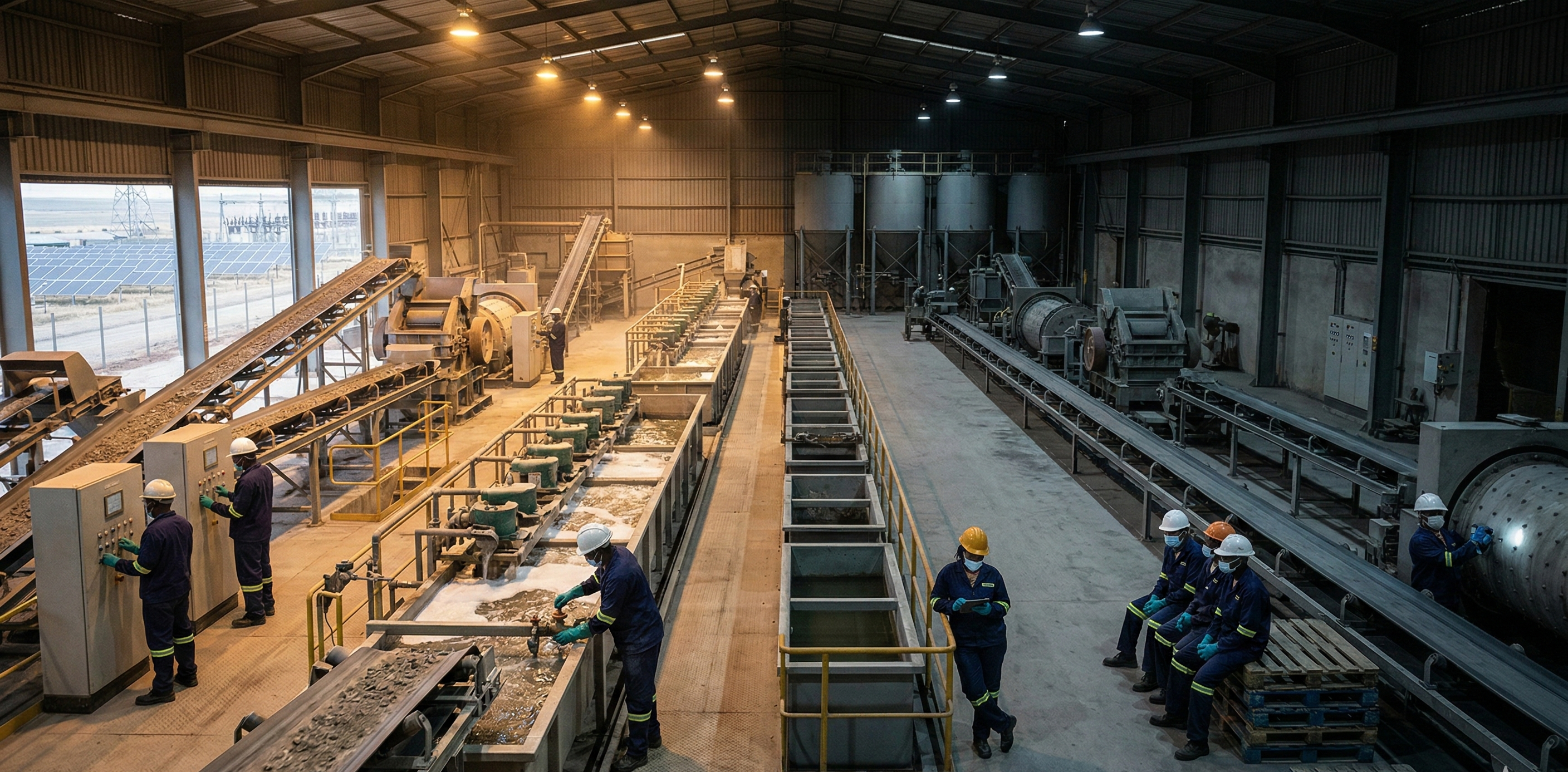
Africa’s industrialisation agenda is accelerating on paper.
From mineral beneficiation strategies to fertiliser expansion plans and green industrial policy frameworks, governments across the continent are signalling a renewed push to move beyond raw commodity exports. Yet there is a constraint that sits beneath every industrial speech and investment roadmap, and that is electricity reliability.
In several African economies, firms report losing productive hours daily due to outages and voltage instability. The World Bank’s latest enterprise survey data indicates that power interruptions remain among the top constraints to doing business in sub-Saharan Africa, with many firms experiencing multiple outages per month and resorting to costly self-generation.
At the same time, the International Energy Agency’s Electricity 2026 outlook emphasises that globally, electricity demand is rising faster than overall energy demand, and in many regions, faster than GDP.
The world economy is reorganising around electricity. The question is whether Africa can industrialise under conditions where many firms operate effectively on the equivalent of eight reliable hours of grid power per day. This is not a rhetorical provocation, but a macroeconomic tension.
Reliability, not capacity, is the binding constraint
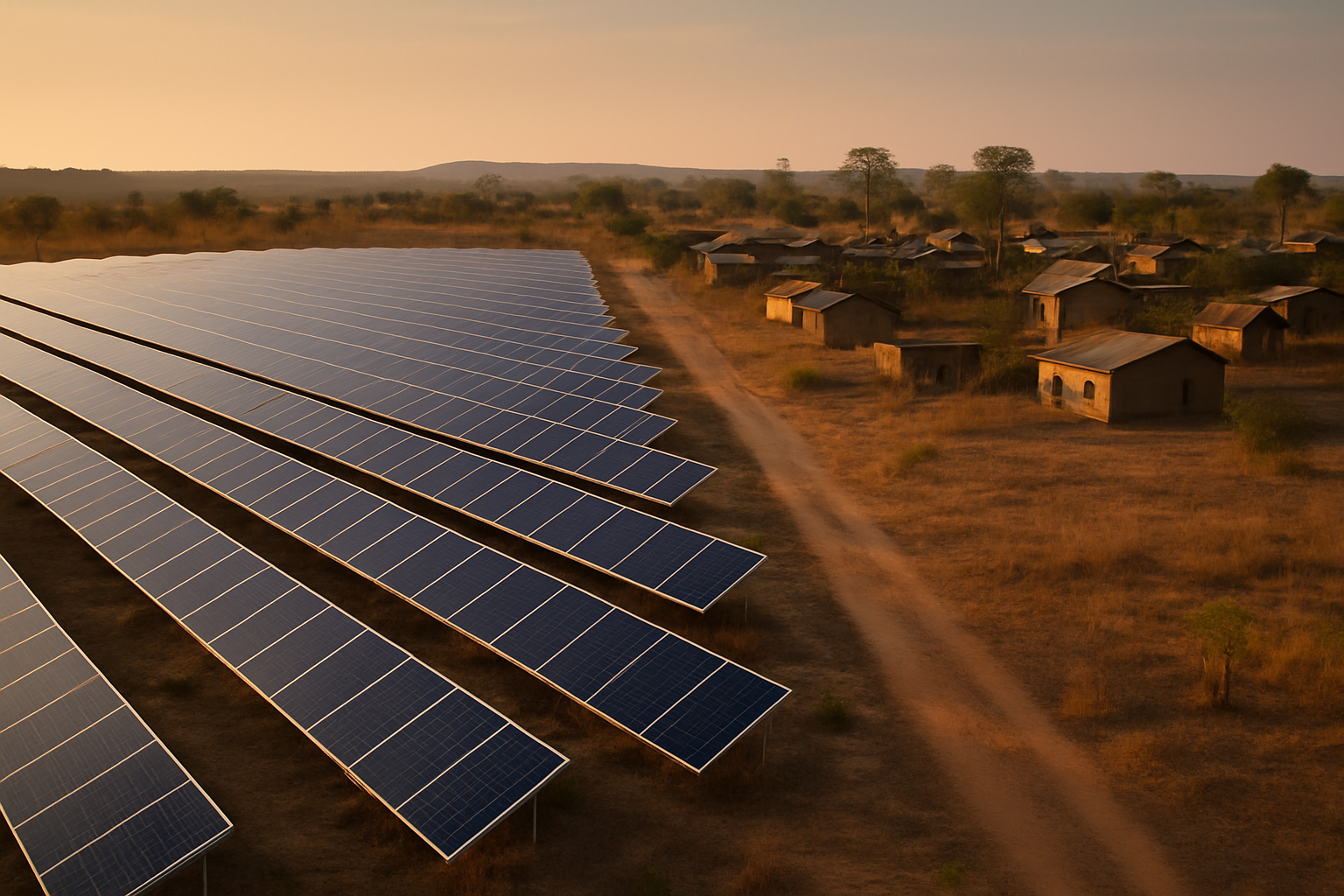
Installed capacity figures often dominate public discourse. Governments announce new megawatts; development banks finance solar parks; transmission projects are launched. But installed capacity doesn't equal reliable supply.
Across sub-Saharan Africa, technical and commercial losses remain elevated in many power systems. Utilities in several countries struggle with liquidity constraints, delayed payments and foreign exchange exposure. Even where generation capacity has increased, distribution bottlenecks and grid instability limit effective delivery.
The African Development Bank’s African Economic Outlook 2025 underscores that energy infrastructure deficits continue to constrain productivity growth and private investment across the continent.
Firms respond rationally. They invest in diesel generators, they overbuild backup systems, and price uncertainty into their operations.
But self-generation is expensive. It increases operating costs, reduces competitiveness and amplifies exposure to fuel price volatility. In macroeconomic terms, it shifts electricity from a productivity enabler to a cost burden.
Industrialisation requires scale, predictability and long production cycles. Voltage fluctuations and daily outages undermine precisely those conditions. The constraint isn't the theoretical generation potential, but the delivery discipline.
Ambition is outpacing system reform
Many African governments now speak about industrial corridors, green hydrogen hubs, mineral processing zones and special economic areas. These ambitions are legitimate and strategically important. But energy policy sequencing is often misaligned with industrial policy ambition.
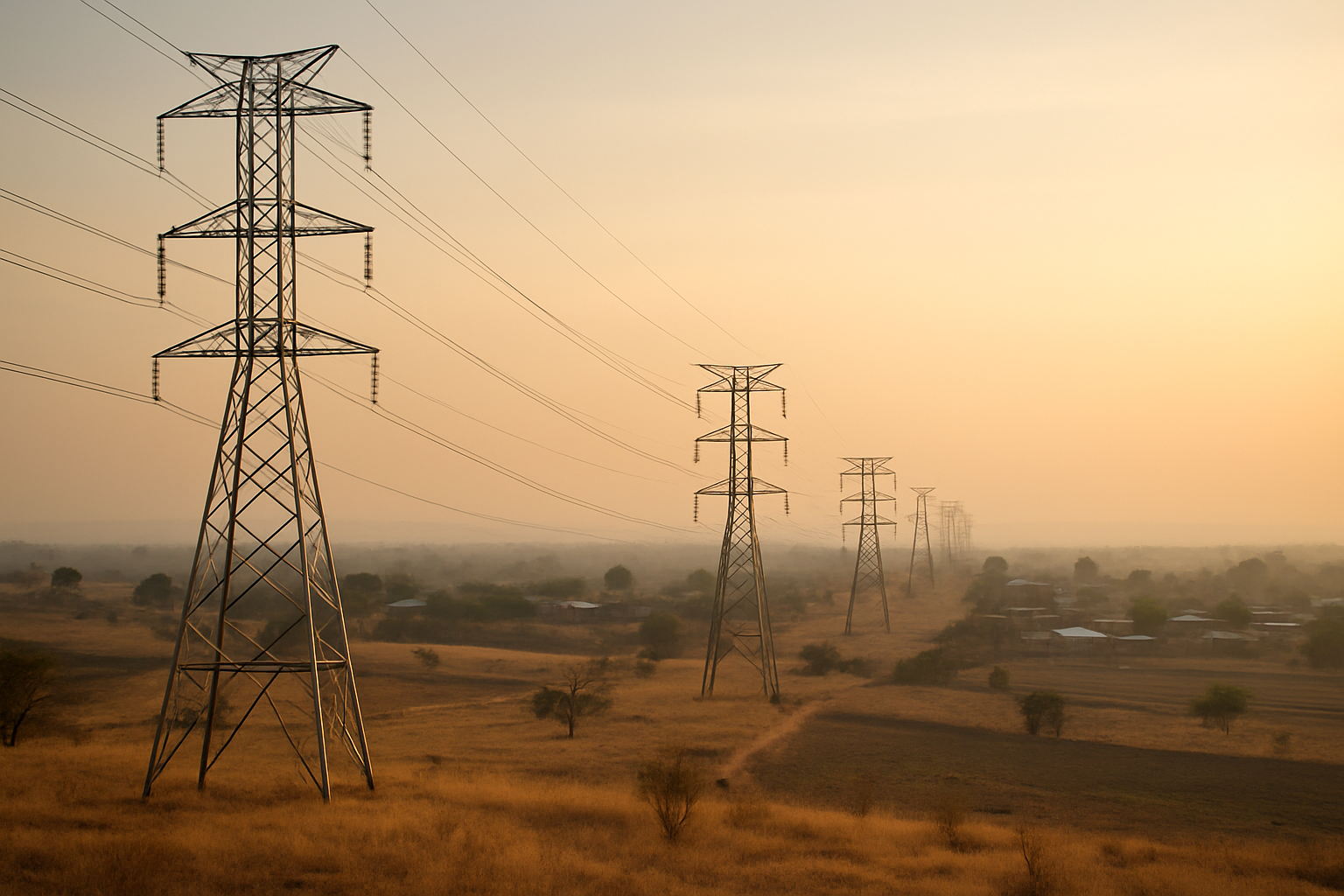
The IEA’s recent analysis highlights that globally, grid investment must increase substantially to keep pace with demand growth. In advanced and emerging economies alike, transmission and distribution upgrades, not generation costs, are now the primary bottleneck to scaling electricity systems.
Where utilities remain financially fragile, transmission expansion slows. Where tariff structures are politically constrained, cost recovery weakens. And where regulatory independence is limited, investor confidence erodes.
Industrial policy often assumes a reliable baseload supply as a given, when in practice, it remains contingent. The result is a structural contradiction: announcing energy-intensive industrialisation while tolerating power systems that cannot consistently support it.
The trade-offs: Diesel, debt and deferred competitiveness
Operating an industry on an unreliable grid supply creates a cascade of trade-offs.
First, diesel dependence rises.
When firms rely on backup generators, fuel imports increase. For net fuel-importing economies, this raises foreign exchange pressure and amplifies exposure to global oil price volatility as seen during recent geopolitical disruptions in the Middle East.
Second, capital efficiency declines.
Manufacturers invest in parallel power systems rather than core productive assets. Capital that could expand output is diverted to risk mitigation.
Third, competitiveness erodes.
Electricity cost per kilowatt-hour, when adjusted for generator fuel, maintenance and downtime losses, often exceeds nominal grid tariffs. This widens the gap between African manufacturers and global competitors operating under stable power regimes.
Fourth, fiscal stress compounds.
Governments may respond to energy price volatility or public dissatisfaction with tariff suppression, further weakening utility balance sheets and constraining reinvestment in grid upgrades.
These trade-offs are arithmetic. Industrialisation without reliable electricity creates hidden subsidies paid by firms, consumers and the macroeconomy.
The competitiveness dimension: Electricity as strategic infrastructure
Globally, electricity is no longer merely an input; it is a competitiveness infrastructure.
Data centres, advanced manufacturing, mineral refining, fertiliser plants and steel mills all depend on stable, high-capacity power systems. As electrification accelerates worldwide, countries with reliable grids gain a disproportionate advantage.
The IEA notes that electricity demand growth is being driven by the electrification of transport, digitalisation and industrial processes. For Africa, this presents a timing challenge.
The continent seeks to capture greater value from critical minerals, including lithium, cobalt, manganese and copper inputs central to global electrification. But mineral processing is electricity-intensive. Without a reliable supply, beneficiation strategies risk remaining aspirational.
Similarly, ambitions to expand green hydrogen production depend fundamentally on sustained renewable generation and grid stability. Intermittent supply undermines electrolysis economics.
In this context, eight reliable hours of power per day is not merely inconvenient, but structurally incompatible with competitive industrial production.
Why this matters for Africa
Africa’s development strategy rests increasingly on three pillars:
Industrial value addition.
Job creation through manufacturing.
Integration into electrified global supply chains.
Each of these pillars presumes reliable electricity.
If reliability does not improve, several risks emerge:
Industrial projects cluster in a few urban nodes, widening regional inequality.
Investors demand sovereign guarantees or risk premiums, raising public contingent liabilities.
Mineral extraction continues without meaningful downstream processing.
Digital infrastructure expansion slows relative to global peers.
Conversely, improving reliability generates multiplier effects.
Stable grids reduce diesel dependence, lower production costs, enhance export competitiveness and attract long-term capital. They also strengthen fiscal space by reducing emergency subsidies and improving utility solvency.
In short, electricity reliability is not a social amenity, but a macroeconomic architecture.
The institutional imperative: Utilities and governance
Improving reliability is not solely a technical exercise; it requires institutional reform.
Utilities must address loss reduction, cost recovery and governance structures. Regulators require technical depth to manage tariff reform and procurement processes. And transmission planning must align with industrial zoning and mineral corridor strategies.
The African Development Bank emphasises that infrastructure investment must be accompanied by institutional strengthening to yield productivity gains. Absent governance reform, new generation capacity may not translate into stable delivery.
This is where industrial and energy policy must converge. Industrial zones shouldn't be approved without verified grid readiness assessments. Mineral processing incentives should be conditional on power system stability metrics. And financing packages should integrate transmission upgrades, not only generation assets.
Industrialisation is a system-level project. Power reliability is its foundation.
Conclusion: Industrialisation is measured in uptime
Can Africa industrialise on eight hours of reliable electricity per day? Technically, some sectors may function under constrained supply, and informal and small-scale enterprises often adapt with ingenuity.
But a competitive, large-scale, export-oriented industry requires more than adaptation. It requires predictability.
The global economy is entering what many analysts describe as an age of electricity. Countries that build robust, reliable power systems will anchor productivity gains, while those that don't will operate under structural disadvantage.
Africa’s renewable potential is vast, its demographic dividend is significant, and its mineral endowment is strategically important. But industrialisation is ultimately measured in uptime delivered, and not just in megawatts installed.
Without sustained grid reliability, industrial ambition remains vulnerable to interruption. The policy question is not whether Africa can generate electricity, but whether it can deliver it consistently enough to power the factories it seeks to build.