Can African Grids Absorb a Rapid Fossil Fuel Exit?
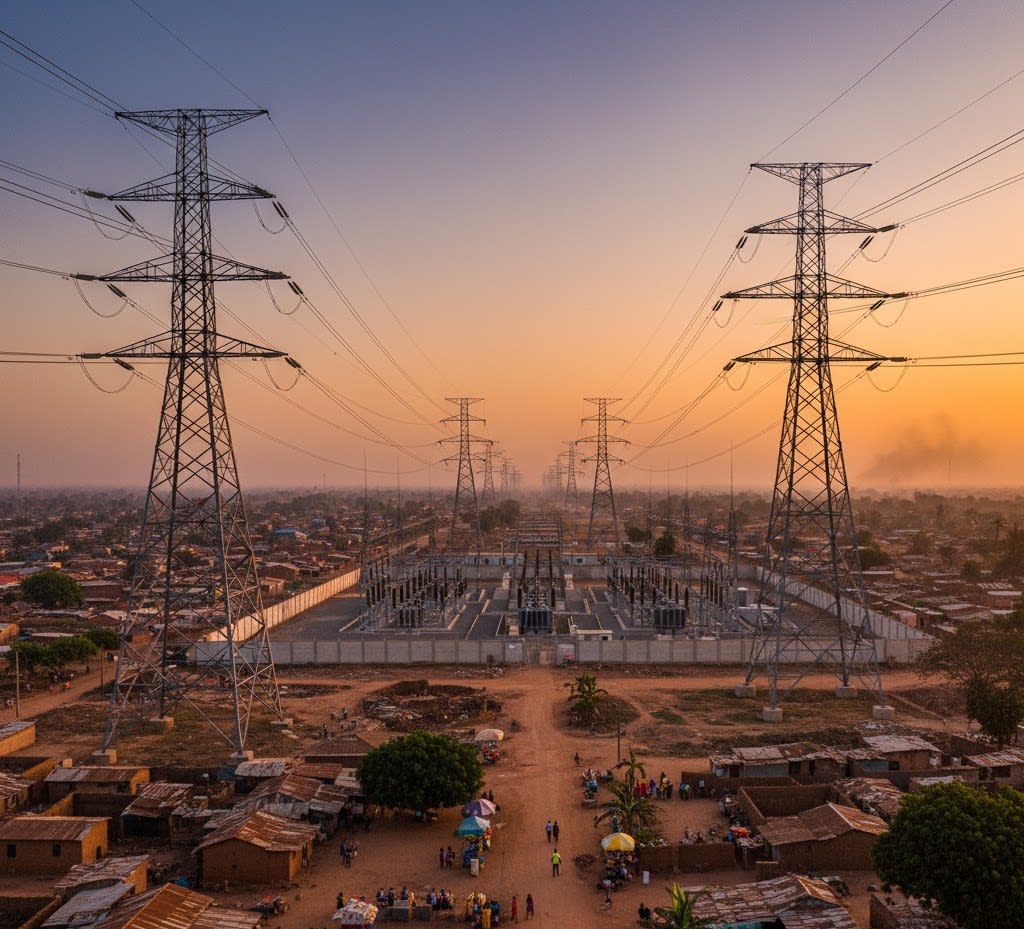
The global call to “transition away from fossil fuels” is accelerating. But beneath the diplomatic language lies a systems question rarely addressed in headlines: can electricity grids, particularly in Africa, absorb a rapid fossil fuel exit?
Phase-out scenarios assume something fundamental: that power systems are stable, flexible, and capable of integrating large volumes of renewable energy without compromising reliability. They assume storage is available to manage intermittency and that dispatch systems can balance variable supply and fluctuating demand.
But those assumptions don't automatically hold in African power markets. Because across much of the continent, fossil fuels, particularly gas and diesel, provide baseload stability and system balancing. Removing them too quickly without strengthening grid infrastructure risks replacing carbon exposure with reliability risk.
This is not a defence of fossil fuels. It is a systems reality check.
Phase-out assumes grid stability, but stability remains uneven
A rapid fossil fuel exit presumes that power systems can maintain frequency, voltage, and supply-demand balance under high renewable penetration.
According to the International Energy Agency’s Electricity 2026 report, global grid investment must rise to nearly USD 600 billion per year by 2030 to keep pace with electrification and renewable deployment.
The report stresses that grid expansion and modernisation are now the binding constraints of the energy transition. In Africa, grid fragility is more acute.
The African Development Bank’s 2025 energy infrastructure review estimates that transmission and distribution losses in several Sub-Saharan African countries still exceed 20%, compared to single-digit levels in advanced systems. Many utilities remain financially constrained, limiting maintenance and upgrade capacity.
Grid stability depends on three things:
Sufficient firm capacity
Modern dispatch systems
Robust transmission infrastructure
In many African systems, fossil-based generation, particularly gas turbines and diesel backup, provides the frequency control and ramping flexibility that intermittent renewables cannot yet fully supply.
A rapid fossil exit without parallel grid reinforcement could therefore destabilise already fragile systems.
Storage remains limited relative to renewable ambition
Energy storage is often cited as the technical solution to fossil phase-out. Battery systems can smooth renewable variability, reduce curtailment, and support peak demand management.
Yet deployment remains uneven. The IEA’s 2025 update on global battery storage shows record additions worldwide, but Africa’s share of grid-scale battery capacity remains small relative to demand growth. Most battery deployment on the continent is concentrated in a handful of markets, including South Africa and Morocco.
Storage economics also remain sensitive to financing conditions. High cost of capital, often exceeding 12–15% in some African markets, raises the levelised cost of storage projects compared to OECD contexts.
Moreover, storage isn't a standalone solution. It requires grid integration, market rules for ancillary services, and dispatch protocols that value flexibility. Without these enabling frameworks, storage remains underutilised.
Phase-out assumptions that rely heavily on storage must therefore confront a reality: scaling storage at pace requires both capital and institutional reform.
Dispatch flexibility is a constraint
Modern power systems rely on sophisticated dispatch mechanisms to balance supply and demand in real time. High-renewable systems require flexible generation assets, demand response, and real-time market signals.
Many African utilities operate under vertically integrated or state-dominated structures with limited competitive wholesale markets. Dispatch decisions may not fully reflect real-time price signals or system optimisation incentives.
The World Bank’s 2025 power sector reform update highlights that several African utilities continue to face liquidity constraints, delayed payments, and limited investment in smart grid technologies.
Flexible dispatch isn't just a technical upgrade, but a governance and market reform challenge.
Gas turbines and diesel plants often provide rapid ramping capability. Removing these assets without equivalent flexibility mechanisms risks increasing curtailment or load shedding. Phase-out is therefore inseparable from dispatch reform.
Fossil fuels still underpin baseload security
In many African countries, fossil fuels remain central to baseload electricity supply.
Gas-fired power dominates in Nigeria, Algeria and parts of North Africa. Diesel generators supplement unreliable grids across industrial zones. Coal remains significant in South Africa, though retirement schedules are advancing under transition financing frameworks.
The IMF’s 2025 climate risk assessment for emerging economies emphasises that premature fossil retirement without replacement capacity can undermine macroeconomic stability through supply disruptions and growth slowdowns.
Baseload replacement requires either:
Large-scale hydro
Nuclear (where politically and financially feasible)
Firm renewables paired with storage and grid modernisation
Each pathway demands long planning horizons and substantial capital. Rapid fossil exit timelines must therefore be sequenced with replacement capacity deployment, not assumed.
Grid investment remains below required levels
The African Development Bank estimates that Africa requires over USD 100 billion annually in energy sector investment to meet demand growth and transition needs combined. Current flows remain significantly below that level.
Grid expansion isn't just about capacity; it is about regional balancing. Interconnected systems can smooth variability across geographies, reducing reliance on fossil backup.
Yet regional power pools, including the West African Power Pool and Southern African Power Pool, continue to face operational and regulatory constraints. Without accelerated grid investment, renewable expansion risks bottlenecking at transmission limits.
The risk of disorderly exit
A disorderly fossil exit is not theoretical. It manifests as:
Load shedding
Rising industrial self-generation
Increased diesel dependence
Investor retreat
Political backlash
Where power reliability declines, firms respond defensively, investing in private generation or relocating production.
This outcome would undermine both decarbonisation and industrial competitiveness.
The IEA’s 2026 modelling underscores that transition credibility depends on maintaining system reliability during structural change. For Africa, where power systems are already strained, sequencing is critical.
What would readiness look like?
If African grids are to absorb a rapid fossil fuel exit, several conditions must be met:
Transmission reinforcement and loss reduction
Scaled grid-scale storage deployment
Modernised dispatch systems
Financially solvent utilities
Regional interconnection expansion
Clear retirement-replacement sequencing
These are not climate talking points. They are infrastructure and governance reforms.
Phase-out without grid reform is aspirational. Phase-out with grid reform is transformational.
Conclusion: the transition is a grid test
The debate over fossil fuel phase-out often unfolds at the level of emissions and diplomacy. But for African economies, it is a grid test.
Can systems maintain stability under renewable expansion? Can storage scale fast enough? Can dispatch flexibility replace fossil ramping? Can investment flows support transmission modernisation?
The answer today is uneven. Some African systems are advancing. Others remain constrained.
The energy transition won't be judged solely by installed renewable capacity. It will be judged by whether lights stay on, factories operate, and grids remain stable.