Nigeria Wants 60% of Its Vehicles Electric. Its Grid Supplies About 4,000 MW.
Nigeria approved tax waivers for nearly 4,000 electric vehicles in the first half of 2026. Import duty on EVs has been cut to zero from 5%, and VAT has been eliminated since 2024. Nigeria's Energy Transition Plan envisages EVs reaching 60% of the national fleet by 2050, and industrial policy is starting to move with that ambition: on 30 January, the federal government signed a memorandum of understanding with South Korea's Asia Economic Development Committee for a proposed EV manufacturing plant, which NADDC says will progress in phases from assembly to full production, with eventual capacity of 300,000 vehicles a year and an estimated 10,000 jobs, figures describing a planned project, not existing capacity.
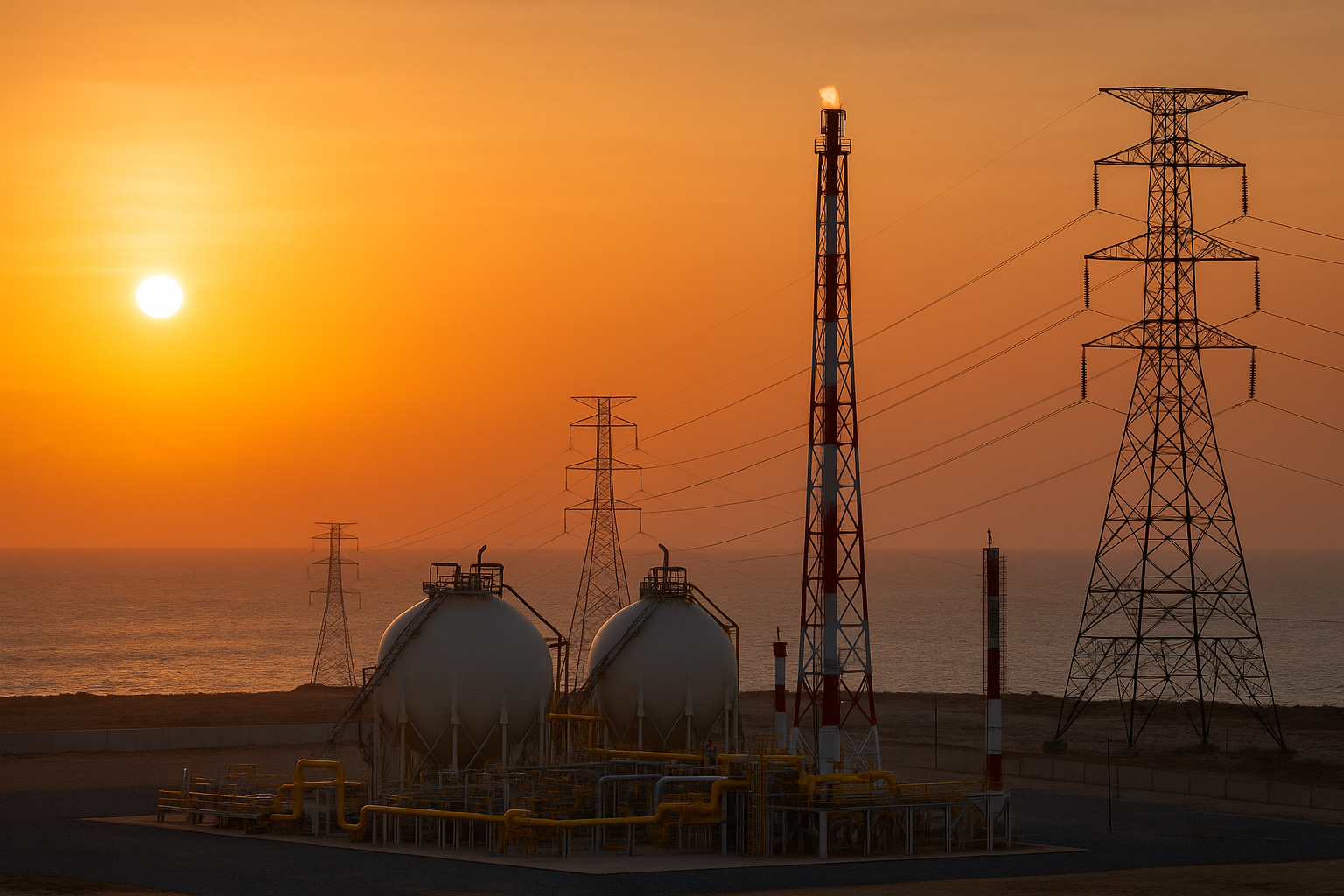
Underneath this sits a smaller number: about 4,000 megawatts. NERC's April 2026 factsheet put Nigeria's installed grid-connected capacity at 13,625 MW, but only 4,286 MW was available for dispatch, a plant availability factor of 31%, with average utilised output of roughly 4,048 MW, for a country of more than 220 million people. Nigeria has about 48 public EV charging stations, mostly in Lagos and Abuja, against more than 500 in South Africa, and its own Energy Transition Plan projects only around 60 by 2030.
At first glance, the conclusion looks obvious: Nigeria is electrifying vehicles before it has the electricity to support them. The arithmetic is more complicated, and the constraint isn't simply the megawatts available nationally, but where charging demand appears, when, whether local distribution can carry it, and how much of that electricity is actually coming from the grid at all.
One million EVs do not automatically require 7,000 MW
A standard 7 kW home charger, if a million of them drew full rated power simultaneously, would add roughly 7,000 MW of demand, more than Nigeria's entire average dispatched output. That illustrates what unmanaged charging could do; it isn't a realistic estimate of what a million EVs would actually draw. Using the IEA's own consumption assumptions, roughly 0.20 to 0.26 kilowatt-hours per kilometre, annual driving distances of 8,000 to 18,000 kilometres, and charging losses of about 5%, a million electric light-duty vehicles would consume somewhere between 1.7 and 4.9 terawatt-hours a year. Spread evenly, that is an average continuous load of roughly 190 to 560 MW, equivalent to 5% to 13% of the roughly 4,222 MW Nigeria was dispatching in May 2026, substantial, but a different order of problem from adding 7 gigawatts continuously.
The difficult problem is concentration, not total volume. If large numbers of drivers plug in at 7 pm, EVs amplify an existing evening peak; if charging happens overnight, at workplaces during surplus generation, or at depots with managed supply, the same annual energy requirement strains peak demand far less. The IEA has been explicit that EVs can become flexible loads rather than fixed ones if charging is managed, which means EV policy and electricity planning cannot be designed as separate exercises.
The distribution system may matter more than the national total
Even ample generation wouldn't guarantee any neighbourhood could support meaningful EV charging, because power has to survive transmission and distribution networks already strained. NERC's Q1 2026 data show distribution companies received 7,148 GWh but billed customers for only 5,967 GWh, an energy-accounting efficiency of 83.48%. The wider aggregate technical, commercial, and collection loss stood at 37.44%, against a target of 16.92%. That figure needs care because it doesn't mean 37% of electricity vanishes in the wires. It combines technical losses, commercial losses, and bills never collected, but still shows how weak the distribution system's operational and financial base remains. A single household charger is manageable; twenty on one residential transformer may not be, and a depot with dozens of chargers could need its own feeder or dedicated generation. Nigeria's EV infrastructure problem is therefore increasingly local rather than national: which substations have spare capacity, where fleets concentrate, whether charging can be scheduled off-peak, and who pays for upgrades. Counting public chargers alone answers none of that.
Forty-eight chargers, and a mixed electricity reality underneath them
Nigeria's roughly 48 public stations understate the picture in one direction, since many EV owners already charge through portable cables from household supply, meaning Nigeria doesn't need a public charger for every car. But a household outlet isn't necessarily reliable grid electricity. During outages, households and businesses fall back on petrol or diesel generators, solar, or batteries, and Reuters has found the same pattern at dealerships and charging sites. EV charging in Nigeria is therefore less a binary between grid and off-grid than a genuinely mixed system, where a vehicle might draw grid power today, rooftop solar tomorrow, and generator power during an outage, and its real environmental and cost benefit depends on which of those it is actually drawing on at the time. A diesel-charged EV isn't automatically written off environmentally either; the outcome depends on vehicle and generator efficiency and the real mix of sources over time, not a single categorical label.
Nigeria's motorcycles are solving a narrower, more tractable problem
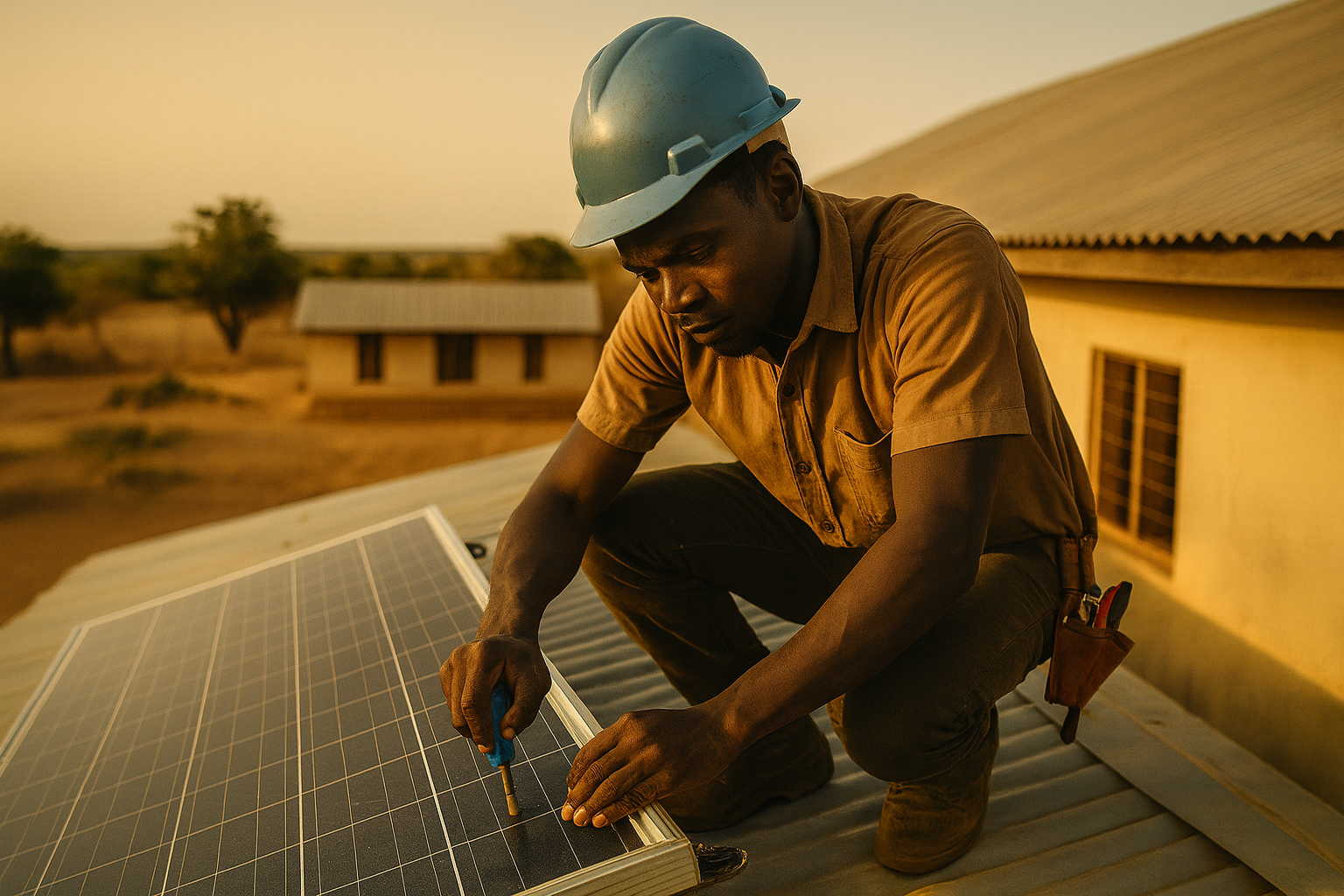
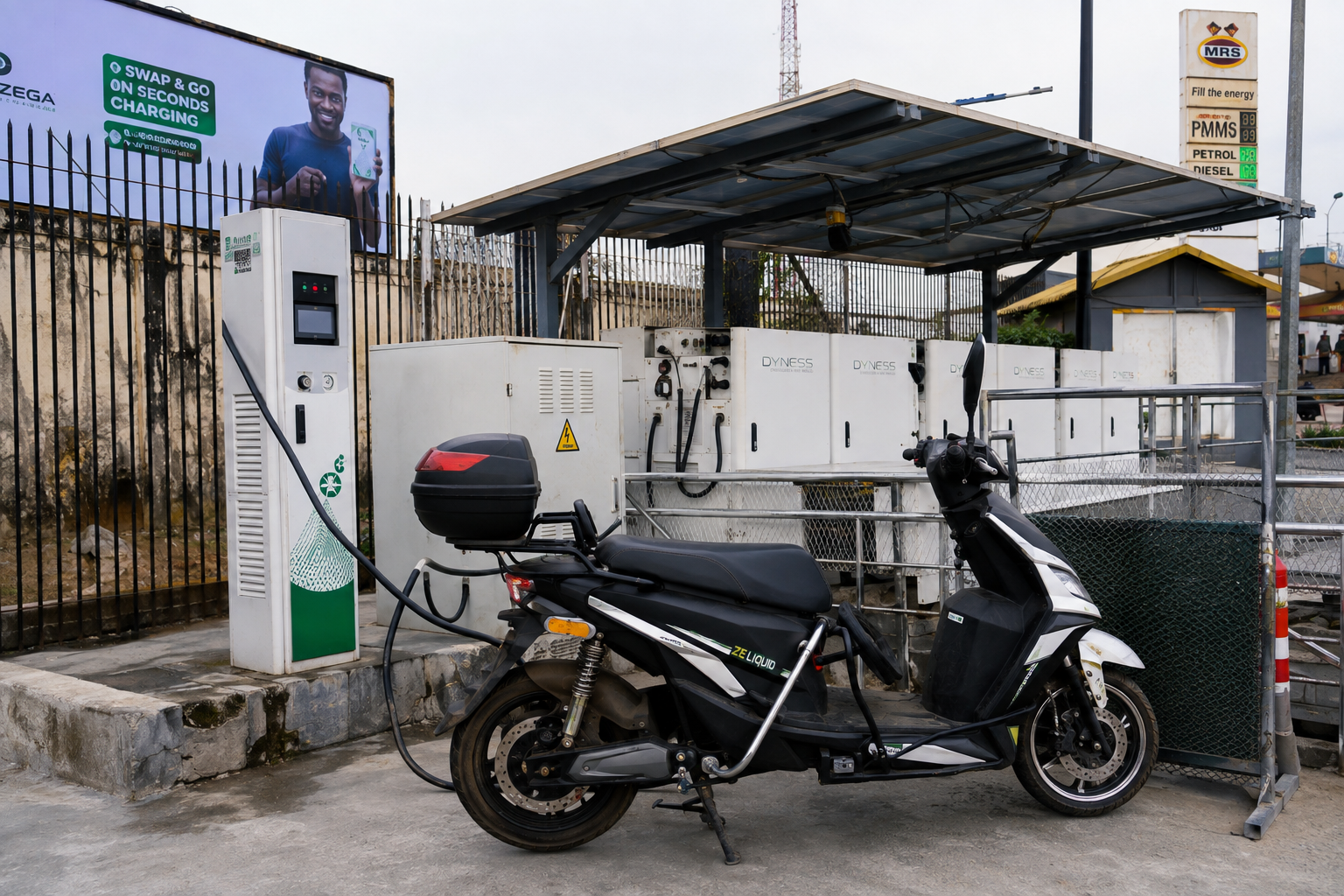
The most consequential shift may be happening outside the passenger-car market. Nigeria has more than 15 million motorcycles used heavily in commercial delivery and informal transport, where fuel is a direct daily cost, making electrification economically compelling well before the grid improves. RMI estimates electric motorcycles can already beat petrol on lifetime cost, and that under supportive policy electric models could reach around 70% of the two-wheeler market within 15 years. Battery swapping suits this market specifically: rather than a rider waiting for a charge, operators swap a depleted battery for a charged one in minutes. Spiro operated more than 100 swap stations across Lagos and Ogun State as of September 2025 and plans substantial expansion; MAX is also investing in swap networks. Not every operator runs on solar; RMI specifically identifies AaraGO and SunFi as building solar-and-storage models, so batteries still need charging from somewhere, but the model lets that charging be centralised and scheduled rather than scattered unpredictably across household connections, real flexibility for a weak-grid system.
Nigeria may actually have three EV transitions, not one
The debate usually treats this as a single national shift, but at least three distinct transitions are under way with different grid relationships. Private passenger cars depend most heavily on home, workplace, and public charging, carrying the strongest exposure to distribution reliability. Commercial fleets, buses, taxis, and delivery vehicles can use depot charging, dedicated solar, and negotiated supply, and high utilisation makes the investment case faster. Two- and three-wheelers, through battery swapping, are the one already working, because swapping separates the moment a vehicle needs energy from the moment the electricity behind it is generated.
These paths don't need identical policy, yet Nigeria's headline EV policy is still centred mostly on the vehicles themselves, import duties, manufacturing incentives, and assembly targets. The Electric Vehicle Transition and Green Mobility Bill, covering domestic assembly, charging infrastructure, and local content, passed its second Senate reading on 5 November 2025 and remains under legislative consideration rather than enacted law. The Kano plant follows the same industrial logic, but a factory eventually capable of 300,000 vehicles a year will need a market able to charge them; manufacturing policy and power-system planning have to converge, not run on separate tracks.
The grid does not have to be fixed first, but the sequencing has to be deliberate
Nigeria doesn't need a European-grade grid before allowing EVs onto its roads, and pretending otherwise ignores what is already working. Fuel costs have risen sharply since 2023's subsidy removal, and electric two- and three-wheelers already cut costs for commercial users. EV demand can itself justify new electricity investment, since customers able to pay for reliable power improve the case for solar, batteries, and mini-grids, but only if charging is planned rather than left to appear wherever vehicles are sold. Concentrated at managed hubs and swap stations, new demand can be built around predictable supply; scattered randomly, it risks local overloads patched with more generators. This is a sequencing problem, not a binary choice between fixing the grid and adopting EVs.
The 60% target for 2050 is dramatic, but it isn't yet the most useful measure of progress. Better indicators sit closer to the ground, such as how many motorcycle-kilometres have gone electric, how much charging happens when the grid has spare capacity, how many sites pair solar with storage, and how much promised manufacturing capacity actually materialises rather than staying an MOU. Nigeria's grid is plainly too small and unreliable for mass electrification at 2050 scale without major expansion, but the 4,000 MW figure doesn't mean the transition has started on the wrong path. It means Nigeria can't copy a model built for grids that already reach every parking space, and its most promising results so far come from designing around the infrastructure it actually has rather than the one it wants.