Nigeria Does Not Have an Engineering Shortage It Has an Operational Failure

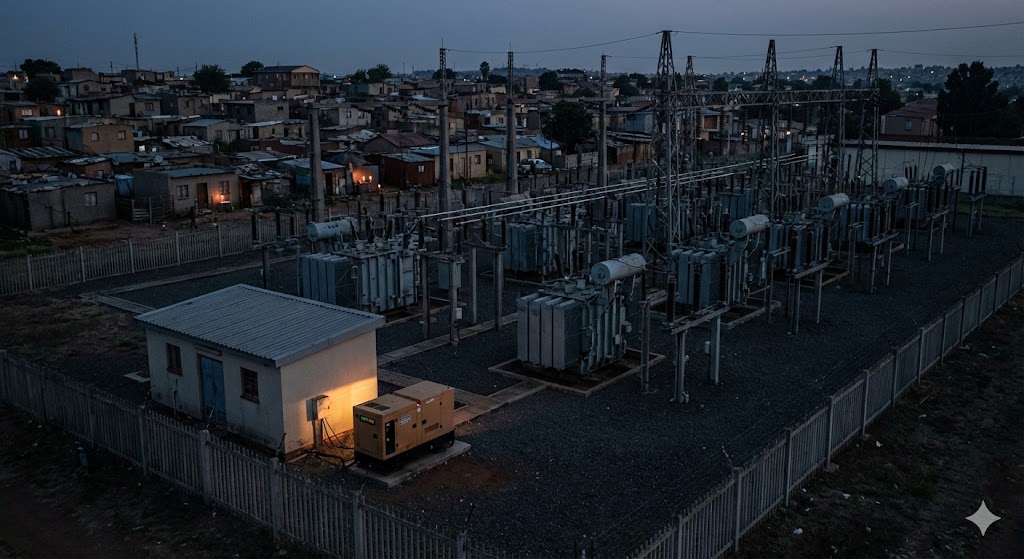
A few years ago, I was in a conversation with someone responsible for technical operations at one of Nigeria’s distribution companies. He described a relatively new substation, donor-financed and functional by any installation metric, that had developed a fault in its protection relay system.
A protection relay isn't complex or particularly expensive. It is the device that detects abnormal electrical conditions and isolates faults before they cascade into wider system failures. When it works, nobody notices it, but when it fails, entire networks feel the consequences.
In this case, the problem wasn't funding. The money to replace the relay existed, but nobody on the utility’s payroll had the certification required to calibrate and commission a replacement on that specific platform.
The engineer who had originally installed it was a contractor, so he left once the job was completed. The utility had accepted the asset without absorbing the capability to maintain it.
The relay remained degraded for months. This isn't an isolated failure, but the operating condition of much of Nigeria’s electricity infrastructure. While it isn't a crisis in the dramatic sense, it is a steady accumulation of deferred maintenance, uncertified personnel, and systems running below their designed capacity because the human infrastructure required to sustain them was never built.
Nigeria has engineers, but not the ones the grid needs
The way Nigeria discusses its energy skills gap follows a familiar pattern. There is talk of too few engineers, and the solution proposed is more graduates, more university programmes, or more STEM investment.
It sounds logical, but it is also incomplete, because Nigeria isn't short of engineers in aggregate terms. The country has over 100 universities, with many offering electrical engineering programmes. Also, the Council for the Regulation of Engineering in Nigeria registers thousands of engineers each year.
By those measures, Nigeria isn't a deficit country. What is missing is something more specific, the operational layer that sits between installation and sustained system performance, protection relay calibration, transmission line inspection, substation maintenance planning, distribution transformer management, and grid stability monitoring.
These aren't academic disciplines. They are applied, equipment-specific capabilities developed through apprenticeship, structured field experience, and continuous recertification. And they are systematically underdeveloped. The issue is not education, but how that education is translated, because Nigeria produces engineers, and it doesn't consistently produce operators.
Why utilities can't build the workforce they need
To understand why this gap persists, it is necessary to look at the financial condition of the institutions responsible for building that workforce. Nigeria’s distribution companies have operated under chronic liquidity constraints since privatisation in 2013. The payment chain, from consumers to DisCos, to the bulk trader, to generation companies, to gas suppliers, has never fully stabilised. Revenue shortfalls accumulate at every stage.
By the first quarter of 2026, sector liquidity remained one of the defining constraints on performance. In that environment, training budgets are cut, not because management undervalues skills, but because immediate operational survival takes precedence. The result is predictable: a workforce that ages without recertification, a skills base tied to outdated equipment, and a limited ability to absorb new technologies.
The Transmission Company of Nigeria faces a related constraint. As a public entity, it struggles to offer competitive salaries for highly specialised roles. Protection engineers, system planners, and high-voltage specialists can earn significantly more in private markets or abroad, leading to attrition: the engineers the system needs are trained, then they leave.
An education system built for a different energy economy
Beneath the institutional constraints lies a deeper structural issue. Nigeria’s engineering education system wasn't designed for the energy transition it is now trying to support.
It was designed for a petroleum economy. The country’s most prestigious engineering programmes at the University of Lagos, Obafemi Awolowo University, University of Nigeria, Nsukka, and Ahmadu Bello University reflect an era when oil was the central economic driver and petroleum engineering carried the highest status.
Electrical engineering programmes teach strong fundamentals: circuit theory, electromagnetism, basic power systems, but they don't consistently provide applied training in operating a modern electricity network, such as protection system design, load flow analysis under contingency, SCADA system commissioning, and relay coordination in expanding grids.
A graduate may understand the theory of power systems, but they aren't prepared to manage one. The skills exist in Nigeria, but are fragmented, concentrated in individuals, not embedded in institutions.
The commissioning gap that keeps the grid fragile
The specific mechanism that turns this skills deficit into a system reliability problem is what I think of as the commissioning gap, the space between the moment a project is completed and handed over, and the moment the operating institution has genuinely internalised the capability to sustain it.
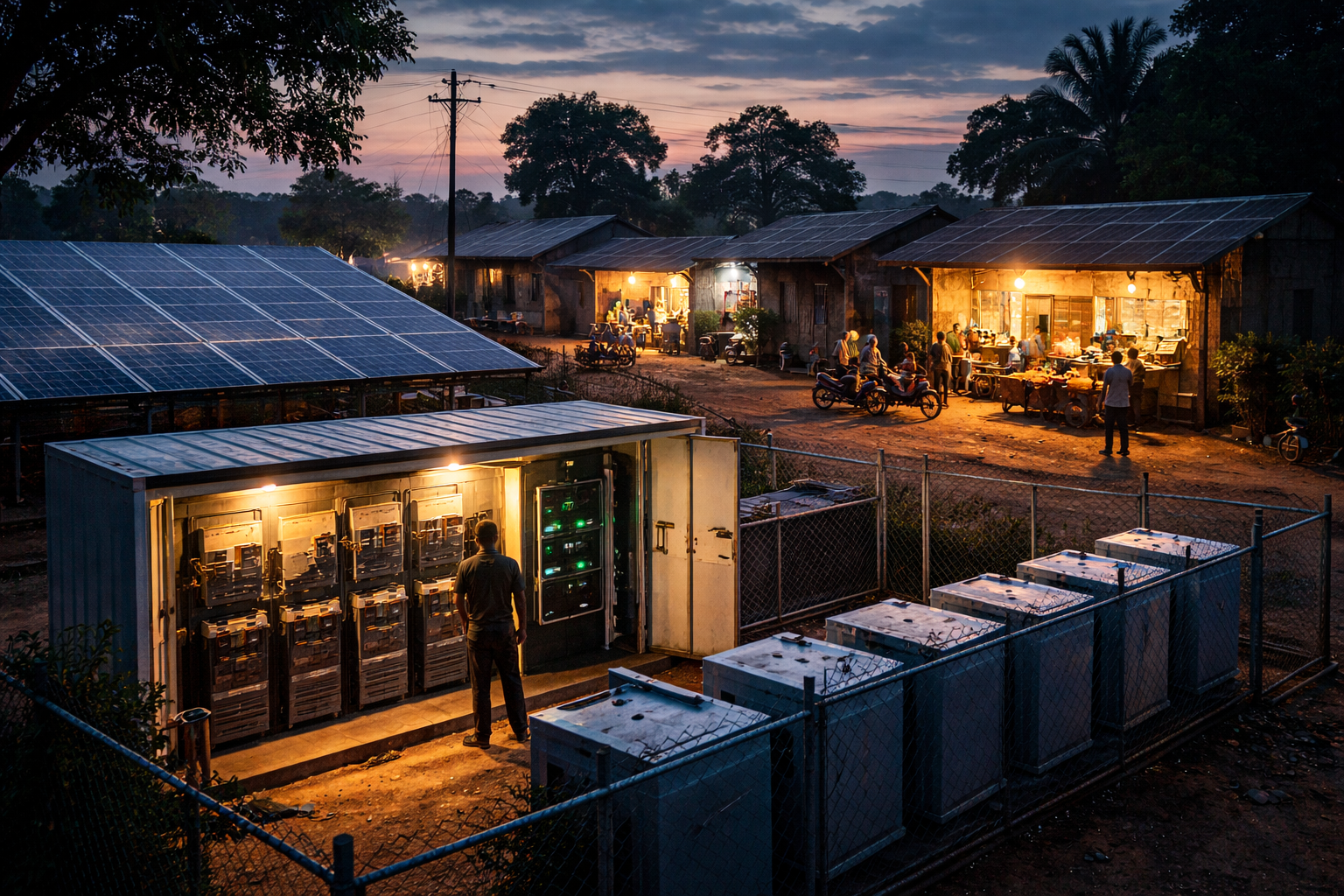
International development finance institutions and bilateral donors fund infrastructure in Nigeria on a significant scale. Solar installations, substation upgrades, distribution network extensions, and control system replacements.
These projects are delivered by contractors, often international firms with specialised technical teams who commission the asset, verify that it is functioning to specification, and hand over documentation. What is rarely funded, rarely planned for, and rarely measured is the transfer of operational capability: whether the utility's staff can actually maintain what they have received.
The commissioning engineer leaves, the asset operates, and three months later, a component requires recalibration. Six months later, the SCADA interface needs a configuration update, and eighteen months later, a protection relay trips, and nobody knows how to reset it correctly. None of these events appears in the project completion report. They appear instead in the Nigerian Electricity Supply Industry's aggregate system reliability statistics as outage minutes, equipment failures, and distribution losses that remain stubbornly above international benchmarks despite years of investment.
What a real skills response would look like
Naming this problem isn't the same as solving it, but naming it correctly is a precondition of solving it. The current policy response, more engineering graduates, university STEM programmes, and more TVET centres, addresses a real need but misses the specific constraint.
What Nigeria's electricity sector needs, urgently and practically, is a structured programme of operational skills development anchored in the utilities themselves, funded as a non-negotiable component of every infrastructure project, and designed around the specific equipment and systems being deployed.
Every donor-financed substation project should carry a mandatory post-commissioning skills transfer component with its own budget line, its own timeline, and its own accountability framework. Every generation and transmission project should require the contracting firm to certify a defined number of Nigerian engineers on the specific platforms being installed before the project closes.
The Chartered Institute of Power Engineers of Nigeria has recently engaged the Nigeria Electricity Regulation Commission on improving technical competence standards across the electricity supply industry, a signal that the regulatory conversation is beginning to move in the right direction.
But regulatory intent without a financing model that makes utility training investment possible will not change the operational reality. DisCos that can't clear their payment chains can't fund apprenticeship programmes. The financing logic has to change before the skills logic can follow.
Nigeria has the engineers, but lacks the system that turns engineers into operators. That gap, specific, nameable, and solvable, is where the energy transition will be won or lost, long before the next megawatt is announced.