Why Nigeria’s Solar-Powered Clinics Still Cannot Keep Vaccines Cold
1,500+ Nigerian clinics are electrified. Vaccines still spoil. A new ETA policy brief identifies the market design failures — and three reforms NERC can implement now.
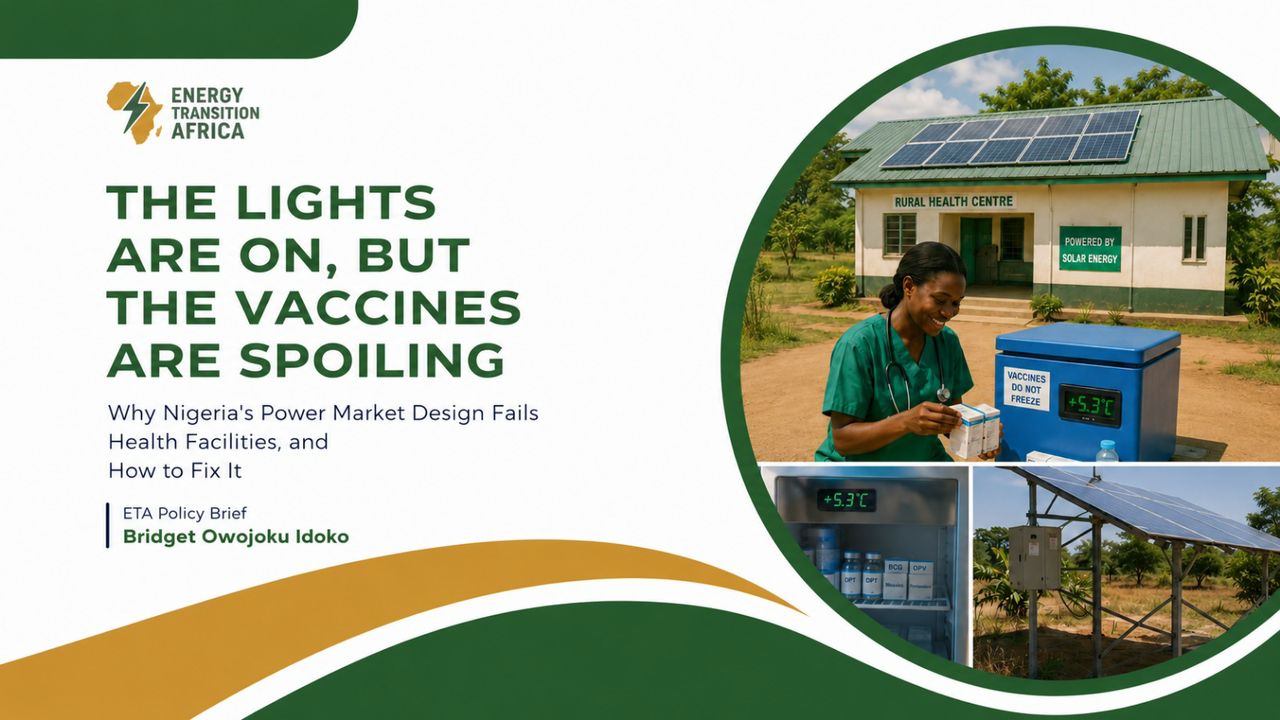
Over 1,500 primary health centres across Nigeria have been officially electrified. Solar panels sit on rooftops, and inverters hum in equipment rooms. On paper, the connection exists.
And yet vaccines spoil, emergency procedures are abandoned mid-delivery, and health workers deliver babies by torchlight.
The standard explanation reaches for infrastructure gaps and investment shortfalls. This brief argues that the explanation is wrong because the problem isn't the hardware; it is the rules.
A 2023 World Bank assessment found that fewer than 40 percent of electrified rural health facilities in Nigeria receive reliable power sufficient to maintain vaccine cold chains. Seventy-eight per cent of primary health centres surveyed reported weekly outages lasting more than six hours. Fewer than 5 per cent received any compensation from their distribution company.
The brief identifies three specific market design failures: the absence of a dedicated tariff class for health facilities, off-grid regulation built for villages rather than clinics, and the absence of enforceable service-level agreements and proposes three reforms:
The current Multi-Year Tarrif Order (MYTO) review should introduce a regulated public service tariff class for health facilities, with defined service standards and performance-linked compensation for distribution companies.
NERC should mandate enforceable service-level agreements with minimum uptime targets of 23 hours per day for tertiary facilities and 16 hours for primary health centres, with automatic compensation for non-performance.
A fast-track regulatory pathway for health facility electrification should replace the donor-dependent turnkey model with commercially sustainable arrangements that include maintenance obligations surviving the installation phase.
Each reform is achievable within NERC's existing regulatory authority. None requires new capital. All three address the governance gap that investment alone has repeatedly failed to close.
This is not a capital problem. It is a governance problem. Governance problems have governance solutions.
Download the full brief, including trade-off analysis, implementation sequencing, and full references below.
Suggested Citation
Energy Transition Africa (2025). Why Nigeria’s Solar-Powered Clinics Still Cannot Keep Vaccines Cold: Market Design Failure in Health Facility Electrification.