Nigeria's Solar Boom Runs on Lead. Nobody Is Tracking Where It Goes.
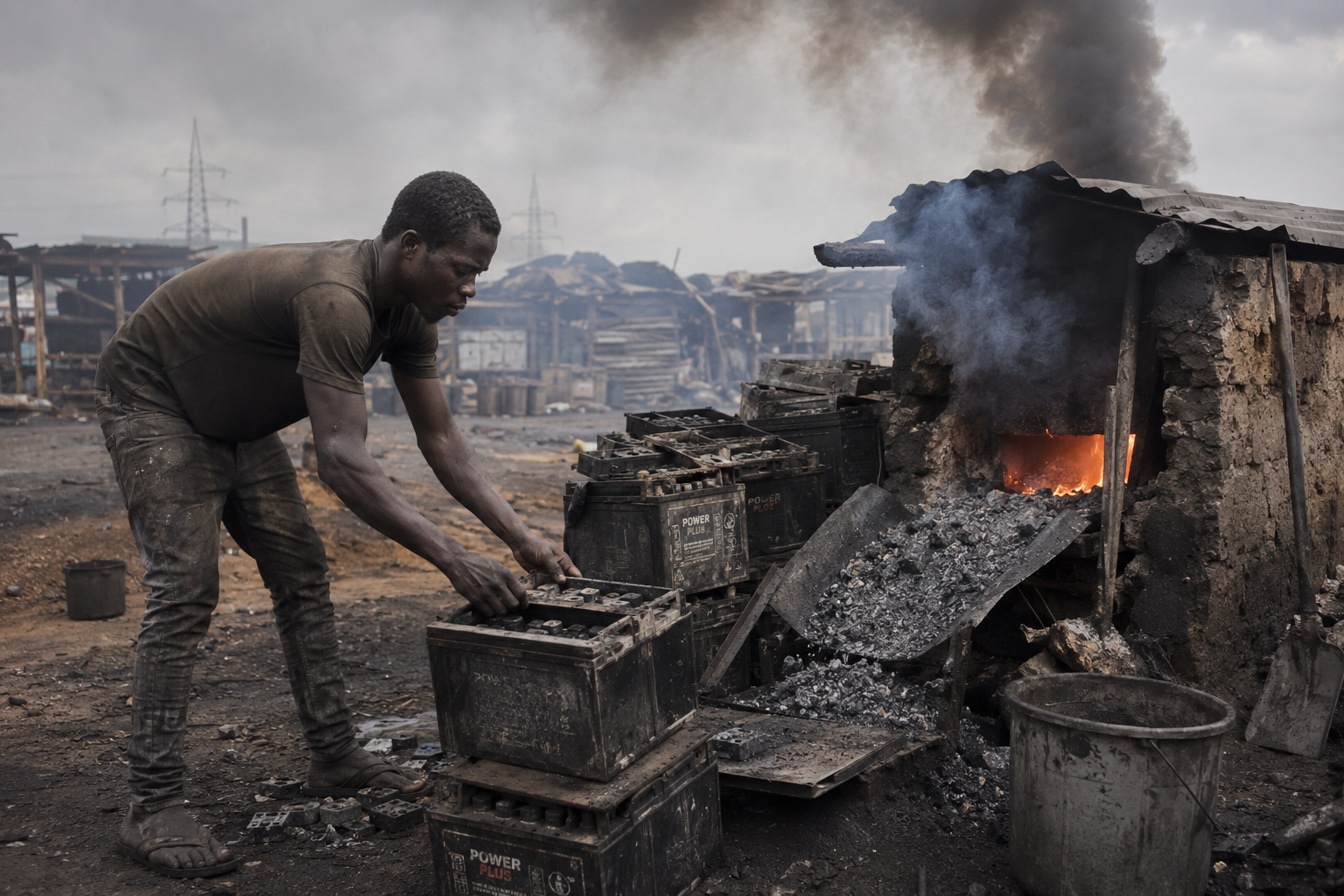
Nigeria's solar revolution is built on Lead, a material that hardly appears in the country's energy transition conversation.
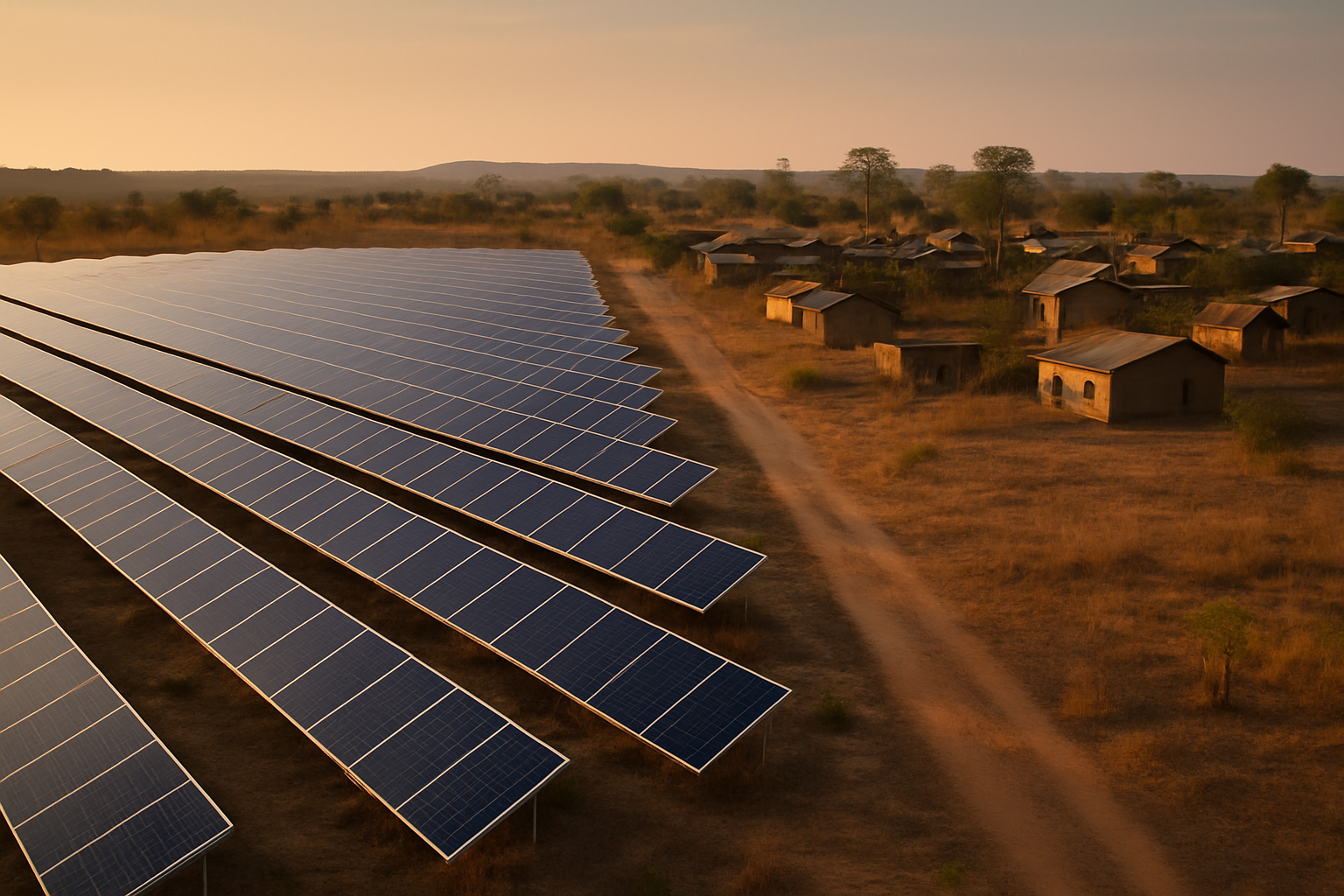
In rural communities, health facilities, schools, telecommunications towers, mini-grids, and small businesses, off-grid solar has become one of the most consequential energy-access stories in modern Nigerian history. Millions of people who can't rely on the national grid now depend on solar systems for lighting, refrigeration, communications, and productive economic activity.
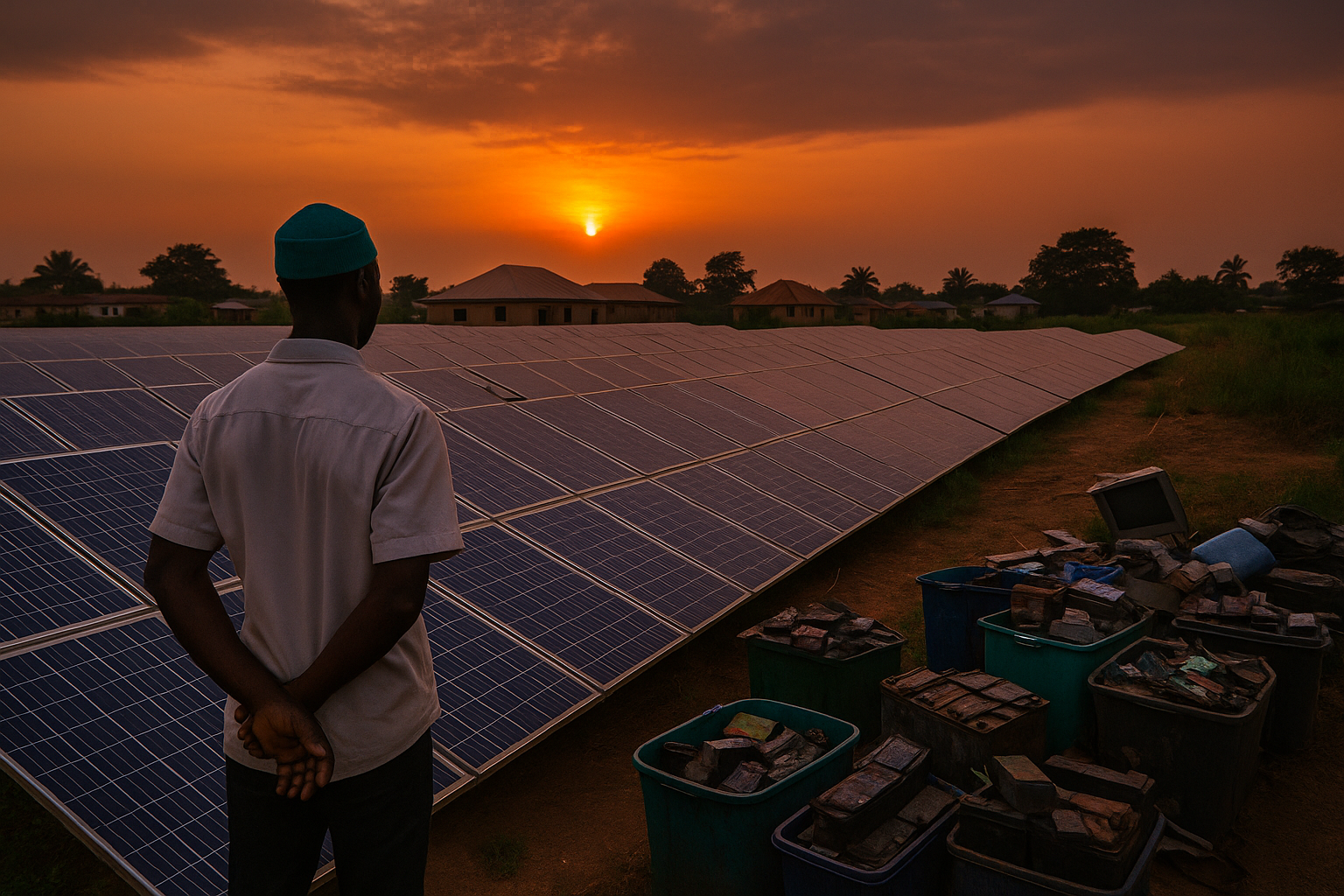
Hidden inside almost every one of those systems is a component that receives remarkably little attention: the battery. Specifically, the lead-acid battery. While global energy storage conversations increasingly centre on lithium-ion, most of Nigeria's off-grid solar economy still relies on lead-acid batteries because they are cheaper, simpler, and easier to service locally. The World Bank's own directly financed programmes use lithium-ion batteries, but the broader market that low-income households and small businesses actually buy from doesn't.
That affordability is precisely the problem. Lead-acid batteries fail quickly in off-grid conditions, typically within three to four years. When they fail, the toxic material inside has to go somewhere, and nobody can confidently say where most of it ends up.
The waste stream is growing faster than the data tracking it
A 2026 policy paper from the Centre for Global Development estimates that off-grid solar's lead-acid battery waste across sub-Saharan Africa runs between 250,000 and 1.5 million tonnes annually, a range wide enough to represent a six-fold difference between its low and high estimates, and researchers are explicit that the true figure is more likely to sit in the upper half. The range itself depends on assumptions about average battery size and replacement frequency that nobody has measured precisely at scale: a full-size car battery with a one-year lifespan implies roughly 1.5 million tonnes; a smaller motorcycle-sized battery with a two-year lifespan implies roughly 250,000. CGD's researchers estimate off-grid solar could account for 13 to 47 percent of all used lead-acid battery waste generated in the region, on top of existing demand from vehicles and other uses.
Nigeria-specific projections, cited from AllOn's market analysis and widely reported across Nigerian outlets, show total solar e-waste rising from 3.3 million kilograms in 2021 to a projected 60.3 million kilograms by 2040, an eighteen-fold increase. Nigeria currently recycles less than 0.1 percent of its e-waste overall, against an African average of roughly 1 percent, with only 10 to 17 percent of e-waste treated formally at all.
The honesty about the uncertainty is itself part of the story. Nobody, not governments, international agencies, or the solar industry, has built the measurement infrastructure to know the real number with precision.
Where the batteries actually go
Nigeria has become one of sub-Saharan Africa's largest lead-acid battery recycling hubs, and the destination researchers have now traced for batteries entering global supply chains. More than ten large formal recycling plants operate in the country, most concentrated in Ogun State near Lagos and its export infrastructure. Independent technical assessments under international environmental programmes have repeatedly described environmental, health, and safety conditions at these formal facilities as substandard. Alongside them operates a much larger informal sector of backyard smelters and scrap collectors with no pollution controls at all.
An investigation published by The Examination and The New York Times in November 2025, working with Pure Earth and the University of Ibadan, commissioned blood testing of 70 volunteers living near or working in battery-recycling factories in Ogijo, a town in Ogun State on the border with Lagos. Seventy percent tested positive for lead poisoning. More than half the children tested had blood lead levels high enough to cause lifelong cognitive harm,and soil and dust samples registered concentrations up to 186 times what experts consider hazardous. More than 20,000 people live within a mile of Ogijo's recycling factories; investigators concluded that many are likely being poisoned without knowing it. The investigation traced the supply chain to a single Ogijo smelter that shipped recycled lead, through the commodities trader Trafigura, to East Penn Manufacturing in Pennsylvania, which supplies batteries for Tesla, General Motors, and Ford. Following publication, Nigerian authorities closed seven recycling factories and began testing roughly 500 nearby residents.
The problem is not confined to informal operators. A study covering licensed recycling plants across Cameroon, Ghana, Kenya, Mozambique, Nigeria, Tanzania, and Tunisia found that 85 percent of soil samples collected near formal, licensed facilities exceeded international lead safety thresholds. Formal licensing alone doesn't guarantee safe practice without active enforcement.
Africa has seen the worst-case outcome before
Two earlier cases give this risk its proper scale. In Dakar, Senegal, between November 2007 and March 2008, eighteen children died from an aggressive, unexplained neurological illness in a neighbourhood where residents had been informally recycling lead-acid batteries to extract scrap lead. A peer-reviewed investigation found all 81 people tested, children, siblings, and mothers, were poisoned with lead; outdoor soil concentrations reached up to 302,000 milligrams per kilogram, roughly 750 times the US federal standard for lead in children's play areas.
In Kenya's Owino Uhuru settlement in Mombasa, a lead-acid battery recycling plant operated from 2007 to 2014, exporting processed lead to India. More than 20 deaths have been linked to the resulting contamination. In December 2024, Kenya's Supreme Court upheld a compensation award of roughly $12 million, 1.3 billion Kenyan shillings, to some 3,000 affected residents. As of this year, residents report that the compensation has still not reached them.
Throughout Africa and South Asia, researchers estimate that between one-third and half of all children have elevated blood lead levels, one of the most widespread environmental health crises in the world, with unsafe lead-acid battery recycling identified as a major contributing source. Lead exposure produces no explosion, no visible disaster. It accumulates quietly, in ways rarely traced back to their source until the cognitive damage has already been done.
Why nobody owns this problem
The structural explanation is that lead-acid battery waste from off-grid solar falls into the gap between three systems that don't talk to each other.
Energy access programmes, including Nigeria's DARES initiative and the World Bank-backed electrification push, are funded and measured against connection and installed-capacity targets, not end-of-life waste outcomes. Environmental regulation exists on paper: Nigeria's National Environmental (Battery Control) Regulations 2024 require recycling facilities to conduct biannual blood-lead testing of workers and provide protective equipment, a genuine step toward formalising what was previously an entirely informal industry. But enforcement capacity remains limited against a collection and smelting sector that operates on thin margins, where genuine pollution controls would price many informal operators out of business entirely. And the international climate and renewable energy financing architecture that has driven much of the off-grid solar expansion has historically not required end-of-life waste management as a condition of funding.
The result is a system where success is measured at the point of installation, and the consequences are absorbed by the communities living nearest to recycling sites, disproportionately children, whose developing brains are most vulnerable to lead's neurological effects.
What the evidence suggests would actually help
Researchers are careful not to overclaim a solution that doesn't yet exist. Lee Crawfurd of the Centre for Global Development, who reviewed the underlying research, has said that banning lead-acid batteries isn't realistic, yet they remain the only storage technology affordable enough to sustain the off-grid solar access model at the scale and price point that has driven Africa's deployment numbers. "Safe recycling is expensive," Crawfurd noted, "and that creates a strong incentive to do it unsafely." The more realistic intervention is making recycling itself safer and bringing more of the informal sector into regulated, monitored operations, which requires financing and enforcement capacity that doesn't yet exist at the scale of the problem.
Nigeria's 2024 regulatory shift and the emerging interest of international commodity buyers like Trafigura in formalising their sourcing are early, partial steps in that direction. Whether they reach the scale of an industry generating up to 1.5 million tonnes of hazardous waste annually across the region, with health stakes that Pure Earth and independent researchers describe in unambiguous terms, is the question this evidence leaves open.
Nigeria's solar success is measured at the point of installation, but its lead problem begins at the point of disposal. The energy transition does not end when a solar system is switched on, but when every component of that system reaches the end of its life without poisoning the community it was built to serve.