South Africa's New Electricity Trading Rules Could End Eskom's Century-Old Monopoly
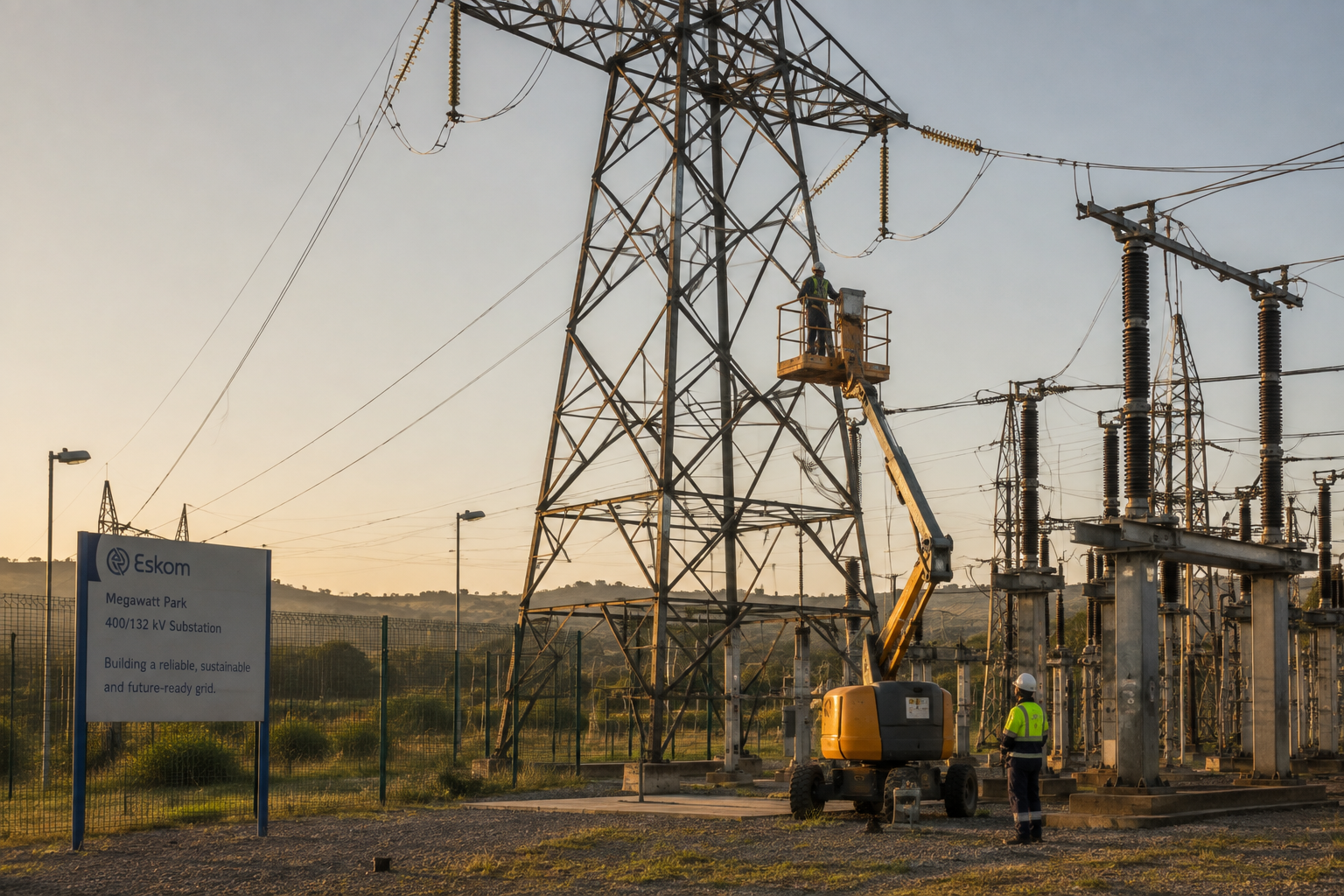
For a century, buying electricity in South Africa meant buying it from Eskom. The state utility generated it, transmitted it and, in most cases, distributed it. There was no market competition and no alternative supplier for any customer, household or industrial, connected to the national grid.
That is changing. South Africa's Electricity Regulation Amendment Act came into force on 1 January 2026, creating the legal framework for a multi-year transition to a competitive electricity market. The National Energy Regulator of South Africa (NERSA) has now published three successive versions of its Draft Rules for Electricity Trading, the operational detail that will actually govern how that market functions. Version 3, released in June, was originally open for comment until 27 July; NERSA has since extended that deadline to 28 August 2026 after stakeholders asked for more time to work through a lengthy and technically dense document. What survives that consultation will determine whether South Africa's electricity reform produces genuine competition or simply replaces one monopoly with a more complicated version of the same structure.
What the rules actually do
The rules open the market in phases rather than all at once. Phase 1 allows large customers connected at transmission and high voltage, the anchor buyers, to source part of their energy from licensed traders rather than exclusively from Eskom. Phase 2 introduces wholesale market trading alongside bilateral agreements and regional import and export. Full separation of Eskom's own distribution and trading activities is pushed out further still, to Phase 4, which the rules place at least six years after the wholesale market launches. What exists now is the on-ramp, not the market itself.
That on-ramp already has traffic. NERSA licensed five companies, Green Electron Market, CBI Electric Apollo, GreenCo Power Services, Discovery Green and NOA Group Trading, to trade electricity in 2024 and early 2025. These firms aren't generators; they buy power from generators, including renewable independent power producers, and sell it on to large customers. They are the mechanism through which competitive supply is meant to reach end users, but they cannot trade commercially until the rules that govern how trading actually works are finalised.
The most consequential mechanism in that rulebook, and the one at the centre of the dispute over the licences themselves, is the non-bypassable charge. When a factory buys power from a private trader instead of Eskom, it still pays a mandatory charge that contributes to Eskom's stranded costs, cross-subsidies for residential customers and other system-wide obligations. Version 3 extends this charge further than earlier drafts: it now applies not only to large contestable customers but to any customer connected above 100 kVA, and separately to any customer with a wheeling arrangement or on-site generation, regardless of connection size. For industrial users hoping competition will meaningfully cut their electricity bills, the non-bypassable charge determines how much of that saving actually survives contact with the rulebook.
Wheeling itself, the mechanism by which power generated at one site is carried across the national grid to a buyer elsewhere, is more developed in Version 3 than in earlier drafts, with clearer procedures for reconciling transactions between traders and network operators. Virtual wheeling, which lets buyers and sellers transact without power physically flowing directly between them, is now defined for the first time, but it remains conditional and only becomes operational once the wholesale market itself launches, applies solely to connections above 100 kVA, and still needs further rules before it can function in practice.
Why the Eskom court challenge still matter
Eskom's court challenge to the five trading licences, filed in July 2025 because NERSA had approved competition without first finalising the rules to govern it, is stayed. That distinction is what makes the August consultation more than procedural. Eskom and the licensed traders agreed in early 2026 to pause the litigation specifically to allow NERSA's rule-making process to run its course; if the finalised rules don't adequately address Eskom's underlying objections, particularly on non-bypassable charges and the pace of market opening, the utility has kept the option of reviving the case.
Eskom's public posture has shifted alongside the process. Group Chief Executive Dan Marokane has written and spoken about Eskom "tooling up" to compete as a trader in its own right rather than resisting the market's existence, framing the earlier litigation as a defence of orderly reform rather than opposition to competition itself. Independent analysts reading the successive drafts have been more sceptical, describing the accommodations made to Eskom's concerns across each version as substantial enough to raise the question of whether the framework represents market reform or a more sophisticated form of market containment.
The wholesale market those trading rules eventually plug into has also slipped. The South African Wholesale Electricity Market was originally due to launch on 1 April 2026; the National Transmission Company South Africa confirmed in April that the date wouldn't be met and pushed the launch to the third quarter of the year, citing unfinished operational, regulatory and market readiness work. The trading rules and the wholesale market are separate processes, but neither functions fully without the other, and both have now moved later than originally planned.
What this means beyond South Africa
South Africa's electricity market reform is the most closely watched utility restructuring on the continent, because so many other African power systems are attempting some version of the same move, away from vertically integrated state monopolies and towards structures that admit private generation, trading and competition. How NERSA resolves the tension between opening the market and protecting Eskom's cost-recovery base will be read elsewhere as evidence of what is achievable, and how long it realistically takes.
The industrial stakes of getting this wrong aren't abstract. In mid-2026, Transalloys halted production at South Africa's last manganese alloy smelter, citing years of losses driven substantially by electricity costs, a decision that put roughly 600 direct jobs and an estimated 7,000 downstream livelihoods at risk. ArcelorMittal South Africa has separately been negotiating with government over the closure of its long steel operations, citing high electricity tariffs among the structural costs it says make the business unviable. Regulatory clarity of exactly the kind these trading rules are meant to provide, ETA has argued in its analysis of Africa's transmission investment gap, is the difference between industrial capacity that survives an energy transition and industrial capacity that becomes a casualty of an unresolved one.
None of this is settled by the rules alone. NERSA still has to reconcile competing submissions after 28 August, decide how far the non-bypassable charge extends before it defeats the purpose of competition, and gazette a final version that either holds up against a revived Eskom challenge or doesn't. The dispute resolution provisions in Version 3 are themselves still described by legal reviewers as high-level, with no expedited route for urgent disputes over market access or supply security, and no clear answer for what happens when a network operator is itself the party being disputed with. Those are not footnotes; they are exactly the kind of operational detail that decides whether a trader with a signed contract can actually get paid on time once the market opens.
What is certain is that the outcome of a technical consultation most South Africans will never read is about to determine what "competitive electricity market" actually means in practice, for the traders waiting to operate, for the industrial users counting on lower bills, and for the rest of the continent watching to see whether this transition is real.