Zimbabwe Banned Raw Lithium Exports but China Still Controls the Value Chain
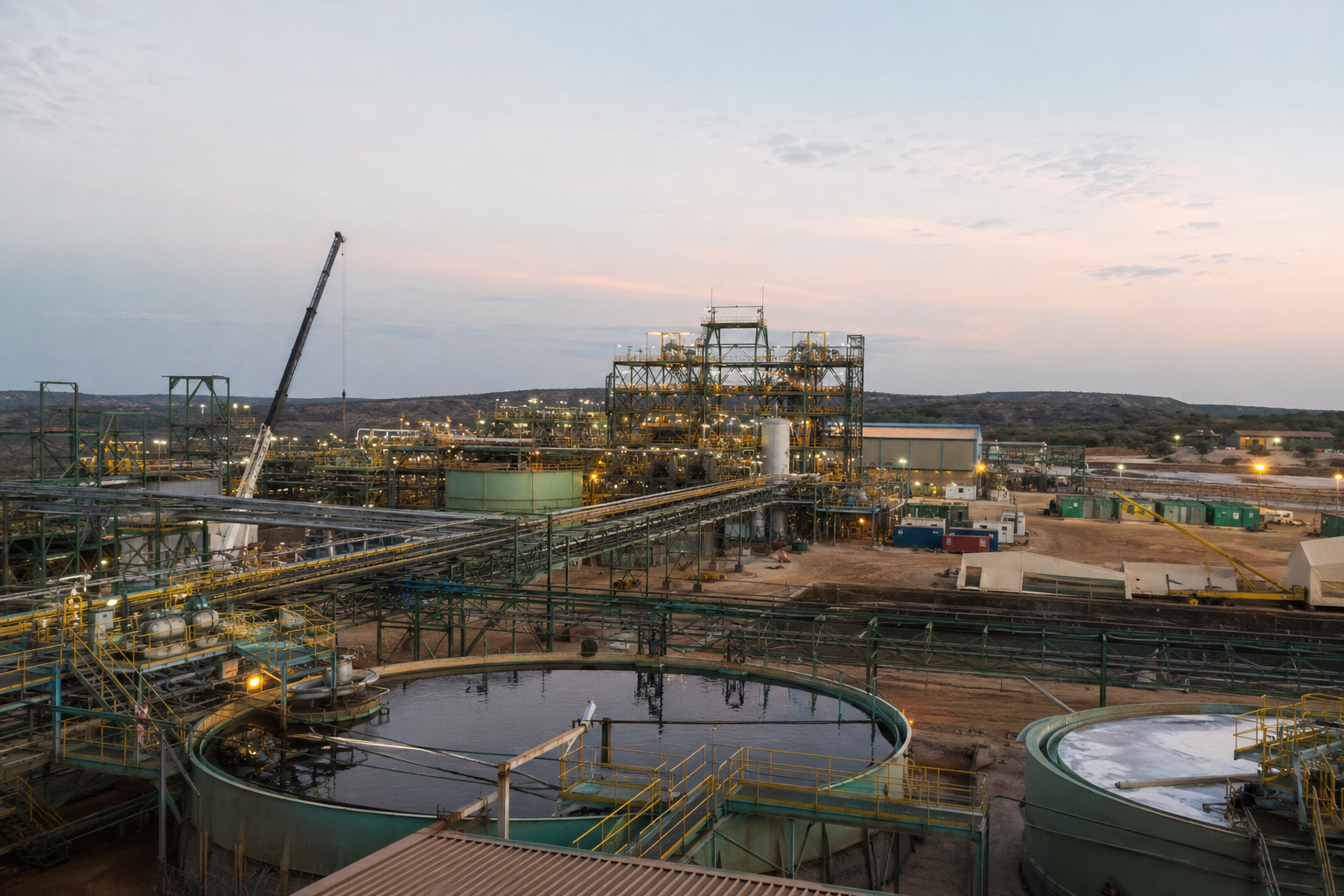
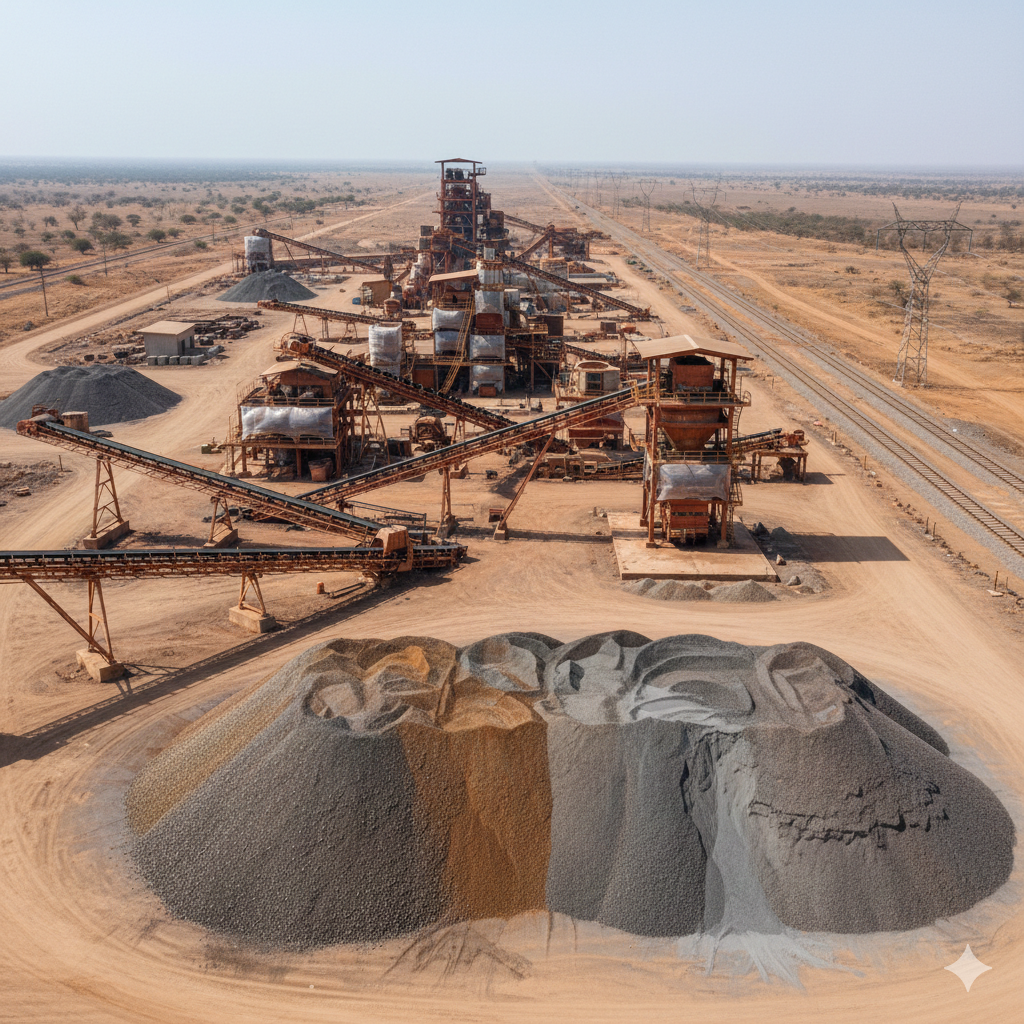
In 2022, Zimbabwe banned the export of raw lithium ore. In early 2026, Huayou Cobalt, a Chinese company, commenced production at a $400 million lithium sulphate processing facility at the Arcadia Mine, creating Africa's first plant of its kind. Most commentary on this sequence has treated it as proof that export bans work. The reality is more instructive than that. This piece explains what Zimbabwe's lithium export ban was designed to achieve, what actually happened, why the outcome reveals a specific gap in how beneficiation is understood across Africa, and what a more complete policy architecture would require.
What Zimbabwe did and why
Zimbabwe's export ban emerged from a policy logic that has gained significant traction across the continent over the past five years. Critical minerals, such as lithium, cobalt, graphite, and manganese, are the physical inputs of the global energy transition. Electric vehicles, battery storage, and renewable energy infrastructure all depend on them. African governments recognised that exporting these materials in raw form captures only a small fraction of the total economic value embedded within global mineral supply chains. The development argument was direct: restrict raw exports, incentivise domestic processing, retain more value, and create industrial employment.
Zimbabwe formalised that logic in 2022 by banning exports of raw lithium ore. The policy was consistent with broader continental conversations within the African Union and regional economic blocs, where export restrictions were increasingly framed as industrial policy, a legitimate instrument for states seeking to move from raw material supplier to industrial participant in transition economy supply chains.
The mechanism was straightforward: if companies could no longer export unprocessed ore, they would need to build processing capacity closer to extraction sites. The incentive structure would shift, and processing investment would follow.
In important respects, it did.
What actually happened
In the first quarter of 2026, Huayou Cobalt's lithium sulphate processing facility at Arcadia began production. Lithium sulphate is significantly more valuable than raw lithium ore. It is a processed, battery-grade intermediate product used in downstream battery manufacturing, the kind of material that commands substantially higher prices than the ore from which it is refined.
The facility is one of the continent's most significant lithium processing investments and Africa's first lithium sulphate plant. Zimbabwe's export restriction directly contributed to creating the conditions for it. Without the ban, there would have been less commercial incentive to process locally. The policy achieved its stated proximate objective: processing moved onto African soil.
But the ownership structure of what arrived tells a more complicated story.
Huayou Cobalt is a Chinese company. The refinery feeds into Chinese-controlled supply chains. The downstream battery manufacturing ecosystem, in which the highest margins are generated, remains overwhelmingly external to Zimbabwe. The processing has been geographically relocated. The economic control over what is processed and the industrial system it serves has not moved in the same proportion.
That gap is the centre of the analysis this piece is trying to make precise.
Why processing location and value capture are different things
The reason beneficiation matters economically is that mineral value increases dramatically at each successive stage of processing. Raw ore is worth relatively little compared with refined battery-grade material. Refining, chemical conversion, precursor manufacturing, and battery assembly each generate progressively higher margins. As ETA has previously documented, drawing on cobalt chain data, cobalt extracted at the mine stage may generate approximately $5.8 per kilogram; refined cobalt products can reach $16.2 per kilogram or more, depending on the downstream processing stage. The value multiplication follows processing.
But the value doesn't automatically remain in the country where processing occurs. That depends on ownership structures, equity participation requirements, technology transfer provisions, tax architecture, supply chain integration, and domestic industrial linkages. Processing can be geographically onshore while remaining economically offshore if none of those conditions is in place.
This is what the Zimbabwe-Huayou case illustrates. The export ban successfully forced processing onshore. Processing ownership remained external. The refinery exists physically in Zimbabwe. The broader value chain remains substantially integrated into foreign industrial systems, specifically the Chinese battery manufacturing supply chain that Huayou serves.
Zimbabwe gains from this arrangement. Local industrial activity has increased. Employment has been generated. Tax revenues flow. Infrastructure has been built. The country participates further down the value chain than simple raw ore exports would allow. These are real and meaningful gains. The outcome is unquestionably better than exporting unprocessed ore alone.
But it isn't the same as the fuller version of beneficiation that development policy discussions often invoke when they argue for export restrictions as an industrialisation strategy. When economists and policymakers make that argument, they are generally referring not only to local processing but to domestic participation in ownership, technological capability, and long-term industrial upgrading. Those are related but distinct objectives, and the policy instruments required to achieve them are different.
The gap export bans cannot fill alone
The structural issue the Zimbabwe case exposes isn't whether export bans work as mechanisms. They do work, in a specific and limited sense: they change the investment calculus for foreign processors and can shift processing activity geographically. The question is what they cannot do alone.
UNCTAD estimates that the Global South faces approximately $225 billion in investment shortfalls across critical mineral processing and downstream industrial activities. That gap is concentrated precisely at the stages where value multiplication is highest: refining, chemical conversion, advanced processing, and manufacturing integration. Export restrictions alone cannot fill a financing gap of that scale. If domestic or regional capital is unavailable at sufficient volume and competitive cost, foreign firms will continue to dominate the processing stages that African governments are trying to build for their own industrial base. The ban changes who processes, but doesn't automatically change who owns, finances, and ultimately benefits from the processing.
Countries seeking genuine value retention need an industrial policy architecture that extends significantly beyond export controls. That architecture requires industrial financing strategies that make domestic and regional ownership commercially viable; equity participation requirements embedded in processing licences rather than added as afterthoughts to existing agreements; technology transfer provisions that are specific, time-bound, and enforceable rather than aspirational; local procurement systems that create genuine industrial linkages rather than parallel supply chains; skills development programmes calibrated to the specific technical requirements of each processing stage; and joint venture frameworks with enforcement mechanisms that function under commercial pressure.
Without those elements operating together, export bans may succeed in relocating industrial activity geographically while leaving ownership and strategic control largely unchanged. The processing arrives. The value chain does not follow.
Why the AU framework represents the right diagnosis
The African Union's Continental Critical Minerals Value Addition Framework, adopted in February 2026, represents an attempt to move beyond the narrower understanding of beneficiation that the Zimbabwe case exposes. The framework recognises that processing location alone is insufficient, that value retention depends on governance structures, and that African countries require coordinated industrial strategies rather than isolated export controls operating ahead of the institutional infrastructure that would make them transformative.
In many respects, the Zimbabwe-Huayou sequence illustrates precisely the scenario the AU framework was designed to address. The export ban changed behaviour. The processor arrived, but the questions of ownership, technology, and long-term industrial leverage remain unresolved, not because the policy was wrong but because it was only the first instrument in what needs to be a longer sequence.
That distinction matters for how other African governments read the Zimbabwe case. The lesson is that export bans are one instrument within a much larger industrial policy architecture, and the architecture matters as much as the instrument. Countries that treat the export ban as the destination rather than the starting point may find they have relocated processing without fully relocating prosperity. Zimbabwe demonstrated that the first step is achievable. The rest of the work, ownership, financing, technology, and industrial integration, is where the transition from raw material supplier to industrial participant actually happens.