Africa’s Digital Economy Is Booming but It Is Still Powered by Diesel
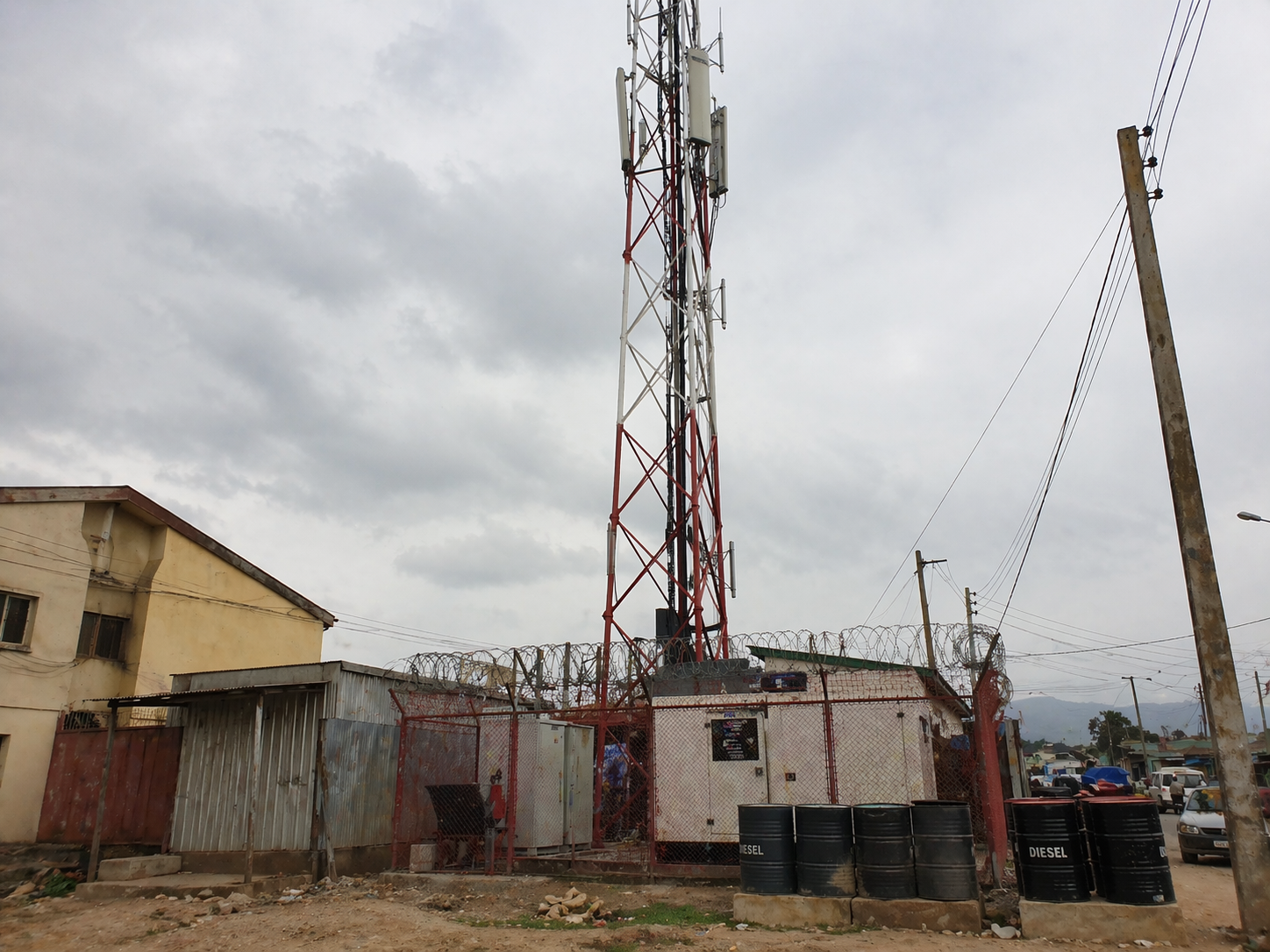
Africa's digital economy story is a compelling one. Mobile money has reached more than 800 million registered accounts across the continent. Fintech platforms are scaling across borders, hyperscale data centre announcements are landing in Lagos, Nairobi, Cairo, and Johannesburg, and governments are committing to digital transformation as the next engine of economic growth.
All of this is real, but so also is what is rarely stated alongside it as well.
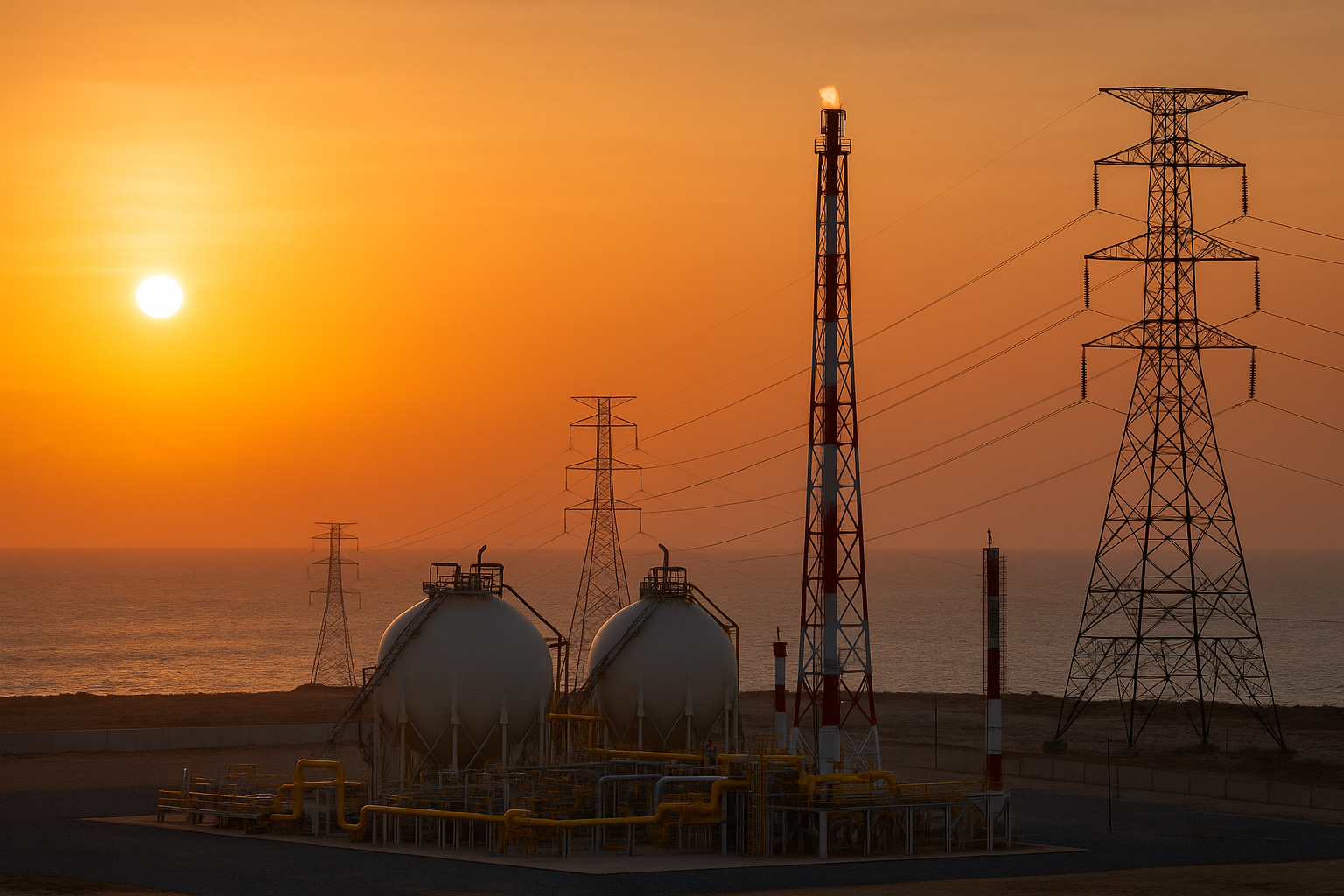
More than half a million telecommunication towers across Africa remain dependent on diesel for power, according to a July 2025 analysis by CrossBoundary Energy. Twelve newly commissioned Tier III and Tier IV data centre facilities in Nigeria, Kenya, and South Africa adopted multi-megawatt standby diesel arrays in 2024 because the grid could not guarantee the uptime their operations require. In Nigeria alone, mobile operators and tower companies purchase and transport over 40 million litres of diesel per month to operate generators at tower sites due to recurrent grid outages.
Africa's digital infrastructure isn't primarily powered by the grid, but by diesel. And that fact is reshaping the economics, the competitiveness, and the climate credentials of the continent's most celebrated growth story in ways that neither the technology sector nor the energy sector has fully confronted.
Why reliability, not access, is the constraint that matters here
The global conversation about Africa's energy challenge has been organised, for most of the past two decades, around access. How many people have a connection? How many communities are electrified? How many megawatts have been installed?
For the digital economy, access isn't the binding constraint. Reliability is.
A telecom tower cannot tolerate a four-hour outage, a data centre can't operate on an intermittent supply, and a financial services platform can't process transactions on a grid that trips unpredictably. The tolerance for disruption in digital systems is effectively zero.
Yet sub-Saharan African grids averaged 56 hours of monthly outages in 2024, according to Afrobarometer data. Nigeria's grid collapsed at least twelve times in the first half of that year. South Africa's Eskom recorded 118 days of Stage 6 load-shedding across 2023 and into 2024. For digital infrastructure operators, these aren't manageable inconveniences; they are unacceptable operational risks.
The response has been rational and decisive: build around the grid entirely. Generating electricity with diesel generators typically costs three to four times more than grid-based electricity in the region, with even higher ratios in countries like the DRC, Ethiopia, and Zambia. Operators pay that premium not because diesel is attractive but because the alternative, dependence on a grid that cannot deliver a continuous supply, is commercially untenable.
This is not a workaround. It is the operating model.
The scale of the diesel backbone
The figures that describe Africa's diesel-dependent digital infrastructure are significant enough to constitute a structural condition, not an operational inconvenience.
In some remote areas of the continent, diesel accounts for 30 to 60 percent of a telecom tower's operational costs. Fuel transportation alone increases those costs by a further 15 to 30 percent, according to data cited from GSMA Intelligence. Over the past two years, geopolitical tensions and supply chain disruptions have caused diesel costs to surge by 40 to 60 percent in many African markets.
Data centres carry the same logic on a larger scale. Africa has the lowest data centre electricity consumption per capita globally, less than 1 kWh per capita in 2024, but this figure masks significant concentration in South Africa, where per-capita consumption is more than 15 times the continental average. As hyperscale investment accelerates into the continent's major markets, those facilities will require continuous, high-density power that African grids, in their current condition, are structurally unable to guarantee. The default is already established: backup generation, overwhelmingly diesel, is being specified in data centre projects from the outset.
The IEA's Key Questions on Energy and AI, published recently, confirms that global data centre electricity demand soared by 17 percent in 2025, well outpacing overall electricity demand growth of 3 percent. Africa will participate in that growth. The question is what fuel will power it.
The cost this imposes on digital competitiveness
Diesel dependence is not simply an energy problem. It is a competitiveness problem.
Energy is one of the largest operating costs for digital infrastructure. When that energy is derived from diesel rather than low-cost grid electricity or utility-scale renewables, the cost base rises substantially and persistently. Those costs flow through the system. Data becomes more expensive to store and process, and digital services cost more to deliver. The economics of scaling technology platforms are shaped not only by software development or market size but by the cost of the fuel running the generators beneath the servers.
This creates a structural disadvantage for Africa's digital economy that does not feature prominently in investment announcements or government digital transformation strategies. A data centre in Lagos or Nairobi operating on diesel backup for a significant proportion of its runtime is not competing on equal terms with equivalent facilities in markets where grid electricity is reliable and affordable. The gap isn't in innovation or talent, but in the energy cost embedded in every transaction, cloud query, and every fintech payment processed.
Telecom-tower densification added 8,200 sites across Nigeria and Kenya during 2024 alone, most designed around hybrid diesel-solar microgrid configurations. These aren't temporary arrangements pending grid improvement. They are capital investments in infrastructure designed around the assumption that the grid will remain unreliable, a self-reinforcing signal that perpetuates the condition it responds to.
The climate contradiction at the core of the growth story
There is a dimension of this that sits uneasily alongside Africa's climate commitments and its positioning in global clean energy narratives.
The continent is deploying renewable capacity at a record pace. IRENA's Renewable Capacity Statistics 2026 confirms Africa added 11.3 GW in 2025, its highest annual increase on record. African governments are presenting ambitious nationally determined contributions. The energy transition narrative positions the continent as a future clean energy hub.
And simultaneously, one of the fastest-growing sectors of the African economy, digital infrastructure, is increasing its reliance on fossil fuels. Not because operators are indifferent to climate commitments, but because the grid that would allow them to act differently does not yet reliably exist.
This is not a failure of intent. It is a consequence of system design, specifically, the decades-long failure to invest in grid reliability at a pace commensurate with the demands of the economies building on top of it. The IFC's recent $45 million investment in IPT PowerTech to deploy clean power systems for telecom towers in Ethiopia, Liberia, and Sierra Leone is an example of what targeted intervention looks like. The transition is estimated to reduce power costs for operators by up to 52 per cent in Ethiopia and cut emissions by more than 10,624 tonnes of CO₂ equivalent annually across the three countries. It is also, relative to the scale of the problem, a starting point.
What would have to change
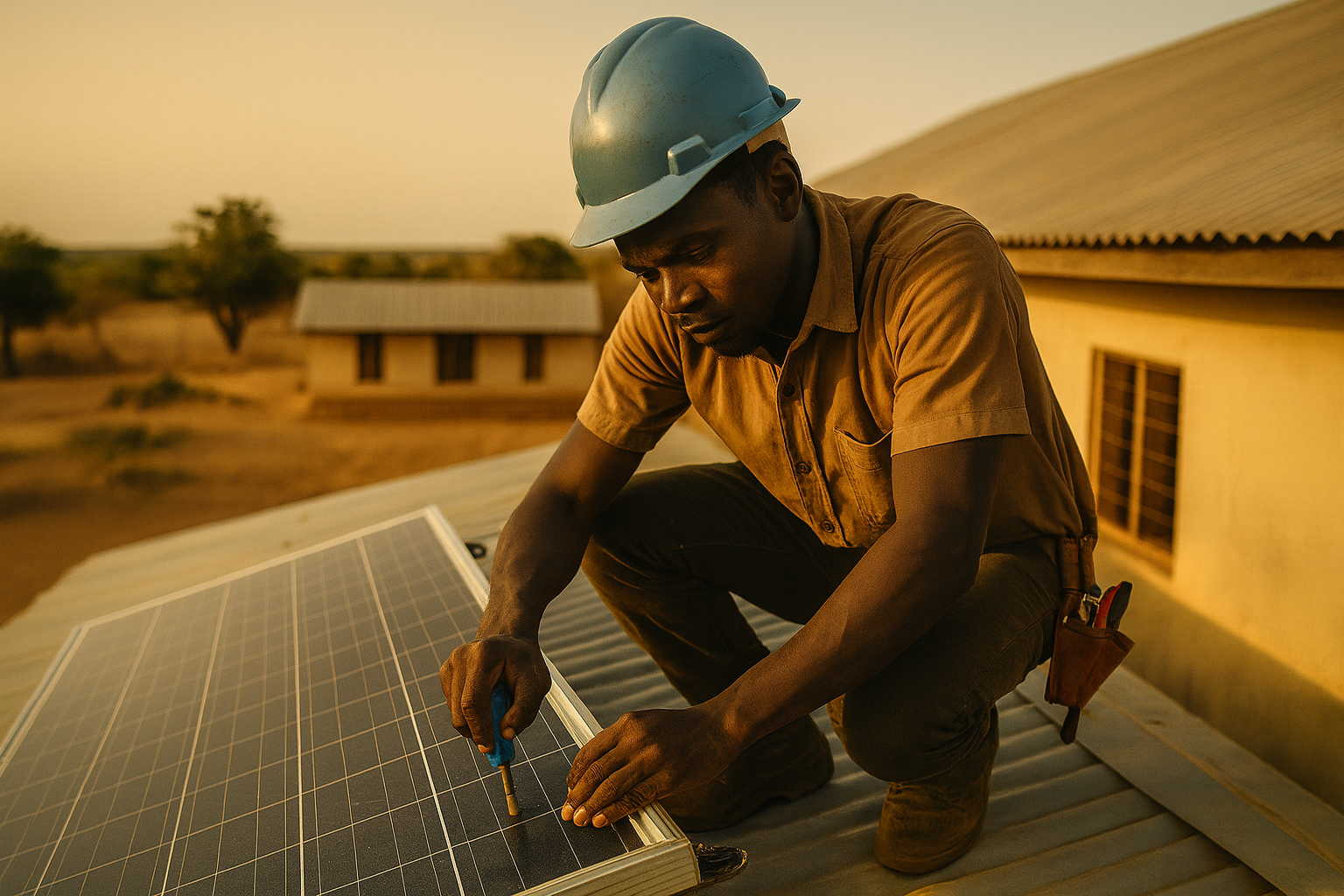
The path out of diesel dependence for Africa's digital infrastructure isn't technically complicated. The technologies, solar-hybrid systems, battery storage, and grid reliability investment exist and are increasingly cost-competitive. According to IRENA, hybrid systems can reduce diesel consumption by 40 to 70 percent in off-grid applications.
What is complicated is the sequencing of institutional and policy change that would allow those technologies to displace diesel at scale. Grid reliability must improve not incrementally, but structurally through sustained transmission and distribution investment of a kind that Africa's utility sector, in its current financially constrained condition, cannot self-finance. Solar-hybrid tower systems are gaining traction, with a segment CAGR of 11.68 percent through 2031 as green financing incentives begin to offset diesel volatility. That trajectory needs to accelerate.
But the more fundamental shift is in how digital infrastructure is planned. Telecom and data centre investment strategies can't continue to be designed around diesel as the default reliability mechanism. Energy planning and digital infrastructure planning need to happen simultaneously, with grid reliability treated as a precondition for digital investment rather than a problem to be engineered around after the fact.
Africa's digital economy is not being held back by a shortage of ambition, capital, or technological capability. It is being constrained by the energy system that powers it. And until that system delivers reliability at competitive cost, the continent's most modern sector will continue to run on one of its oldest fuels, and the cost of that contradiction will be paid by every business, every user, and every economy attempting to compete in the Age of Electricity on terms that were never designed to be fair.