Africa’s Grid Is Failing and the Reports Are Only Just Catching Up
There is a particular kind of silence that settles over a renewable energy project when its evacuation line fails. Not the silence of absence, the turbines are still turning, the wind is still moving, but the silence of generation with nowhere to go. Curtailed, stranded, technically operational, but practically useless.
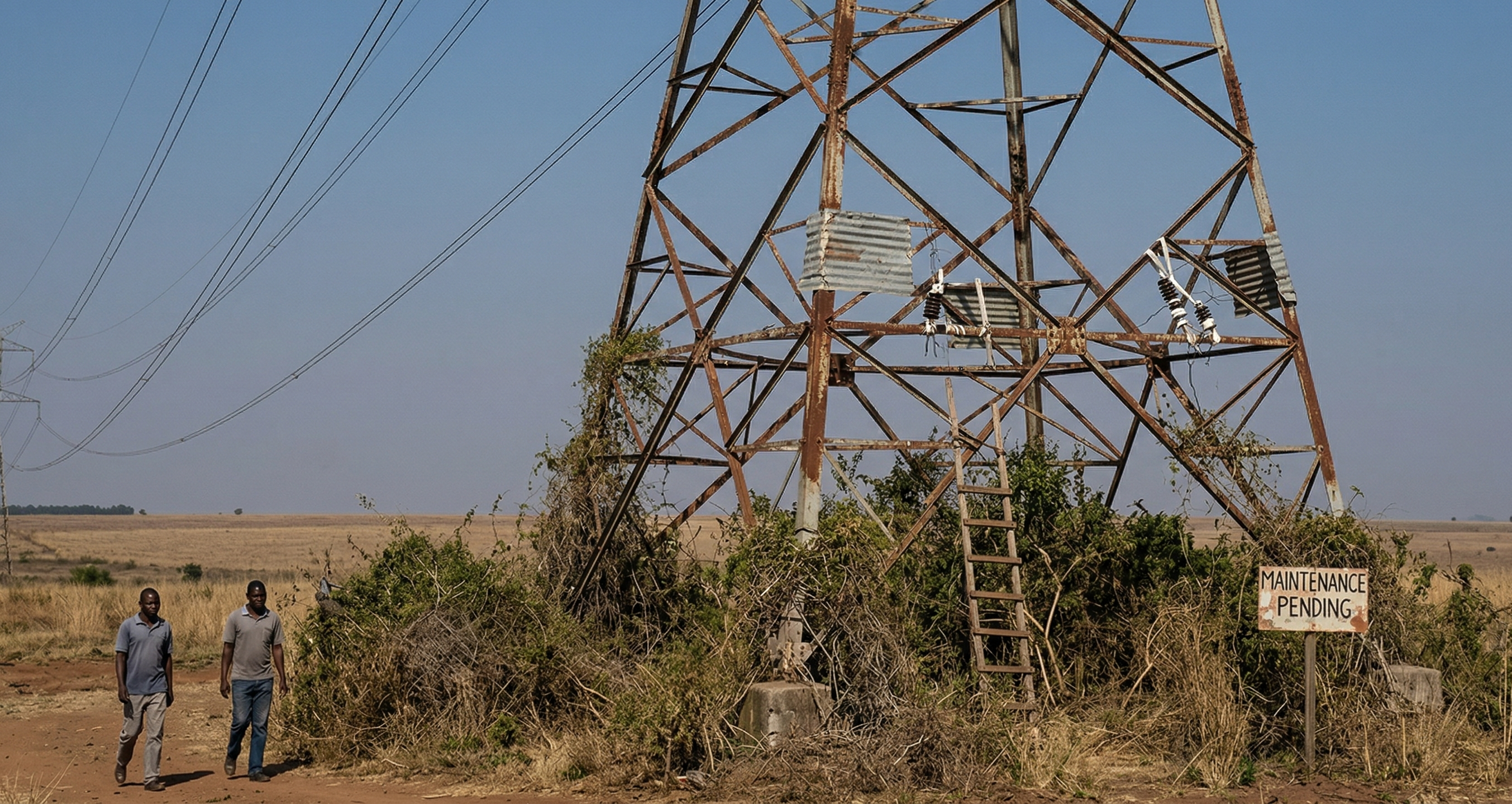
Africa’s largest wind installation, Lake Turkana in northern Kenya, has lived through versions of this silence more than once. The 310-megawatt farm sits in Marsabit County, connected to the national grid by a 428-kilometre double-circuit transmission corridor, one of the longest single evacuation lines on the continent. That line has experienced repeated delays, contractor failures, and structural faults since its construction phase. When sections collapse or trip, the farm curtails.
The towers fall the way infrastructure falls when maintenance is improvised around budget cycles rather than engineered into systems from the outset.
I raise Lake Turkana not as an isolated failure, but as a physical expression of something visible across the continent to anyone who has worked near African infrastructure. The gap between ambition and delivery is often a line; a transmission corridor, a protection relay, or a substation that hasn't been serviced in years.
And that infrastructure is failing in ways that are entirely predictable to the people responsible for operating it.
What a security brief noticed, and who already knew it
A short intelligence brief published this week by the Bloomsbury Intelligence and Security Institute noted that Africa’s power systems face shortages of specialised grid workers, engineers, planners, protection specialists, and maintenance staff, alongside limited transmission expansion and high distribution losses. It framed these as emerging security risks, warning that prolonged blackouts and rising electricity costs could contribute to localised unrest in already fragile urban environments.
The brief is worth noting, but not because it introduces new insight. It draws largely on data from institutions such as the International Energy Agency and the World Bank, evidence that has existed for years within the energy sector. What makes it significant is something else: the audience.
When a security institute, rather than an energy institution, elevates grid maintenance as a strategic concern, it signals that a long-standing operational reality has finally crossed into broader institutional visibility.
The constraint has never been a lack of data, but a delay in recognition. There is a gap, sometimes measured in years, between what practitioners on the ground understand and when that understanding is formally acknowledged by global institutions. This moment is less about discovery and more about confirmation. The field has known this for a long time.
A supply-led transition that skips maintenance
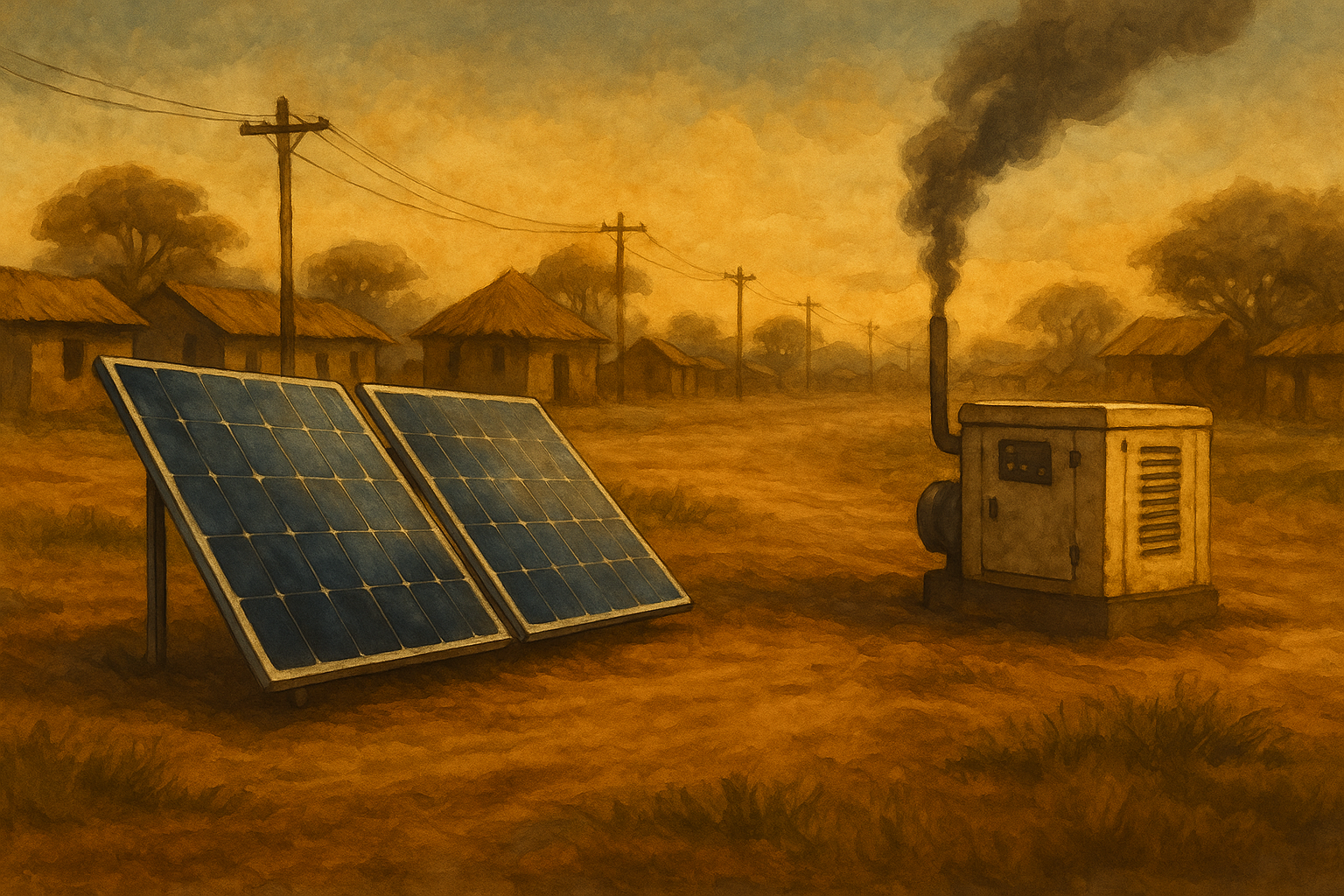
The logic is straightforward: generate more electricity, connect more users, deploy more infrastructure. Hardware becomes the central metric of progress. Everything that sustains that hardware, maintenance systems, protection mechanisms, operational staffing, spare parts logistics, is treated as something that follows deployment, rather than something that must be built alongside it.
This approach is not uniquely African. It reflects the structure of global energy transition finance. Development finance institutions measure success through disbursement tied to procurement, climate programmes count megawatts installed, Nationally Determined Contributions report capacity additions, and power purchase agreements secure revenue for generation assets, but rarely for the decades of maintenance that follow.
The system rewards installation, and not durability, so the consequences become visible.
The World Bank estimates that power outages cost Nigeria approximately $29 billion annually, close to 10 percent of its GDP. Nigeria’s grid collapsed at least twelve times in 2024 and has continued to experience system-wide failures into 2026, with generation falling to zero megawatts on multiple occasions.
The country has roughly 13,000 megawatts of installed capacity, but it reliably delivers closer to 5,000. That gap isn't primarily about generation, but about transmission, operations, and maintenance.
What it looks like from the inside
From a distance, these failures are often described in aggregate terms: capacity gaps, infrastructure deficits, and institutional weakness. Up close, they take on a different texture.
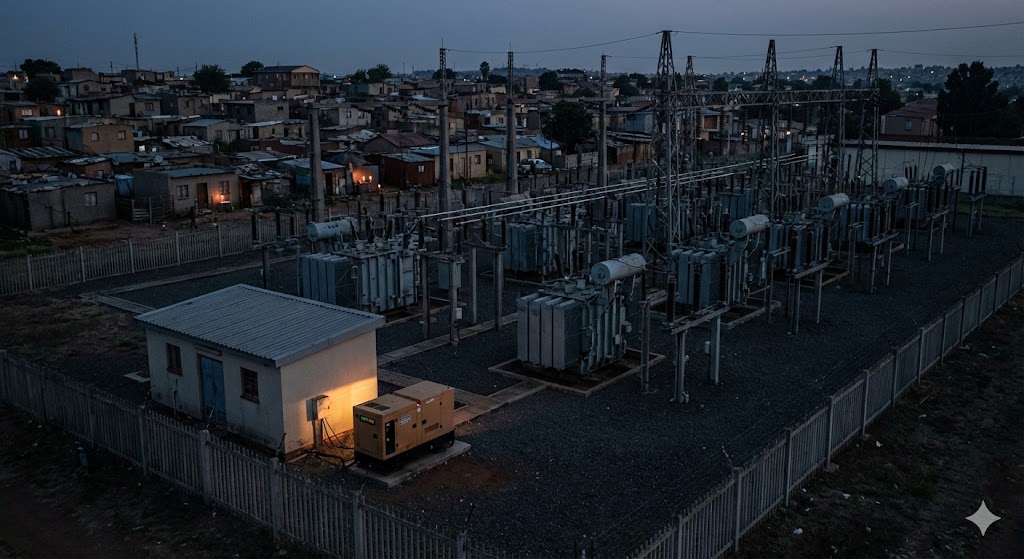
A protection relay that trips under load because no one with the right calibration expertise has returned since commissioning, a line inspector responsible for hundreds of kilometres of transmission corridor, moving between sites on a motorcycle because there is no operational budget for vehicles, and a transformer with a known fault, waiting months for a replacement part that has already been ordered but not delivered.
These aren't edge cases. They are part of the operating reality across multiple systems in Nigeria, in Kenya, in Zambia, contexts that differ in scale, but share the same underlying constraint.
The International Energy Agency has noted that Africa requires a significant improvement in the financial health of its public utilities as a precondition for grid expansion. In practice, this translates into something more immediate.
You cannot maintain an infrastructure that you are unable to operate. Utilities across the continent are constrained by tariffs set below cost recovery, rising debt burdens, and limited fiscal space, so maintenance becomes discretionary, and over time, it becomes deferred, which eventually becomes a failure.
Why the diagnosis has not changed the narrative
All of these are real. But what is often missing from the same conversation is the operational layer: the people, systems, and routines that keep infrastructure functioning after it is built.
The engineer who manages system load to prevent cascading failures. The protection specialist who isolates faults before they spread, and the maintenance crew that ensures a transmission tower remains standing through years of exposure. These roles are rarely visible in policy discussions, yet they determine whether the system works.
The International Energy Agency has been explicit: grid limitations, weak interconnections, and insufficient technical capacity constrain the integration of renewable energy. GlobalData’s recent analysis reaches a similar conclusion: renewable deployment is accelerating, but system fragility remains the binding constraint.
These are not new findings. They have been available to policymakers, investors, and development institutions for years, yet the dominant narrative remains unchanged. Investment forums continue to lead with gigawatts, policy frameworks continue to prioritise installation, and financing structures continue to reward deployment over maintenance. The system continues to measure what is easiest to count.
The confirmation that changes nothing
The security brief, the Lake Turkana transmission failures, Nigeria’s repeated grid collapses, and the accumulation of reports from institutions such as the International Energy Agency and the World Bank don't represent a new argument.
They represent repetition. Each adds to an evidence base that is already extensive, already clear, and already understood by those working within the system. What they haven't done is shift the structure of how the energy transition is financed, measured, or prioritised.
That structure remains externally designed, hardware-focused, and announcement-driven. It is optimised for the moment of installation because that is what its metrics reward.
A functioning relay doesn't appear in a capacity report.
A trained grid operator doesn't headline an investment summit.
A well-maintained substation generates no press release.
And so, it is not counted. The reports will continue. The grid will continue to fail where maintenance is underfunded, and transmission lines will keep collapsing where systems aren't sustained.
At some point, the gap between what is being measured and what is actually determining outcomes stops being a technical issue.
It becomes a decision.
Africa’s grid isn't failing because the problem is unknown. It is failing because the system is not built to value what keeps it working.
And until that changes, the transition will continue to produce capacity without reliability.