Uganda Borrows to Sell Power. Can South Sudan Pay?
Uganda has installed generation capacity of roughly 2,048 megawatts, and its Auditor General has flagged billions of shillings paid for power the country could not use. South Sudan's civil servants were owed between eight and thirteen months of salary arrears by January 2026, according to the World Bank. A 400-kilovolt line now under construction is meant to connect these two positions: Uganda's surplus and South Sudan's need. The financing behind that line places the loan on the seller and the grants on the buyer. Whether that arrangement works depends on a question the public record does not yet answer, and the answer will become visible only once electricity and money are actually flowing in both directions.
What is being built, and who pays for what
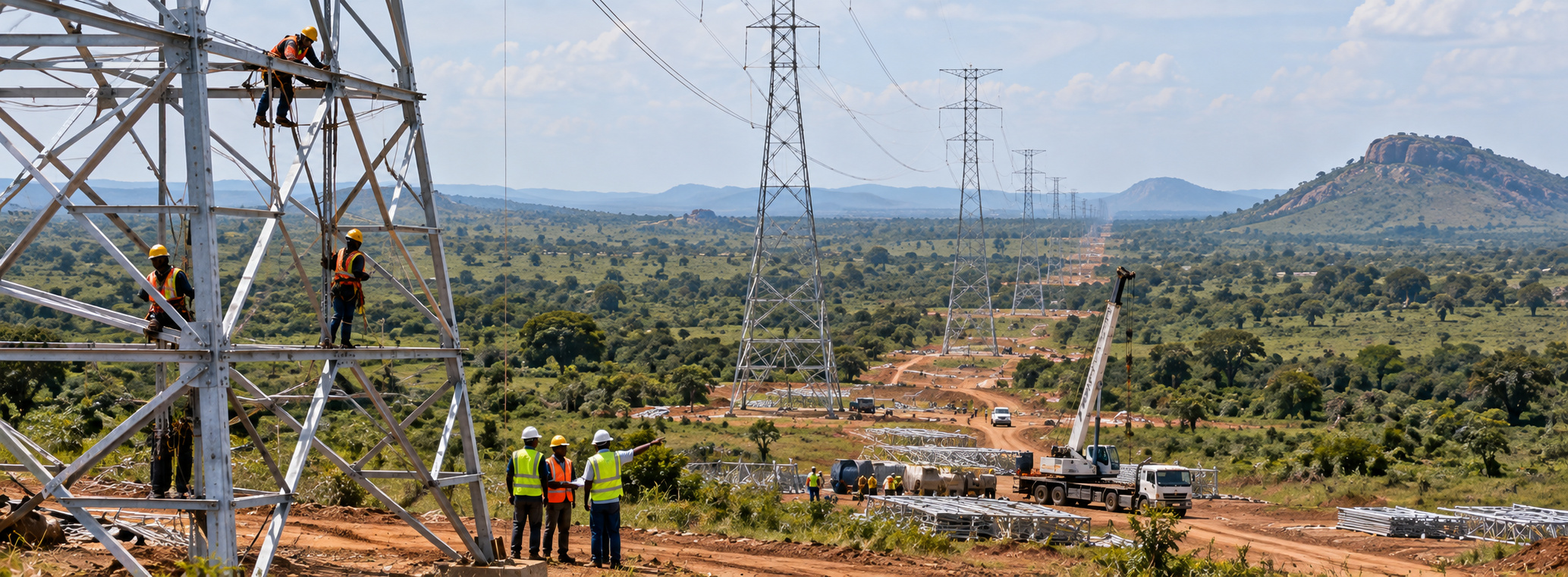
The South Sudan-Uganda Power Interconnection Project is a 299-kilometre, 400-kilovolt double-circuit line running from Olwiyo in Uganda to Gumbo, near Juba, in South Sudan, approved by the African Development Fund's board on 13 December 2024; the total cost is $260 million. Of that, $153.66 million comes from the ADF, the concessional lending arm of the African Development Bank Group: a $119.21 million loan to Uganda, a $32.50 million grant to South Sudan, and a further $1.95 million grant to the Nile Basin Initiative, which coordinates implementation. The European Union is separately providing a €48.93 million grant to South Sudan, and Uganda has committed $17.44 million in matching counterpart funding. Reports from September 2026 cite Uganda's loan as UA 91.7 million, or roughly $121 million. This figure likely reflects currency movement between the December 2024 approval and today's exchange rate rather than a change in the underlying commitment.
The Ugandan component covers about 150 kilometres, including a new substation at Bibia and an extension of the Karuma substation to evacuate power northward. The line is expected to exchange an average of 624 gigawatt-hours a year. The structure is straightforward to state and consequential to sit with: Uganda holds the debt. South Sudan holds the grants.
Why Uganda wants to sell
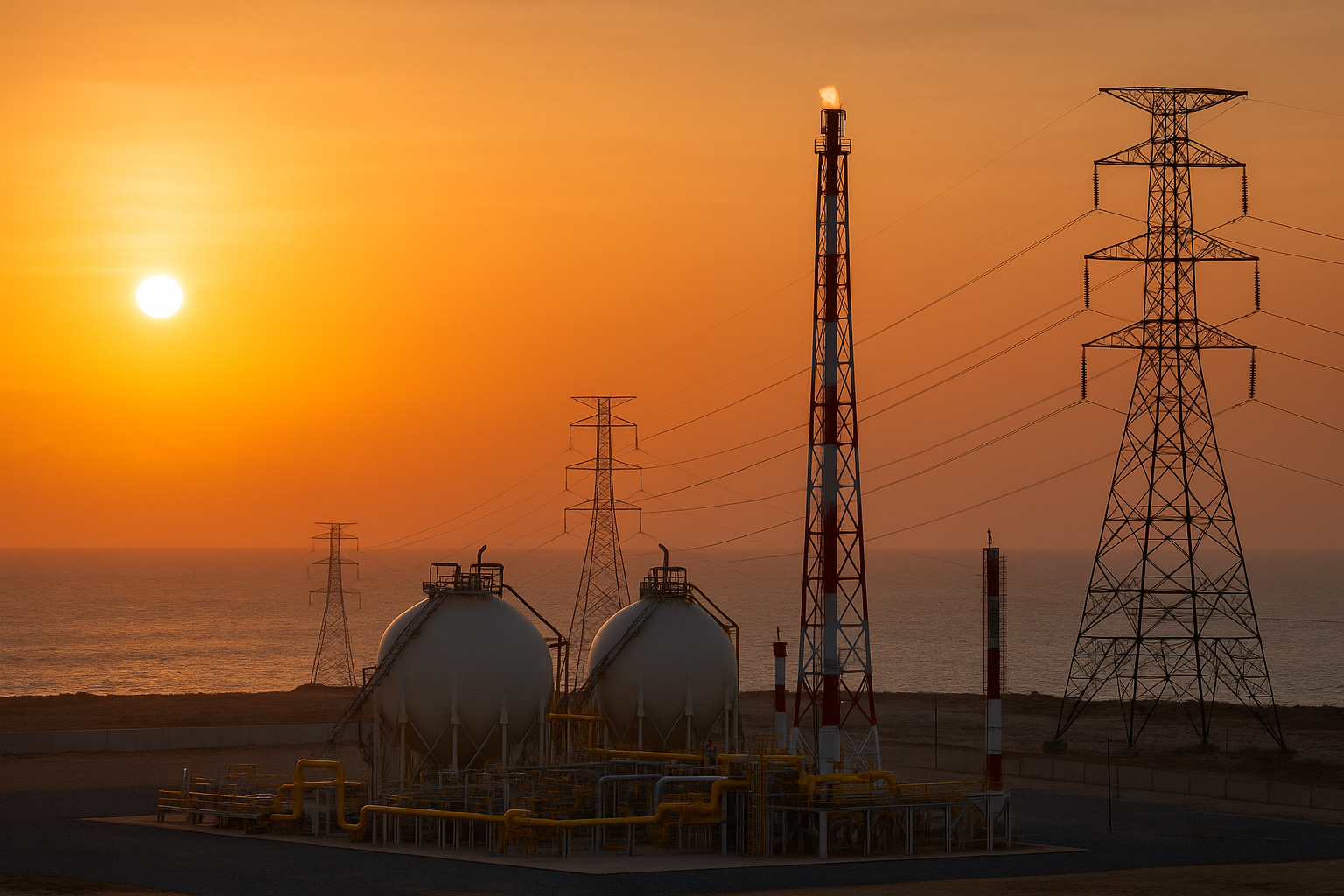
Uganda's incentive to export isn't manufactured. Installed capacity reached roughly 2,048 megawatts after Karuma's 600 megawatts came online, and reporting has put the resulting surplus above a gigawatt, a figure that should be treated as reported rather than independently audited. Uganda pays for a share of that surplus regardless of whether it is used, under take-or-pay contracts signed with generators, and a legislator cited the Auditor General's figure of 26.94 billion shillings in such "deemed energy" payments, money spent on capacity nobody drew from the grid. Electricity export earnings already rose 34 percent to $72 million between March 2025 and February 2026, according to the Bank of Uganda. The AfDB's project listing states that new exports are meant to ease the burden of those take-or-pay obligations, framing this interconnector as much a fix for Uganda's balance sheet as a service to South Sudan.
That need is politically complicated at home. Only 25.3 percent of Ugandans are connected to the grid, according to a 2025 parliamentary debate on the related borrowing, and exporting power while so many citizens remain unconnected is a live domestic argument. It is worth recording briefly rather than centring on it, because it doesn't change the commercial logic driving Uganda toward this line: a country that already pays for unused capacity has every reason to find a paying customer for it, even a customer whose finances carry real doubt.
Can the buyer pay?
South Sudan's public finances depend heavily on oil revenue exported through a pipeline crossing Sudan, a country at war. The IMF reported in November 2024 that the pipeline, carrying roughly 70 percent of South Sudan's export capacity, had been inoperable since February 2024, driving a collapse in government revenue. The World Bank's account of the aftermath, updated through 2026, is stark: a fiscal deficit that widened to 6.7 percent of GDP in FY25, salary arrears of eight to thirteen months by January 2026, food-proxied inflation of 234 percent for the year, and extreme poverty rising from 84 per cent in 2024 to 87 per cent in 2025. Oil production has since recovered to around 157,000 barrels a day in early FY26, and the World Bank projects fiscal consolidation only by FY28.
Against that backdrop, the case for payment is genuinely strong on cost grounds alone: imported power is projected at roughly $0.09 per kilowatt-hour against approximately $0.40 for diesel generation, according to the Nile Basin Initiative, a four-fold difference that gives South Sudan real reason to prioritise this bill over others. But willingness to pay and capacity to pay are different things. The actual payer here is the utility, South Sudan Electricity Corporation, and, for the Nimule and Kaya supply specifically, JEDCO, not the national treasury directly, and no public financial statements for either entity could be located.
What the agreements say, and what they do not
A power sales agreement was signed in Juba on 27 June 2023 between Uganda's Ministry of Energy and South Sudan Electricity Corporation, alongside a separate agreement between Uganda's transmission company and JEDCO covering existing supply to Nimule and Kaya. Reporting at the time noted the minister did not disclose the price. A commercial framework exists, but what is absent from the public record is its content. The Nile Basin Initiative's project page lists joint operation and maintenance agreements and tariff studies among the project's remaining components, work still being defined rather than finished.
Several questions remain genuinely open, like whether a payment guarantee, escrow account or letter of credit backs the arrangement; what currency the tariff will be denominated in; what remedy exists if South Sudan Electricity Corporation cannot pay; and whether Uganda retains the ability to curtail supply if payments lapse. None of these questions is unreasonable to ask of a public financing decision, and none has yet been answered in public.
What it means for the Eastern Africa Power Pool
Regional interconnection in Africa is typically financed as infrastructure first, with payment risk treated as a commercial detail to be resolved later. ETA's reporting on West Africa's power pool has already shown what happens when that detail goes unresolved: formal payment rules exist there too, and utilities have still accumulated real arrears against them. This interconnector offers something rarer, a chance to see the same structural question before energisation rather than after a default has already occurred. Whether the Eastern Africa Power Pool's regulatory framework, including a 2026 cooperation arrangement with the Southern African Power Pool, can translate physical connection into genuine settlement discipline will decide whether this line becomes a functioning market or an unpaid invoice with a transmission tower attached.
On the contrary, Uganda already absorbs the cost of unused power under its existing take-or-pay contracts; any sale above that marginal cost reduces a loss it carries regardless of what South Sudan eventually pays. The loan itself is concessional, routed through the African Development Fund rather than a commercial lender, and carries a correspondingly lighter debt-service burden than the market would charge. And unlike many regional creditors caught in cross-border arrears, Uganda holds a remedy West African utilities have rarely been willing to use in practice: because the interconnector is a single, physical, bilateral line rather than a pooled regional market with many counterparties, Uganda can in principle reduce or halt what it sends down the wire if payment stops arriving.
That argument holds only under two conditions, neither of which can currently be confirmed. First, that curtailing supply to a country already enduring severe fiscal and humanitarian strain carries no meaningful political or reputational cost for Uganda, an assumption regional diplomacy rarely bears out cleanly. Second, that whatever tariff eventually gets set at minimum covers the debt service Uganda owes on the asset itself, since a tariff too low to do that would leave Uganda financing South Sudan's electricity access on Uganda's sovereign credit regardless of what SSEC ultimately remits. Neither condition is verifiable from anything currently public, and South Sudan's first post-independence general election, scheduled for 22 December 2026, sits inside the same window in which these terms will most plausibly be settled or left unsettled further.
Uganda holds the loan. South Sudan holds the grants. The line will only tell us which side got the better deal once electricity and payment actually start moving in both directions.