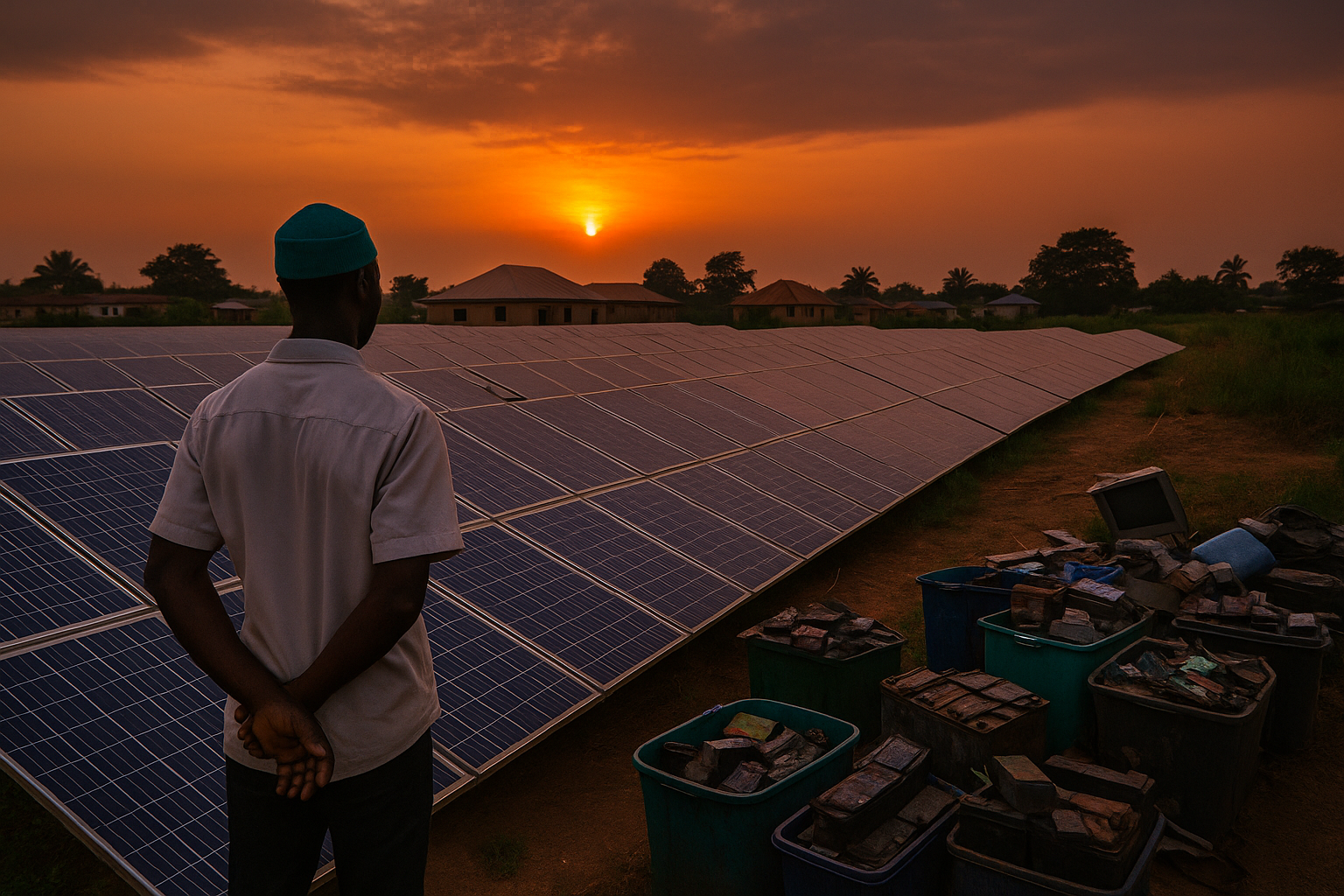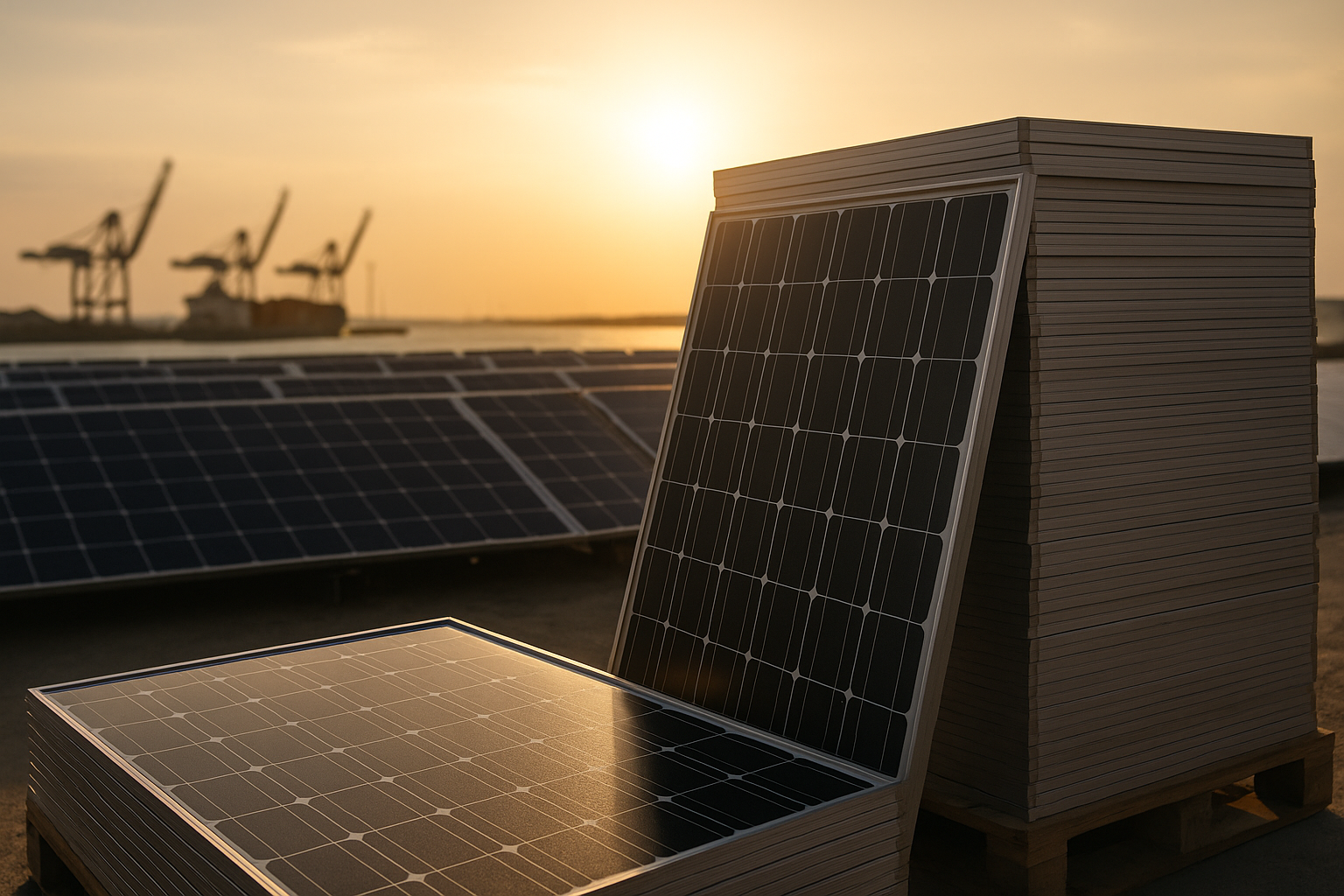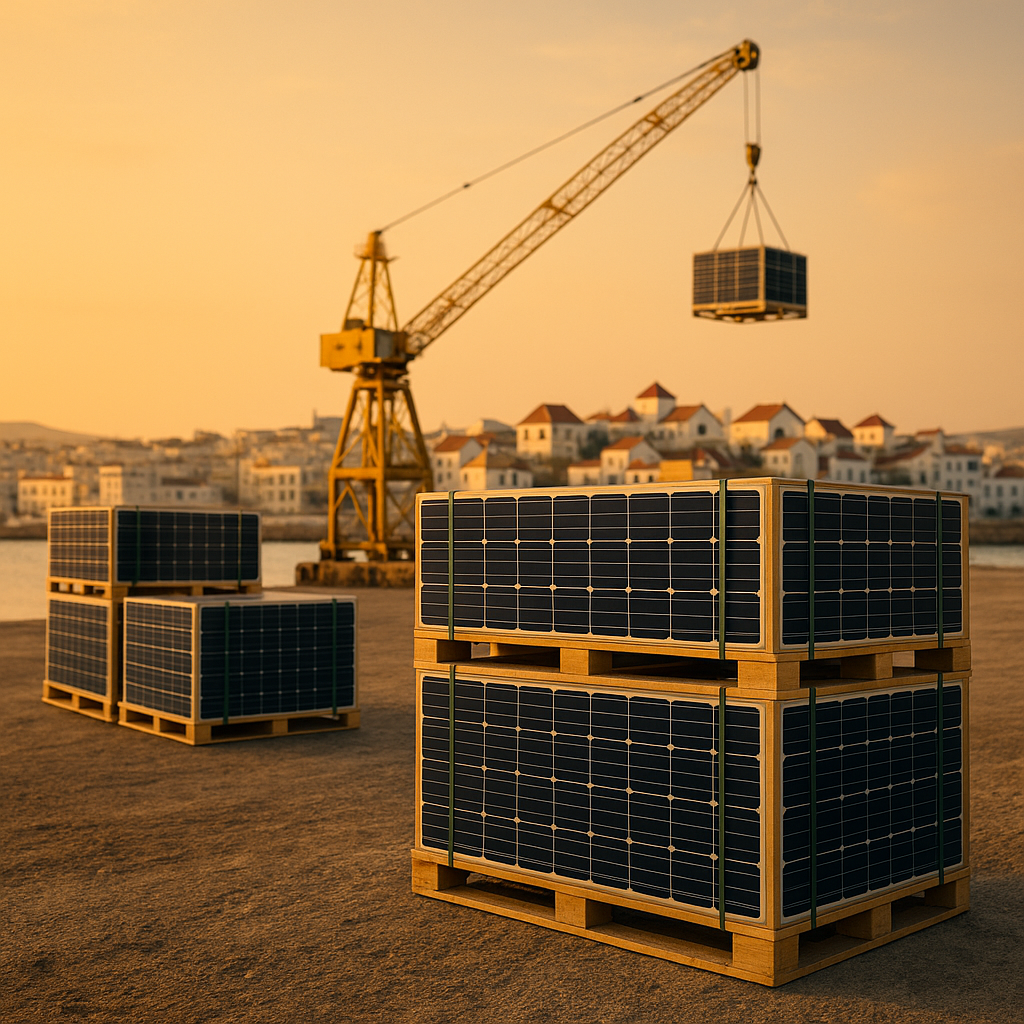
A solar home system battery in sub-Saharan Africa has a typical useful life of between one and five years in off-grid conditions, depending on the technology, climate, and whether the system was installed correctly. When it fails, and most fail rather than being replaced proactively, it becomes waste. What happens to it next depends almost entirely on where it is and who picks it up first. In most of Africa, across the countries where off-grid solar is growing fastest, the answer is: it enters the informal sector, is thrown into a pit latrine, burned, or it sits in household storage until someone finds a use for it. Formal battery recycling infrastructure capable of handling this waste safely exists in almost none of those markets.
The research documenting what actually happens is specific, peer-reviewed, and recent. Three country-level studies in Malawi, Zambia, and urban Lusaka produce findings that deserve to be read together, because they describe different stages of the same problem.
Malawi: what informal recycling looks like
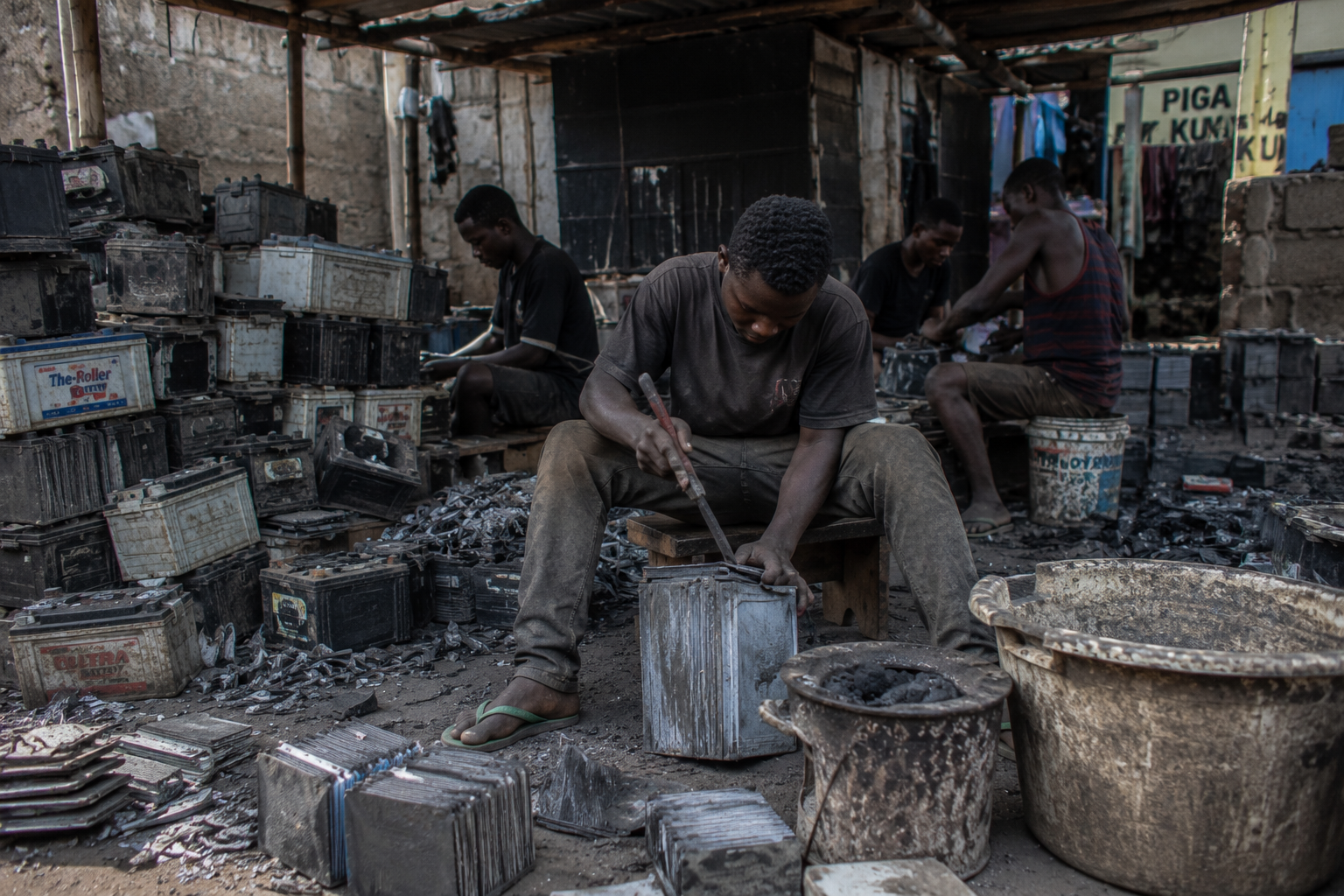
In BCA, a dense settlement in Blantyre, Malawi, informal re-manufacturers who once processed automotive lead-acid batteries have begun receiving a growing stream of batteries from solar home systems. The process is documented by researchers at the University of Manchester in a 2024 study published in Applied Energy, the first research to quantify the environmental impact of this specific practice.
The process is as follows. The battery cells are broken open with machetes, the lead is melted over charcoal cooking stoves, and improvised lead battery cells are then fabricated by hand. In the course of this process, approximately half of the lead content from each battery is released into the surrounding environment. A single battery, processed this way, releases between 3.5 and 4.7 kilograms of lead pollution, equivalent to more than 100 times the lethal oral dose of lead for an adult, into communities where children live, play, and collect water.
The informal recyclers in BCA aren't acting irrationally. Lead has economic value. The market logic of extracting it from a waste stream that no formal system has captured is straightforward. The process of extraction is the problem, not the decision to extract.
The study notes that battery lifetimes in Malawi are frequently as short as one year in real operating conditions, significantly shorter than the ratings on the products themselves. Cheap solar products with low electrical efficiencies, the products that most households can afford, are also the products that deplete their batteries fastest. The waste stream is larger and arrives sooner than the headline statistics about solar adoption suggest.
Zambia: three disposal routes, one shared absence
A 2025 study from the University of Reading, published in the Journal of Environmental Management, examined solar e-waste disposal across four rural districts in Zambia: Mkushi, Kapiri, Chongwe, and Luano-Chingola. The researchers conducted 28 interviews and two focus group discussions between 2022 and 2025. They found three dominant disposal practices: throwing failed products into pit latrines, burning them, and repurposing them as makeshift battery chargers.
The counterfeit dimension of the Zambia study compounds the disposal problem. Rural buyers in low-literacy environments can't reliably distinguish genuine solar products from counterfeits that copy established brand names with minor spelling variations. Genuine devices typically last between six and ten years. Counterfeits have been documented to fail within two to three months. The failure rate of counterfeit products generates waste at a pace that even modest recycling infrastructure would struggle to absorb, but Zambia currently has no national e-waste policy, no formal solar waste regulation, and no systematic collection infrastructure in any of the districts studied.
The health consequences of the disposal routes the study documents are not abstract. When solar panels are burned, they release cadmium, lead, chromium, and arsenic. When batteries are thrown into pit latrines, they leach into groundwater. The lead author's framing is that the solar expansion has been replacing energy poverty with a different kind of environmental problem in the same communities.
Lusaka: what households do when no system exists
A Springer-published household survey of 104 Lusaka residents using solar systems, conducted across four zones of Lusaka West, found that 71.2 percent throw failed products into bins or pits, and 79.8 percent store failed products with no disposal plan. Only 2 percent sell to informal recyclers.
The gap between the 2 percent who sell to informal recyclers and the much larger informal recycling operations documented in Malawi and other sites is explained by intermediary chains: scrap collectors aggregate waste from multiple households before it reaches informal processors. The household survey captures the point of departure, waste leaves the home, but not the destination. The destination is documented separately, in studies like the Malawi research, which shows what happens once the aggregated waste reaches someone who can extract value from it.
The Lusaka survey found that 79.8 percent of households simply store failed solar products, which is its own diagnostic. It reflects the absence of any system to which the product could be returned. Since there is nowhere to take it, the household becomes the de facto end-of-life repository for a product whose manufacturer, importer, and financier typically bear no end-of-life responsibility under any regulatory framework currently in force.
The health consequences in specific numbers
Lead is a neurotoxin with no safe level of exposure. Very low levels of exposure permanently damage brain development in children. The symptoms of lead poisoning, such as developmental delay, lethargy, reduced cognitive function, and irritability, are non-specific and easily mistaken in sub-Saharan Africa for malaria, malnutrition, or other common childhood illnesses. This is a critical part of why cases go undiagnosed. The connection between informal lead-acid battery recycling and childhood lead poisoning is established in clinical and epidemiological literature, but documenting it in specific communities requires active investigation of a kind that most health systems in the affected countries are not resourced to conduct.
UNICEF estimates that globally, 800 million children have lead poisoning, and informal lead-acid battery recycling is identified as a key driver. The Manchester research team notes that Africa's child lead poisoning burden is estimated to cost the continent 134.7 billion dollars every year, equivalent to approximately 4 percent of Africa's GDP, from lost economic productivity, and is estimated to cost Malawi alone twice as much as the international aid the country receives each year.
The 3.5 to 4.7 kilogram lead release figure from the Malawi study is the most precise single piece of evidence for what is happening at the level of individual batteries in individual communities, as it makes the scale of the problem concrete. A lead-acid battery in a solar home system in a BCA-type settlement doesn't stay inert when it fails. It moves through a market chain and a physical process that ends with lethal quantities of neurotoxin entering the air, soil, and water of communities that receive very limited healthcare and almost no environmental monitoring.
What the formal sector looks like and where the gap remains
South Africa is the continent's most developed formal solar e-waste market. Between 2022 and 2024, South Africa saw approximately 1.5 million new solar installations, driven by the private response to load shedding. From 2025 onwards, a wave of end-of-life equipment from those installations will begin to arrive. Accredited waste handlers transport decommissioned panels to facilities that separate and aggregate materials; most components are then exported for processing overseas. Businesses face fines of up to R10 million under the National Environmental Management Waste Act for non-compliant disposal. The regulatory framework exists, is cited, and has some enforcement record, yet the informal sector still accounts for approximately 25 percent of South Africa's e-waste recycling.
In Nigeria, which reached approximately 385 to 400 megawatts-peak of solar capacity by end of 2024 and recorded a 94 percent increase in solar imports in 2023, formal battery recycling infrastructure isn't proportionate to the scale of the waste stream now being generated. Solar panel lifespans of 20 to 25 years mean that the panel disposal wave is further away. Battery lifespans of one to five years, and in some markets, as short as one year for low-quality products, mean the battery disposal wave is arriving now, in the markets that have been growing fastest.
The Centre for Global Development estimates that off-grid solar systems in sub-Saharan Africa generate between 250,000 and 1.5 million tonnes of used lead-acid battery waste annually, accounting for 13 to 47 percent of all lead-acid battery waste in the region. The wide range reflects the inadequacy of the underlying data, which is itself part of the problem. Formal waste monitoring systems don't exist in most of the markets generating the waste. The estimate is the best available, and its width reflects the absence of the infrastructure that would produce a more precise figure.
What the question implies
Africa's off-grid solar expansion is one of the most significant energy access stories on the continent. An estimated 449 million people globally are now served by Tier 1 and Tier 2 off-grid solar solutions, with Kenya, Nigeria, and Uganda the largest markets.
Whether it also becomes an environmental health crisis in the communities where it is deployed depends on decisions being made now, not after the wave of end-of-life batteries has fully arrived, but at the point of import, in the procurement criteria of the funding programmes that drive volume, and in the regulatory frameworks that determine who bears responsibility for what happens to the product after it stops working.
The battery enters the household as an energy access solution. When it fails, it becomes a hazardous waste problem in a community that didn't create the product, design the supply chain, and has no infrastructure to manage its end of life. The research from Malawi and Zambia documents what happens in that gap with enough precision to make the question unavoidable: who is responsible for what happens after the panels arrive?