Why Currency Risk Is Becoming a Bigger Problem for African Energy Projects Than Political Risk
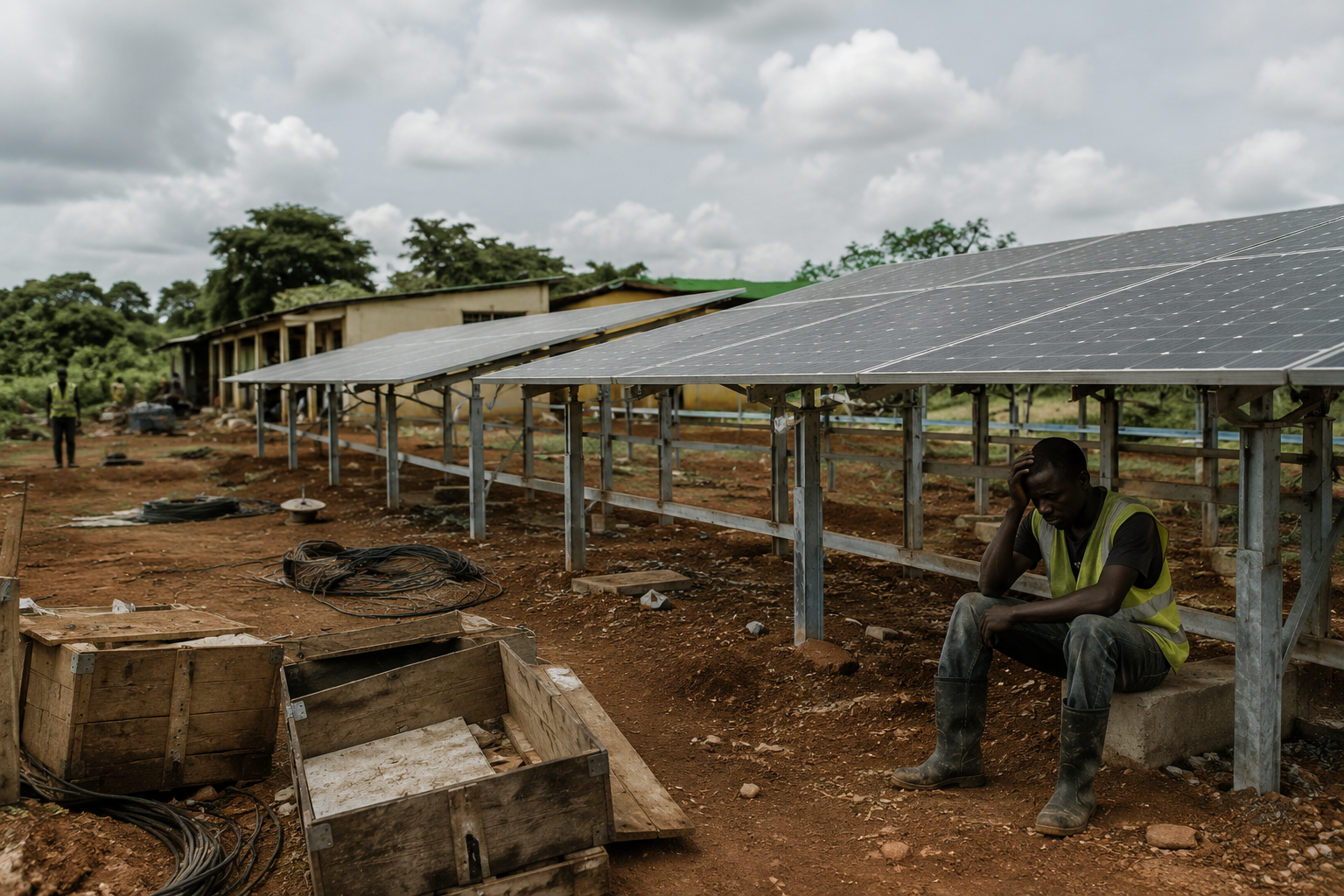
Ask an African energy developer why their project could not reach financial close, and their answer will mention political risk, regulatory uncertainty, or the cost of capital in general terms.
But the answer that rarely appears in the public narrative, but that developers name immediately in private, is currency.
Political risk is the explanation around which the financing architecture has been built. Guarantee instruments, blended finance facilities, and development finance institution mandates are justified primarily by reference to expropriation, contract breach, and sovereign interference. That architecture isn't wrong, but it has been organised around a risk that is relatively rare while systematically underweighting a risk that is near-continuous, structurally embedded in project finance, and largely uninsurable at commercially viable cost.
The result is a financing system that insures against the dramatic event while leaving the chronic one unaddressed. And in Africa's energy project pipeline, the chronic one is what is actually producing failures.
How African energy projects are financed, and where the mismatch begins
Most large-scale renewable energy projects in Africa are financed through a combination of equity and debt. The debt component, loans from development finance institutions, commercial banks, or bond markets, is almost always denominated in hard currency: US dollars or euros.
The reason is structural rather than arbitrary. Lenders raise capital in hard currency. Their liabilities are denominated in dollars or euros, investment committees assess returns in dollars or euros, and risk frameworks are calibrated around hard-currency repayment. When a solar developer in Nigeria, Zambia, or Ghana seeks project finance, the loan is structured in dollars even though the project will operate entirely within a local economy.
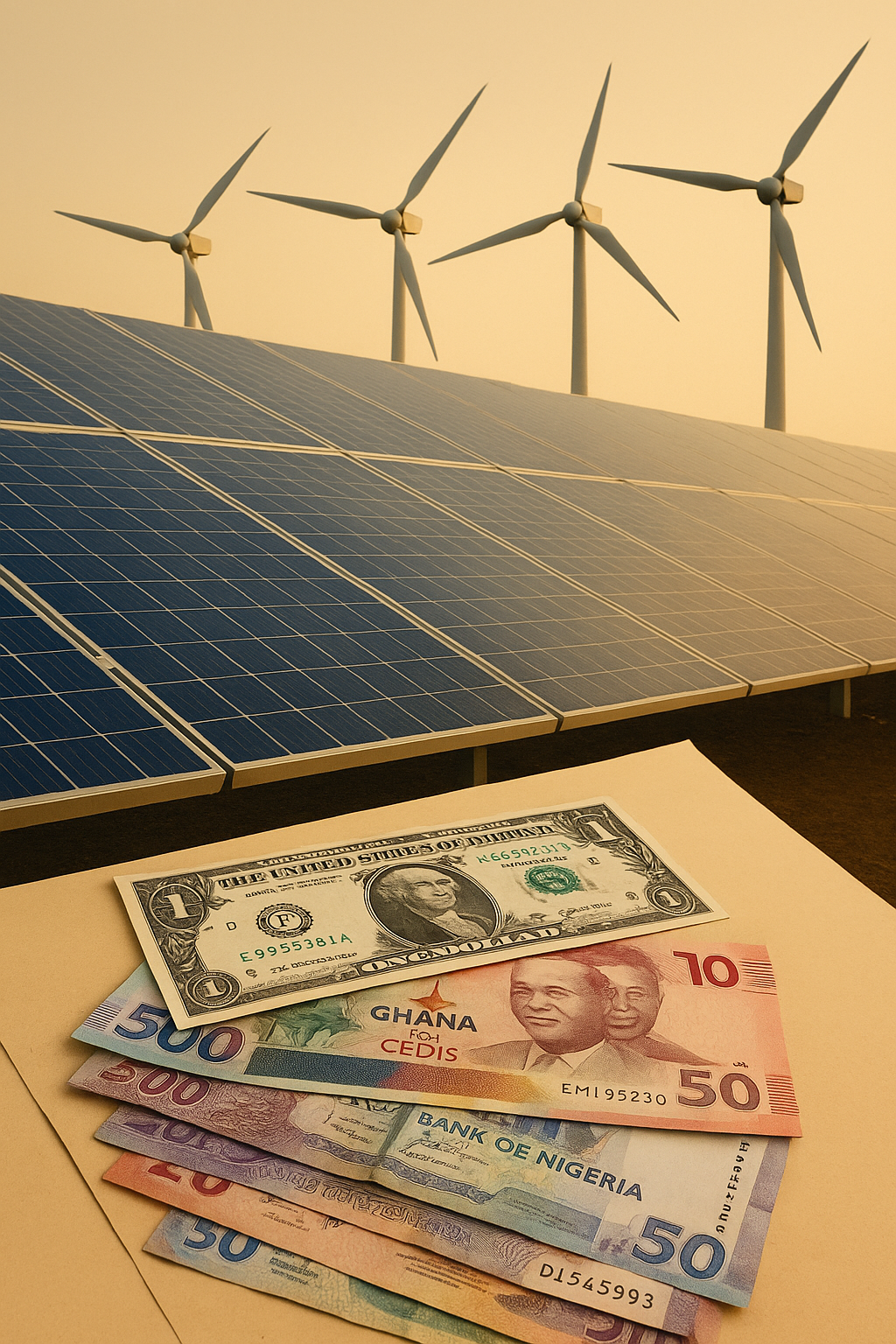
The revenue side of the equation runs in the opposite direction. The project sells electricity to the national utility under a power purchase agreement, and the utility collects payments from households and businesses in local currency: naira, kwacha, cedi, shilling, etc. Even where PPAs contain dollar-indexing clauses, revenue collection in practice runs through local currency systems. The project earns in local currency and owes debt service in dollars.
As long as the exchange rate is stable, the arithmetic works. The project converts local currency revenue to hard currency at a predictable rate and meets its obligations. The problem is that exchange rates across Africa's major energy markets are rarely stable over the fifteen-to twenty-year lifespan of an infrastructure project.
The arithmetic of failure, what currency depreciation does inside a functioning project
The Energy for Growth Hub's 2025 analysis of local currency project finance in Africa confirms precisely why this matters: the weighted average cost of capital for energy projects in Africa averages 15.6 percent, compared with 5.1 percent in the United States and 2.4 percent in Japan. Chief among the factors elevating that cost, the analysis concludes, is currency volatility; most energy projects in Africa are financed in hard currency but generate revenues in local currencies, which are subject to significant depreciation.
The depreciation record in Africa's major energy investment markets makes the mechanism concrete. The Nigerian naira lost more than 70 percent of its value against the dollar between 2019 and 2024, including a depreciation of approximately 100 percent in the second half of 2023 alone following foreign exchange market unification, and a further 40 percent in the first two months of 2024, according to IMF Article IV data. The Ghanaian cedi experienced severe depreciation pressures from 2022 to 2024 before partial recovery in 2025. The Zambian kwacha faced sharp fluctuations linked to debt restructuring and foreign exchange shortages across the same period.
Consider a solar project financed at a 70/30 debt-equity ratio with a fifteen-year dollar-denominated loan at 8 per cent. Revenue: a local currency PPA at a fixed tariff. When the local currency depreciates 30 per cent, the project must generate 43 per cent more local currency revenue simply to produce the same dollar amount for debt service. At 50 percent depreciation, it must generate double. The power plant is running, the utility is paying, the PPA is being honoured, but the project is failing because the currency conversion that connects local revenue to hard currency obligations has deteriorated to the point where the debt service coverage ratio no longer meets lender requirements.
This is the mechanism that kills projects. The project simply becomes non-viable, and the record shows it as an energy finance failure rather than a currency crisis.
Why political risk instruments do not address this
The distinction between political risk and currency risk determines which instruments are available and which are not.
Political risk is insurable. The World Bank's Multilateral Investment Guarantee Agency provides coverage against expropriation, breach of contract, currency transfer restrictions, and political violence, and private market insurers at Lloyd's and elsewhere provide additional coverage. The instruments exist, they are funded, and cover a risk that, while serious, is episodic. But most projects in most African markets don't experience government expropriation or contract cancellation.
Currency depreciation is different in almost every structural respect. It operates at the sovereign level and affects every project simultaneously. It cannot be attributed to a single responsible party, which means there is no insurance claim and no accountability mechanism. And crucially, long-duration currency hedging for African energy projects, covering fifteen to twenty-year tenors, is available from almost no provider at a commercially viable cost.
The TCX Fund, established in 2007 by a consortium of development finance institutions specifically to address currency mismatch in development finance, is the primary instrument designed for this purpose. TCX provides hedging instruments that convert hard currency lending into local currency obligations for borrowers, assuming the foreign exchange risk on its own balance sheet. It is the right institutional response to the right problem. Its capital base, currently $1.8 billion with a $5 billion balance sheet, has hedged a total volume of over $17 billion in development loans across 66 currencies since inception, including $4.1 billion in African currencies, according to an OECD blended finance case study published in 2025. Against an annual African renewable energy investment pipeline of $40 to $50 billion, the coverage ratio is structurally limited. The African Development Bank's $25 million equity investment in TCX in September 2025 will strengthen its capital base and is a positive signal, but it illustrates the scale gap rather than closing it.
The result is a financing architecture with well-capitalised instruments for a relatively rare risk and an undercapitalised instrument for a chronic one.
The compound effect: how currency risk propagates through the entire financing chain
Currency risk doesn't operate in isolation within a project's financial model. It propagates.
A developer building currency depreciation assumptions into their project's financial model must increase the equity return requirement to compensate for the risk of local currency erosion. But higher equity return requirements increase the overall cost of capital, higher cost of capital increases the electricity tariff required for the project to achieve financial close, and higher tariffs reduce the willingness of utilities and governments to sign power purchase agreements. The project cannot reach financial close because currency risk has been priced into the financial model before a single panel has been installed.
This is the propagation that makes currency risk more economically significant than its absence from the public narrative suggests. What emerges at the end of the financing chain looks like a bankability problem or a tariff negotiation failure. What produced it was the currency mismatch embedded in the project's financial architecture from the outset.
What would change the situation
Three specific instruments would materially alter this dynamic, and the evidence base for each already exists.
The first is local currency lending from DFIs at scale. When a DFI lends in local currency rather than dollars, it accepts the currency risk itself rather than transferring it to the project. The IFC has begun expanding local currency lending in Africa, including a partnership with Standard Chartered announced in May 2025 to provide local currency loans for on-lending to private sector projects, with an inaugural transaction in Kenyan shillings, but the scale remains small relative to the financing need. The IFC's own Managing Director acknowledged at the Africa Financial Summit in Casablanca in November 2025 that local currency lending expansion is a priority, but that asset scale constraints persist. Expanding this model and capitalising African development banks specifically to provide local currency energy finance at scale is the most direct structural solution available.
The second is PPA dollar-indexing as a structural requirement in markets with persistent currency depreciation. Where a power purchase agreement automatically adjusts the local currency tariff to reflect exchange rate movements, the project's hard currency revenue is protected without requiring currency hedging instruments. Several markets have introduced indexing provisions; more systematic adoption as a standard feature of PPA design in high-depreciation markets would reduce currency mismatch at source rather than hedging it after the fact.
The third is a significantly capitalised currency hedging facility specifically designed for long-duration African energy projects. TCX is the right model, but its current capitalisation is not commensurate with the scale of the problem it was designed to address. A facility an order of magnitude larger, capitalised by a combination of DFIs, sovereign wealth funds, and blended finance covering the full operational period of projects rather than only the construction phase, would structurally alter the currency risk landscape for African energy project finance.
None of these instruments requires a new institutional architecture. All three require political will to capitalise and deploy existing or adjacent structures at the scale the problem demands.