Africa Has 20% of the World's Population but Receives Just 3% of Its Energy Investment.
Global energy investment will reach $3.4 trillion in 2026, a 5 percent rise from 2025. Of that total, Africa's share amounts to roughly $110 billion, a figure that grows 11 percent from 2025 but remains a continent of 1.4 billion people receiving 3 per cent of the world's energy investment.
The IEA's World Energy Investment 2026 report presents this as part of a positive trajectory. It is worth reflecting on what $110 billion actually means in context. China's energy investment in 2026 approaches $1 trillion, the United States: around $610 billion, and the European Union: over $400 billion. Yet Africa accounts for 20 percent of the world's population and 3 percent of its energy investment.
In a striking illustration of the disparity, energy sector investment in data centre infrastructure alone globally exceeded $105 billion in 2025, surpassing the entirety of Africa's energy sector investment that year.
That single comparison, the world invested more in data centre energy infrastructure in one year than in Africa's entire energy sector, isn't a commentary on data centres, but a precise statement about where capital flows and why. The IEA has now placed it in its most authoritative annual investment report, which is where it belongs.
What the $110 billion is actually made of
The headline figure requires disaggregation before it can inform any useful analysis. Over the past decade, roughly half of energy investment in Africa has been in oil and gas, primarily made by private companies with a view to export. Meanwhile, spending on clean energy remained relatively flat at less than $30 billion per year until 2021.
The clean energy trajectory since then is a genuinely positive signal in the data. Global technology cost reductions have improved the competitiveness of clean energy, and solar PV now represents the least-cost source of power in many African countries. This has led to a tripling of private sector clean energy investment, rising from around $17 billion in 2019 to almost $40 billion in 2024.
Africa has 20 percent of the global population but only 2 percent of clean energy investment. The tripling in private investment is real progress, but the gap between that trajectory and what the continent requires remains structural. The IEA estimates that Africa requires over $200 billion annually by 2030 to achieve all its energy access and climate goals, meaning the 2024 figure covers roughly one-fifth of what is actually needed.
The access data sitting alongside these investment figures makes the structural problem impossible to ignore. 600 million people in Africa still lack access to electricity, and more than 1 billion people lack clean cooking. These figures haven't moved proportionately to investment growth because the investment isn't reaching the systems, communities, and infrastructure configurations that would move them.
Why the investment is not matching the need: the concentration problem
Africa is characterised by strong regional imbalances. South Africa and North Africa account for less than 20 percent of the population but more than 45 percent of energy investment and over 65 percent of installed electrical capacity. By contrast, Sub-Saharan Africa, home to most of the region's population, receives less energy investment and has limited access to reliable electricity.
This concentration isn't new, but the IEA's 2026 report documents it with unusual precision alongside an additional structural deterioration. Public and development finance institution funding for energy projects in Africa has fallen by approximately one-third in the last ten years, reaching $20 billion in 2024, largely due to a reduction of more than 85 percent in spending by Chinese development finance institutions.
The combined picture is one of private clean energy investment growing in the continent's most advanced electricity markets, while development finance, which is specifically designed to go where private capital will not, has contracted sharply. The markets most dependent on concessional and development finance to achieve any meaningful energy access progress are precisely the markets being underserved by both categories simultaneously.
When the IEA reports $110 billion in Africa's 2026 energy investment, that figure isn't evenly distributed across 54 countries and 1.4 billion people. It is concentrated in the markets least likely to have 600 million people without electricity. Record investment in South Africa's solar market doesn't electrify rural sub-Saharan Africa. Both figures appear in the same continental aggregate.
The critical minerals investment paradox
The report's minerals data adds a dimension that is directly relevant to Africa's industrial ambitions. Africa's share of global critical minerals investment has grown significantly over the past decade, with greenfield mining spending concentrated heavily on copper, particularly in the DRC, Morocco, and Zambia.
But investment in refining the processing stage, where economic value is actually multiplied, shows only limited growth relative to extraction. The IEA names the reasons with directness that deserve to be quoted in full: water scarcity, electricity shortages, and a lack of infrastructure and human capital are preventing the continent from capturing a larger share of downstream value.
Since 2023, 13 African countries have imposed export bans on critical minerals in an attempt to force local processing. The IEA data on refining investment suggests these bans aren't yet translating into processing at scale. The constraint is precisely the infrastructure and human capital gaps that the energy investment deficit produces. The minerals beneficiation problem and the electricity investment problem are the same problem approached from different sectoral directions, a point ETA has previously analysed in depth.
What the Iran war shock is doing to Africa's solar market
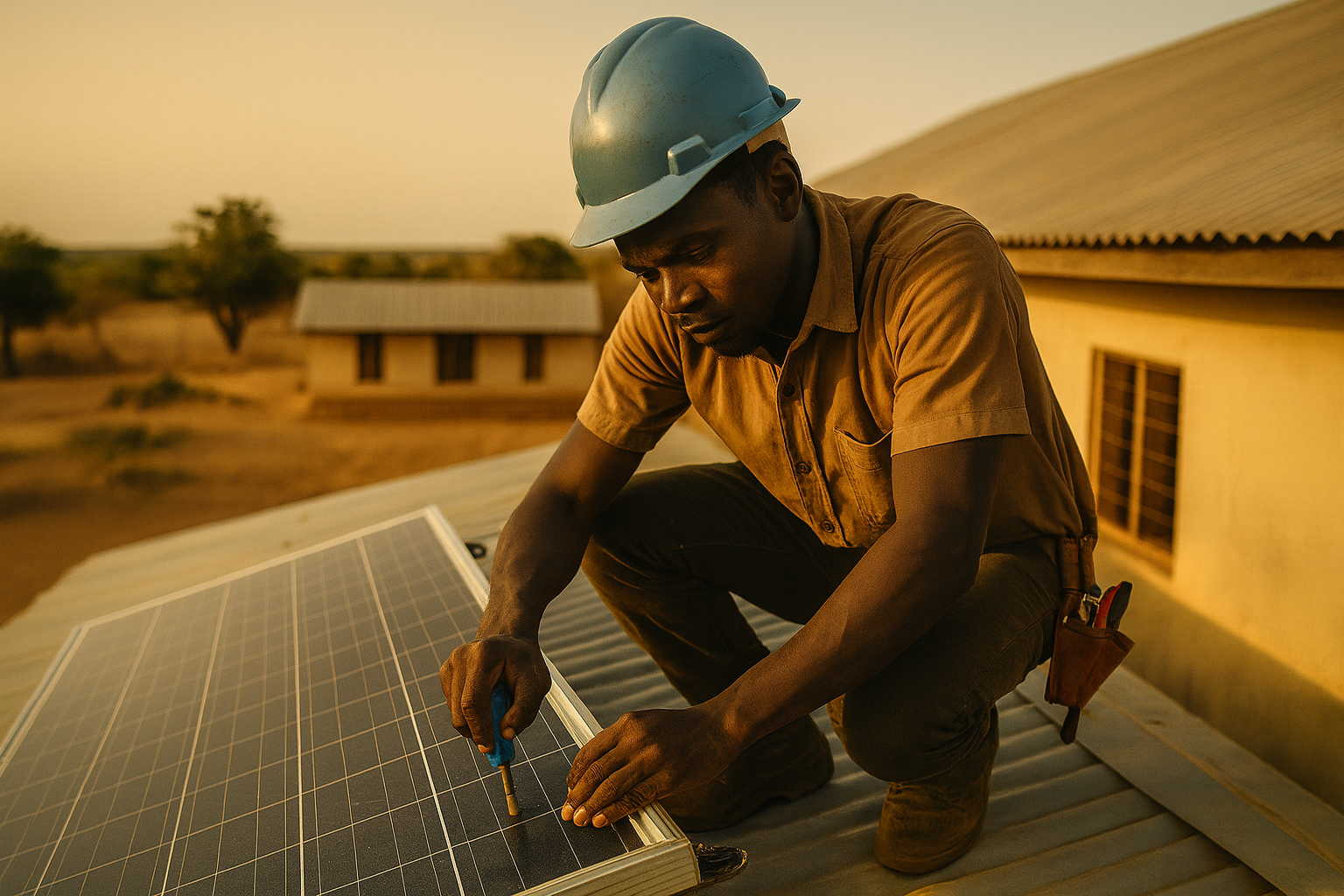
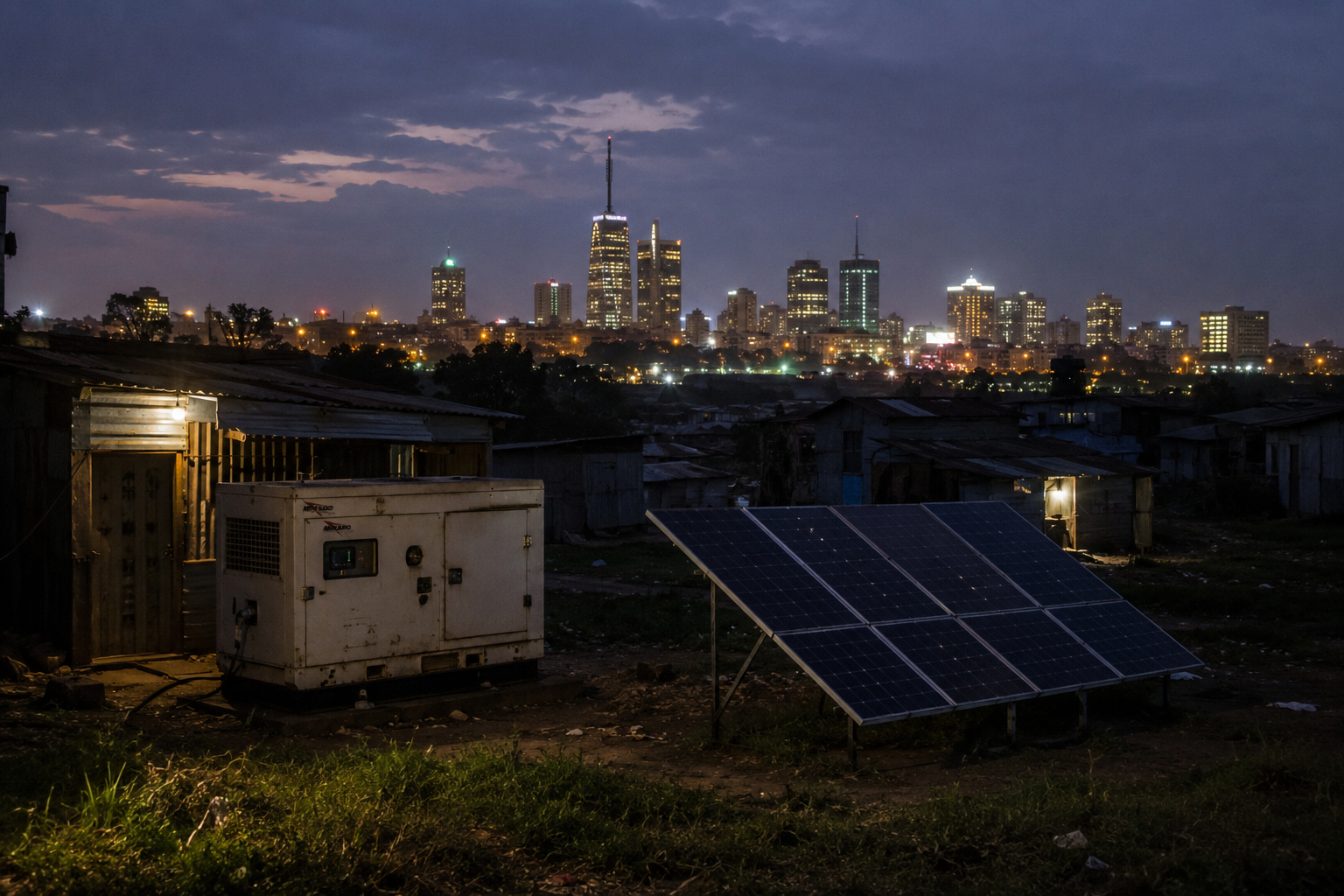
The 2026 report contains one Africa-specific finding that deserves attention because it sits outside the structural investment trends. Fifteen African countries recorded record-high solar panel imports exceeding $400 million in the first quarter of 2026 alone, compared to $650 million for the whole of 2025. Chinese solar exports to Africa jumped 120 percent year-on-year in the same period, as households and businesses seek protection from fuel price volatility, particularly where diesel generators are common.
This is the market responding to an energy security shock rather than to planned renewable energy deployment. Accelerating solar imports in response to a fuel price crisis is a rational household and business decision, and not the same as managed renewable energy deployment integrated into grid systems with maintenance, storage, and technical workforce infrastructure.
The IEA notes explicitly that households and businesses are installing solar panels and batteries to insulate themselves from energy shocks. That is the right short-term response. Whether it becomes part of a managed energy system or joins Africa's undocumented solar economy, the substantial gap between panels shipped to the continent and panels officially tracked in installed capacity statistics depends on decisions being made now about regulation, standards, and maintenance infrastructure. ETA has previously documented this gap between connection and functionality as the productive electricity access problem that headline figures consistently obscure.
The figure that should be held against every pledge
The IEA's World Energy Investment 2026 report offers one data point that ETA intends to use consistently: total energy sector investment for the buildout of data centre infrastructure globally in 2025 exceeded $105 billion, surpassing the total invested in Africa's energy sector that year.
This isn't a rhetorical comparison, but the most precise available statement of where Africa sits in the global capital allocation system. The world deployed more investment in data centre energy infrastructure in one year than it deployed in Africa's entire energy sector for a continent of 1.4 billion people, 600 million of whom lack electricity access and 1 billion of whom lack clean cooking.
Achieving the region's energy development and climate goals requires energy investment to more than double from today's levels by 2030, at which point nearly two-thirds of spending would go to clean energy. From 2023 to 2030, around $22 billion per year is required to connect all African homes and businesses to electricity, while $4 billion per year is needed to provide them with clean cooking solutions. In total, the needed annual investments in access for Africa equate to less than 1 percent of current energy investment worldwide.
Less than 1 percent of current global energy investment, directed correctly, would close the electricity and clean cooking access gap by 2030. The IEA has put that figure on record alongside the data centre comparison. The gap isn't closing at a pace proportionate to the stated urgency of the access problem. The question that follows from every climate finance summit, investment pledge, and partnership announcement is whether those commitments are moving that 1 percent figure in the right direction and at the speed the 600 million number requires.