Africa Controls 30% of Critical Minerals. It Captures 5% of the Value.
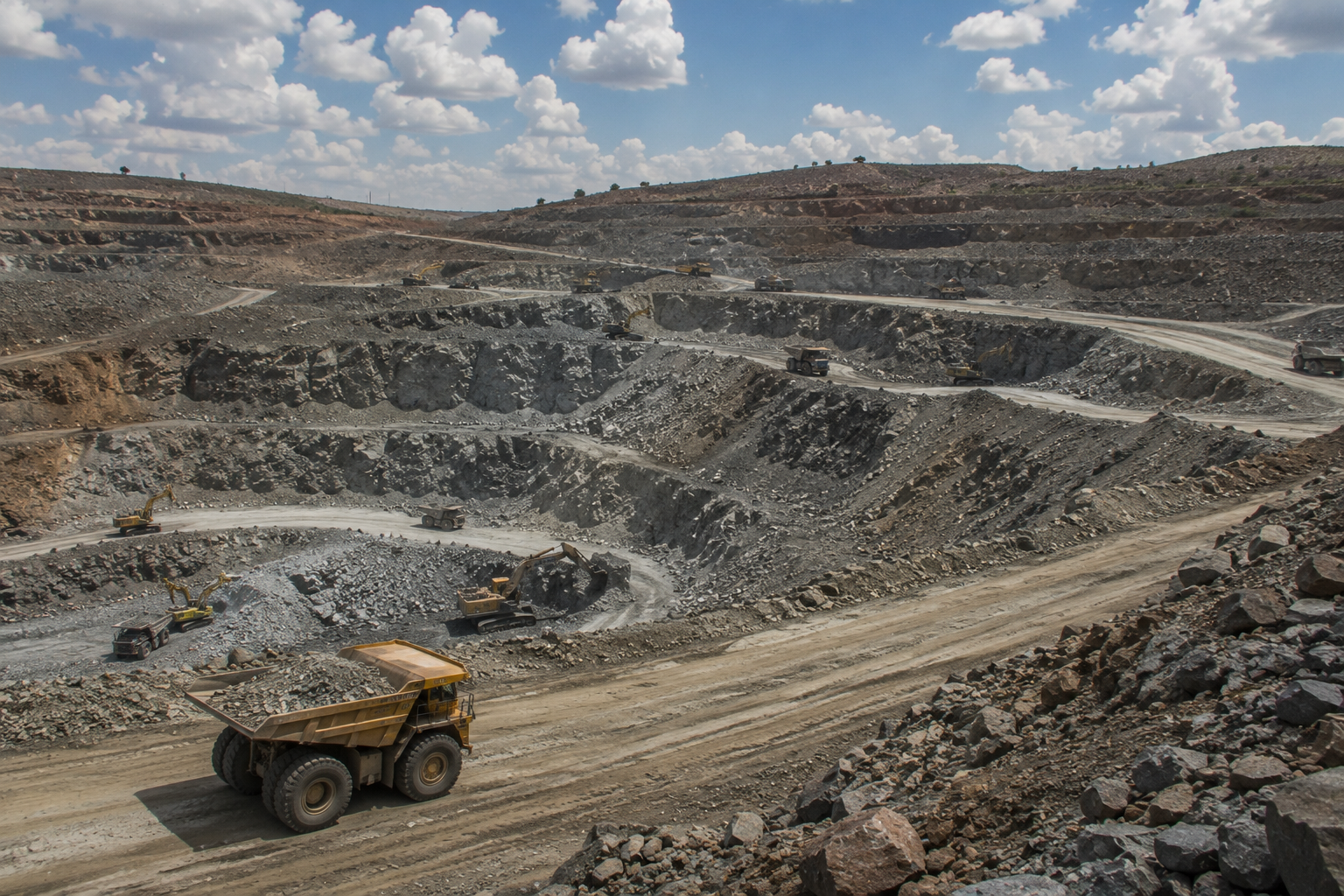
On 10 July 2026, two events unfolded that together describe the nature of Africa's critical minerals problem more accurately than any single policy document has managed.
In Abidjan, at the Radisson Blu Hotel, African ministers of mining, energy, and industry gathered for the AfDB Ministerial Forum on Critical Minerals, Value Chain, and Beneficiation. Hanan Morsy, Deputy Executive Secretary and Chief Economist of the United Nations Economic Commission for Africa, opened with a sentence that deserved more attention than it received: "Africa possesses roughly 30 percent of global critical mineral reserves, yet captures less than five per cent of the associated value added. That statistic should concern us far more than the size of our reserves. Our challenge is no longer geological. It is economic and institutional."
Simultaneously, in Beijing, Namibian President Netumbo Nandi-Ndaitwah was completing a seven-day state visit. She and President Xi Jinping signed eight cooperation agreements covering green minerals, infrastructure, farming, and economic partnership. The China-Namibia joint statement, reported by Reuters and Xinhua, committed both governments to strengthening cooperation in uranium, lithium, and rare earth minerals, with specific emphasis on local processing, technology transfer, and skills development.
These two events, one representing Africa's continental institutional ambition and the other representing how individual African governments navigate a world of competing external powers, are not contradictory. They are the same problem seen from different angles. And the problem isn't which path Africa chooses, but whether it has the institutional capacity to make either path produce the outcomes it promises.
What the numbers actually show
Africa's critical minerals position isn't ambiguous. The continent holds around 30 percent of global critical mineral reserves. The DRC supplies roughly 75 percent of the world's cobalt, Zimbabwe, Namibia, and the DRC hold substantial lithium resources, and South Africa dominates global platinum group metals. Zambia is a significant copper producer, while Morocco has built an emerging electric vehicle manufacturing cluster.
These facts are cited constantly in the international critical minerals conversation, but what is less talked about is that Africa captures less than five percent of the value added across the battery and clean energy supply chains that those minerals feed. The minerals leave the continent, while the manufacturing, processing, intellectual property, industrial employment, and the tax revenue are realised elsewhere.
This is not a new story. It is the oldest story in African economic history. What is new is the scale of what is at stake. The IEA's Global Critical Minerals Outlook projects that demand for lithium, cobalt, graphite, and nickel will continue rising sharply as electric vehicle production and battery manufacturing scale globally. Countries and companies competing for those minerals include the United States, the European Union, China, India, Japan, and Gulf states, all simultaneously, with increasing urgency. Africa has more negotiating leverage in this moment than it has had in any previous commodity cycle.
The question is whether it has the institutional architecture to use that leverage.
What Namibia's China deal actually tells us
The immediate read on Namibia's agreements in Beijing is predictable: another African country locking in a deal with China, raw materials flowing north, promises of local processing and skills development that may not materialise. This reading isn't wrong to be sceptical. Chinese investment data from the American Enterprise Institute shows that $4.2 billion has been invested by Chinese firms in Namibia, virtually all of it in the metals sector. Of the $1.3 billion worth of Namibian goods China purchased last year, uranium accounted for 85 percent.
But the framing of the agreements matters more than commentary assumes. Namibia isn't a passive actor. The country banned the export of unprocessed lithium in 2023, following similar moves by Zimbabwe and Tanzania, as an explicit attempt to force domestic value addition rather than raw export. President Nandi-Ndaitwah arrived in Beijing with dozens of business representatives and a domestic mandate to create jobs and diversify the economy. The joint statement's language on local processing and technology transfer reflects a shift in how African governments are negotiating these relationships, not just how they are framing them.
Whether those commitments translate into processing facilities, skilled employment, and retained industrial value is the question implementation must answer. Namibia has the leverage and the stated intent, but whether the regulatory architecture, technical workforce, and financing structures exist to enforce and sustain those terms over a multi-decade mining relationship is a different question from whether the agreement was signed.
The false choice obscuring the real one
Commentary on Africa's critical minerals tends to frame the debate as a binary: continental integration through AfCFTA and African-owned industrial strategy on one side; bilateral deals with external powers on the other. The Abidjan forum versus the Beijing summit, or regional sovereignty versus pragmatic engagement.
This framing is analytically unhelpful. No single African country possesses every input required for a globally competitive battery industry. The DRC dominates cobalt, Zimbabwe and Namibia hold lithium, South Africa has manufacturing capability and platinum group metals, Morocco has industrial infrastructure and proximity to European markets, and Zambia has copper. Viewed as separate national strategies, these countries compete for the same investors with the same commodity. But viewed as components of a regional industrial ecosystem, they could constitute one of the most significant clean energy supply chains in the world.
AfCFTA is the mechanism designed to make that collective vision operational. The question isn't whether Africa should choose AfCFTA or bilateral partnerships, but whether bilateral agreements are being negotiated in ways that align with AfCFTA objectives or undermine them, and whether the institutional systems exist to enforce that alignment country by country, agreement by agreement, clause by clause.
That alignment requires people. Lawyers who understand both the trade framework and the minerals agreement. Economists who can model the fiscal implications of a local content requirement over thirty years. Regulators who can enforce a processing obligation against a mining company with far deeper resources and experience than the ministry reviewing compliance. These aren't positions Africa lacks in the aggregate; it lacks them in the specific offices and at the tables where these decisions get made.
From continental vision to national implementation
Hanan Morsy's three strategic shifts, shared at Abidjan, are correct. Move from resource nationalism to regional industrialisation. Move from financing extraction to financing industrial ecosystems, which is what the Critical Minerals Acceleration Facility and the New African Financial Architecture for Development, adopted through the Abidjan Consensus in April 2026, are designed to do. Make African pension funds, sovereign wealth funds, and development finance institutions central investors in Africa's industrial future, rather than passive investors in assets abroad.
Each of these shifts is institutionally demanding. Regional industrialisation requires harmonised standards, coordinated infrastructure investment, and governance frameworks that transcend national politics. Financing industrial ecosystems rather than extraction projects requires development finance institutions with the technical capacity to underwrite more complex, longer-term investment theses than standard resource extraction provides. And redirecting African institutional capital requires the analytical capacity to identify, structure, and monitor investments across a continent where that capacity is distributed extremely unevenly.
The vision is coherent, but there's a structural implementation gap caused not primarily by policy design; the policies, from the African Green Minerals Vision to Agenda 2063 to AfCFTA implementation frameworks, are well-designed, but there is a gap in the human and institutional infrastructure required to execute them. The electricity shortages that constrain mineral processing in multiple African countries are an infrastructure problem. The fragmented regulatory frameworks that discourage regional investment are an institutional problem. The limited technical skills that reduce African participation in higher-value activities are a human capital problem. None of these is solved by a ministerial declaration, however well-intentioned.
What the real test actually is
The Abidjan forum and the Namibia-China agreements are complementary parts of a transition that Africa must navigate simultaneously at continental and national levels, with institutional capacity that has not yet caught up to the ambition at either level.
The continent's critical minerals moment is real. The global competition for those minerals among the United States, the European Union, China, India, and Gulf states gives African governments more negotiating leverage than at any point in the post-independence era. The New African Financial Architecture, AfCFTA, and the African Green Minerals Vision provide the policy scaffolding for a different kind of minerals economy than what came before.
Whether this moment becomes another commodity boom or the foundation of a new industrial era will be decided by what happens in the offices and negotiating rooms, by the quality of the people staffing them, the strength of the institutions sustaining them, and the degree to which continental vision translates into enforceable national implementation, agreement by agreement, clause by clause, year by year, and not by the geology beneath African soil
The statistic Hanan Morsy opened with in Abidjan says everything that needs to be said about where Africa has been. Thirty percent of reserves. less than five percent of the value. The institutions and the people to change that ratio are the only variable that matters now.