Africa Is Home to 86% of the World's Electricity Access Gap. The Latest SDG7 Report Explains Why.
Every year, five of the world's most authoritative energy institutions, the IEA, IRENA, the UN Statistics Division, the World Bank, and the WHO, publish a joint account of how the world is doing on affordable, reliable, sustainable, and modern energy for all. The 2026 edition of Tracking SDG 7: The Energy Progress Report, released this month, covers data through 2024. It is the most comprehensive, most rigorous annual snapshot of energy access, renewable deployment, efficiency, and finance available anywhere.
For Africa, it is not a good report, because the combination of findings across five separate dimensions, electricity access, clean cooking, renewables, finance, and the 2030 outlook, adds up to an institutional and unavoidable diagnosis of a continent that is running out of time to course correct before the targets expire. This piece extracts what the report actually says about Africa and its implications.
Electricity access: the pace has halved, and the rural gap is widening
The headline figure in the 2026 report is 655 million people globally without electricity in 2024. That is down from 958 million in 2015, genuine progress over a decade. But the pace at which that number is falling has slowed dramatically. The average annual increase in electricity access was 0.70 percentage points per year between 2010 and 2020. From 2020 to 2024, it dropped to 0.35 percentage points, exactly half. Between 2023 and 2024 specifically, the number of people without electricity fell by just 11 million.
Reaching universal access by 2030 requires more than tripling the current rate to 1.35 percentage points per year. On current trends, the global access rate will reach approximately 92.5 percent by 2030, leaving roughly 640 million people still without electricity, with eighty-five percent of them in Sub-Saharan Africa.
The regional concentration of the deficit has shifted structurally, and in one direction. Sub-Saharan Africa accounted for 49 percent of the global electricity access deficit in 2010, and by 2024, that share had risen to 86 percent. The region is now home to 563 million of the 655 million people without electricity worldwide. Central and Southern Asia, by comparison, reduced their share from 36 percent to just 3 percent over the same period, eliminating 383 million rural people from the unelectrified column, while Sub-Saharan Africa's rural deficit grew from 376 million to 447 million.
Sub-Saharan Africa is the only region in the world where the rural electricity access deficit increased in absolute terms between 2010 and 2024. Every other region, including other low-income regions, reduced its rural deficit. Sub-Saharan Africa added 71 million people to its rural access gap. Population growth outpaced electrification decisively.
The country-level concentration is equally stark. Nigeria tops the global deficit at 87.2 million people without electricity, the world's largest absolute access gap, for the fourth consecutive year. The Democratic Republic of Congo follows at 84.7 million, and Ethiopia at 57.3 million. These three countries alone account for roughly one-third of the entire global electricity access deficit. The 20 countries with the largest deficits account for 78 percent of all people without electricity globally, up from 75 percent in 2022.
The report also addresses something most access statistics obscure: connection is not the same as service. Many households technically connected to the grid in Sub-Saharan Africa's urban areas face poor-quality, unreliable, or unaffordable electricity. They appear in access statistics as served, and in practice, they rely on intermediated forms of access, including shared meters, informal resellers, or landlord-controlled connections, that constrain both availability and affordability. Urban Sub-Saharan Africa's headline connection rate of around 82 percent conceals a service quality problem that no current tracking system fully measures.
Clean cooking: the only region where access is going backwards
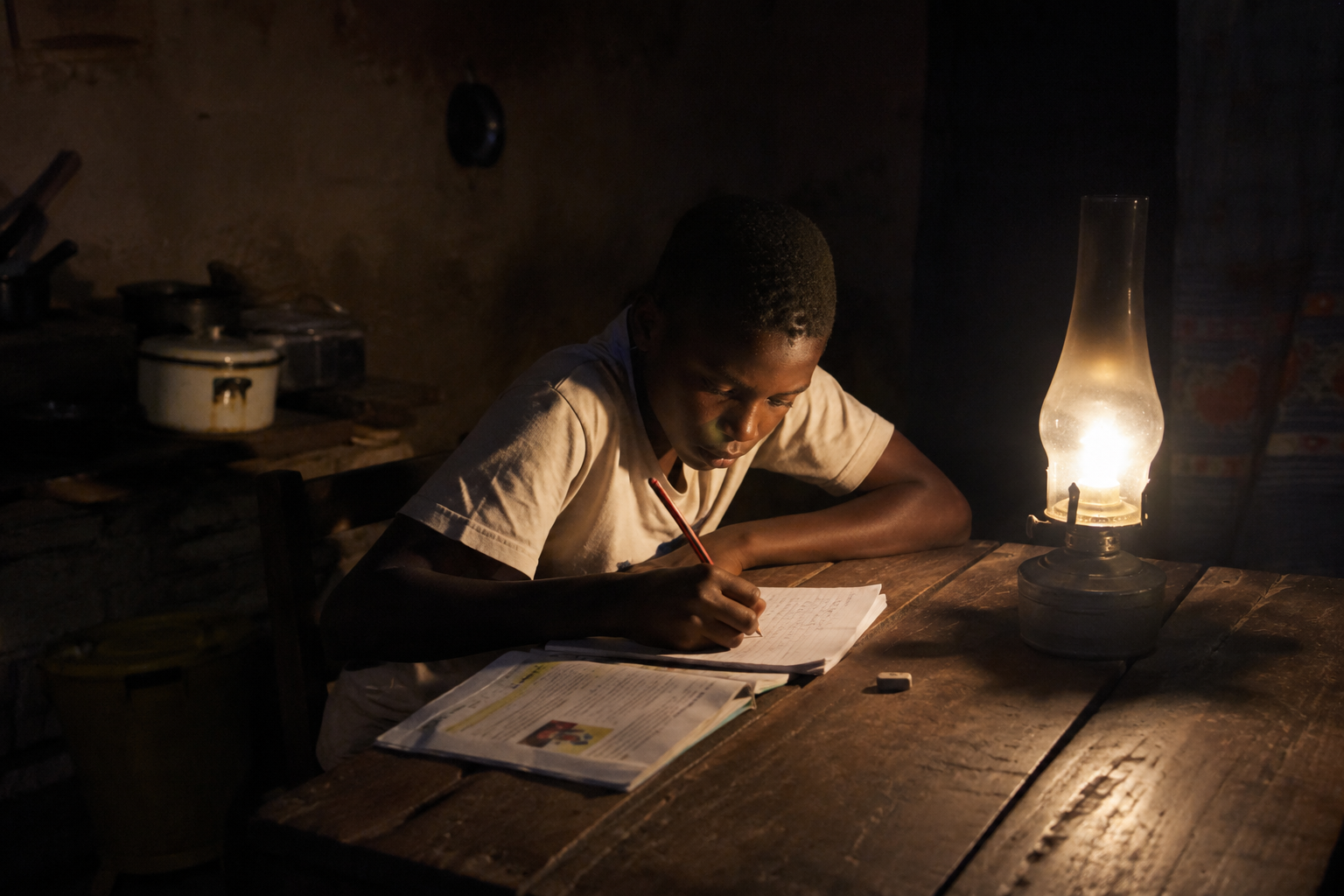
The clean cooking data is, if anything, more alarming than the electricity figures. Globally, around 2.0 billion people remain dependent on polluting fuels for cooking in 2024. Sub-Saharan Africa alone accounts for approximately 970 million of them, and that figure may reach 1 billion by 2027.
The report reveals what makes Sub-Saharan Africa's clean cooking situation different from every other region: Africa is the only continent where access to clean cooking has been declining rather than improving since 2015. In every other region with a significant deficit, access has improved. Asia's access rate has approximately doubled since 2010. In Sub-Saharan Africa, the number of people without clean cooking is growing because population growth is outpacing whatever modest progress is occurring.
Only about 1 in 5 people in Sub-Saharan Africa have access to clean cooking. In rural Sub-Saharan Africa, only 7 percent of people mainly use clean fuels and technologies. Charcoal use as a primary cooking fuel is rising from 26 percent of urban sub-Saharan Africa's population in 2010 to 30 percent in 2024, and from 6 percent to 9 percent in rural areas over the same period.
By 2030, 58 percent of the global clean cooking access deficit is projected to fall within Sub-Saharan Africa. Reaching universal access globally by 2030 would require USD 8 billion annually, with half of that, USD 4 billion per year, for Sub-Saharan Africa alone. The IEA's inaugural Clean Cooking Summit for Africa in 2024 secured USD 2.2 billion in commitments. Of that, only USD 470 million has been disbursed, a pledge-to-disbursement ratio of roughly 4.7:1. That gap between commitment and delivery, stated in this report, is the definitional problem of African climate finance.
Renewable energy: growing fast, but leaving Africa behind
Global renewable energy deployment is the positive story in the 2026 report. Renewables surpassed coal as the predominant global electricity source in 2025, as installed capacity per capita reached a global record of 544 watts per person in 2024.
Sub-Saharan Africa's renewable capacity grew at a compound annual rate of 8.1 percent from 2014 to 2024, above the global average of 5.4 percent, but it started from such a low base that even strong growth has produced modest absolute gains. Sub-Saharan Africa's installed renewables capacity per capita stands at approximately 57 watts per person, against the global average of 544 watts and a high-income country average of 1,224 watts.
The data also contains a structural distortion. Traditional biomass, firewood, charcoal, and agricultural waste are classified as renewable in global statistics because it derives from biological sources, and more than 90 percent of traditional biomass use is concentrated in sub-Saharan Africa and Asia. When it is included, Africa appears to have a high and growing renewables percentage, but when only modern renewables are counted, the picture is very different. The high renewable share in many African countries is largely charcoal and firewood, not solar and wind.
Off-grid solar is the one dimension where Africa is genuinely leading. An estimated 449 million people globally were served with Tier 1 and Tier 2 off-grid solutions in 2024, with Kenya, Nigeria, and Uganda the largest markets. Mini-grids are serving nearly 48 million people at Tier 4 and above, with 95 percent of them in Africa and South Asia. The report shows that the sector's underlying data remains outdated, because the most comprehensive mini-grid assessment was carried out in 2022, and an updated review isn't expected until early 2027.
International finance: Africa's clean energy flows fell 31 percent in a single year
International public financial flows to clean energy in Sub-Saharan Africa fell from USD 7.2 billion in 2023 to approximately USD 5.0 billion in 2024, a decline of 31 percent in a single year, interrupting three consecutive years of growth. This happened while Sub-Saharan Africa remains home to 86 percent of the world's unelectrified population, and while total OECD official development assistance fell by 6 percent, its first decline in five years.
The finance that does flow is structurally misallocated. Debt-based instruments accounted for about 80 percent of total flows globally in 2024. Equity financing, the risk-absorbing capital that enables early-stage projects to reach financial close, declined to just 2 percent, with only 11 of 80 donors making any equity contribution at all and risk-mitigation instruments, including guarantees and credit lines, reached only six recipient countries. The report stated that international public finance remains largely risk-averse, deployed primarily as senior secured debt, and closing the investment gap will require public institutions to take on greater risk through equity, guarantees, and blended instruments.
The geographic concentration problem compounds this. India, Turkey, and Argentina remain the top three recipients of international clean energy finance globally, while the least-developed countries, predominantly in sub-Saharan Africa, received only USD 3.7 billion in 2024, an 11 percent decrease from 2023. These countries hold roughly two-thirds of the global population without electricity access, yet received 15 percent of total public clean energy flows. This, according to the report, is a fundamental misalignment between where energy poverty is concentrated and where financial flows are directed.
What the report confirms, and what it implies
The 2026 Tracking SDG 7, produced jointly by five custodian agencies using the most rigorous available data, confirms that Sub-Saharan Africa is the only region in the world where both the electricity access deficit and clean cooking access are moving in the wrong direction in absolute terms. International finance to Africa's energy sector fell 31 percent in 2024. The pace of electrification has halved from its pre-pandemic rate. 640 million people, 85 percent of them in sub-Saharan Africa, will still lack electricity in 2030 under current policies. 970 million people in sub-Saharan Africa lack clean cooking, and that number will reach 1 billion by 2027.
What the report doesn't yet say, and what the data it presents implies, is that the architecture of international energy finance, as currently structured, isn't capable of producing the outcomes the same institutions publicly commit to at each successive summit. The gap between the USD 2.2 billion committed to clean cooking in Africa at the 2024 Summit and the USD 470 million disbursed is a description of the system.
The SDG 7 targets expire in 2030. The data says the system needs to change before they do.