What Reliable Electricity Actually Does to Income in Rural Africa: Evidence From Kenya, Nigeria, and Rwanda
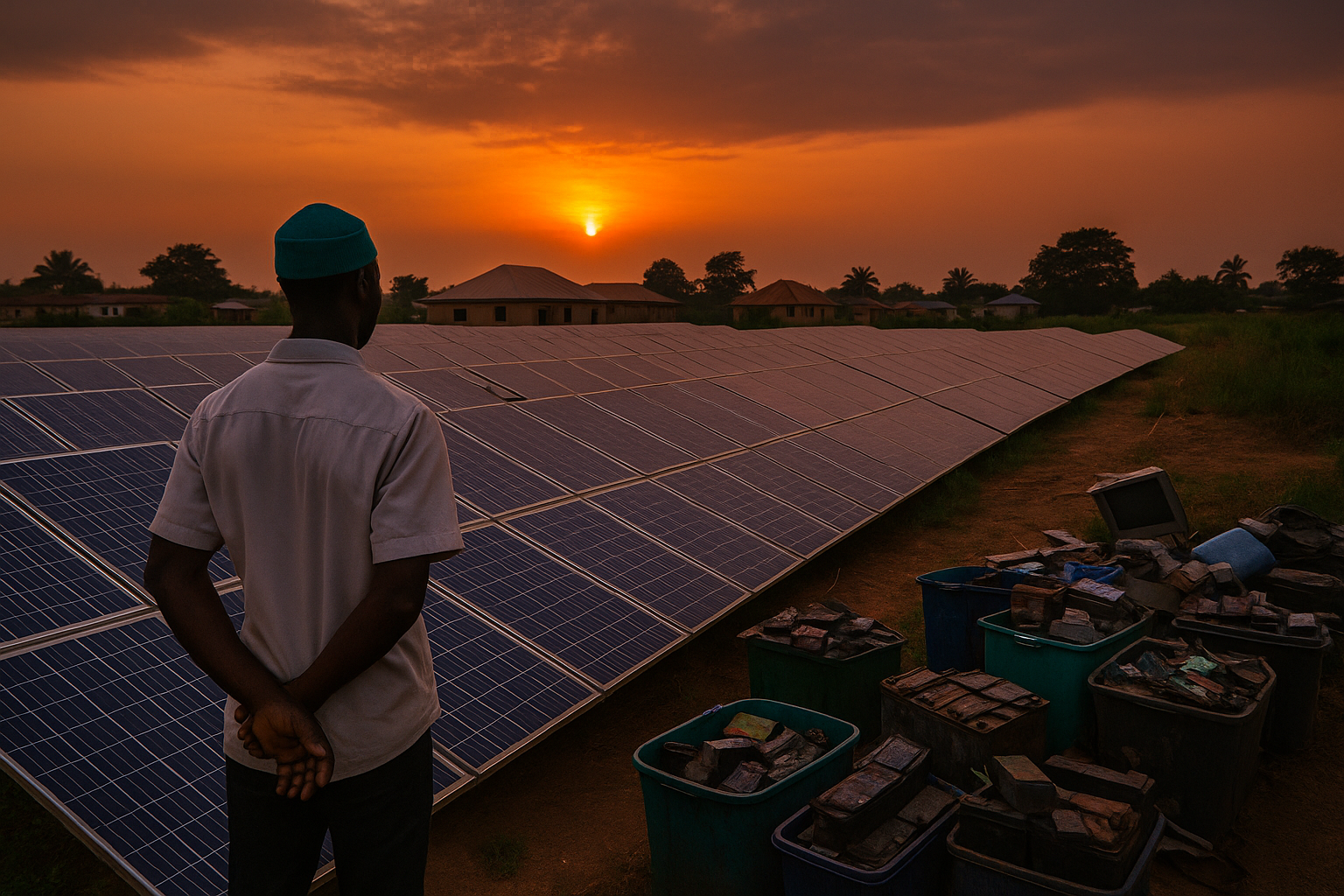
In Makueni County, Kenya, a solar mini-grid was installed in one of two matched trading centres. The other received nothing. Researchers tracked both communities across time.
In the electrified centre, businesses expanded, new ones opened, workers were hired, and perceived household wealth increased, while in the unelectrified centre, the baseline held.
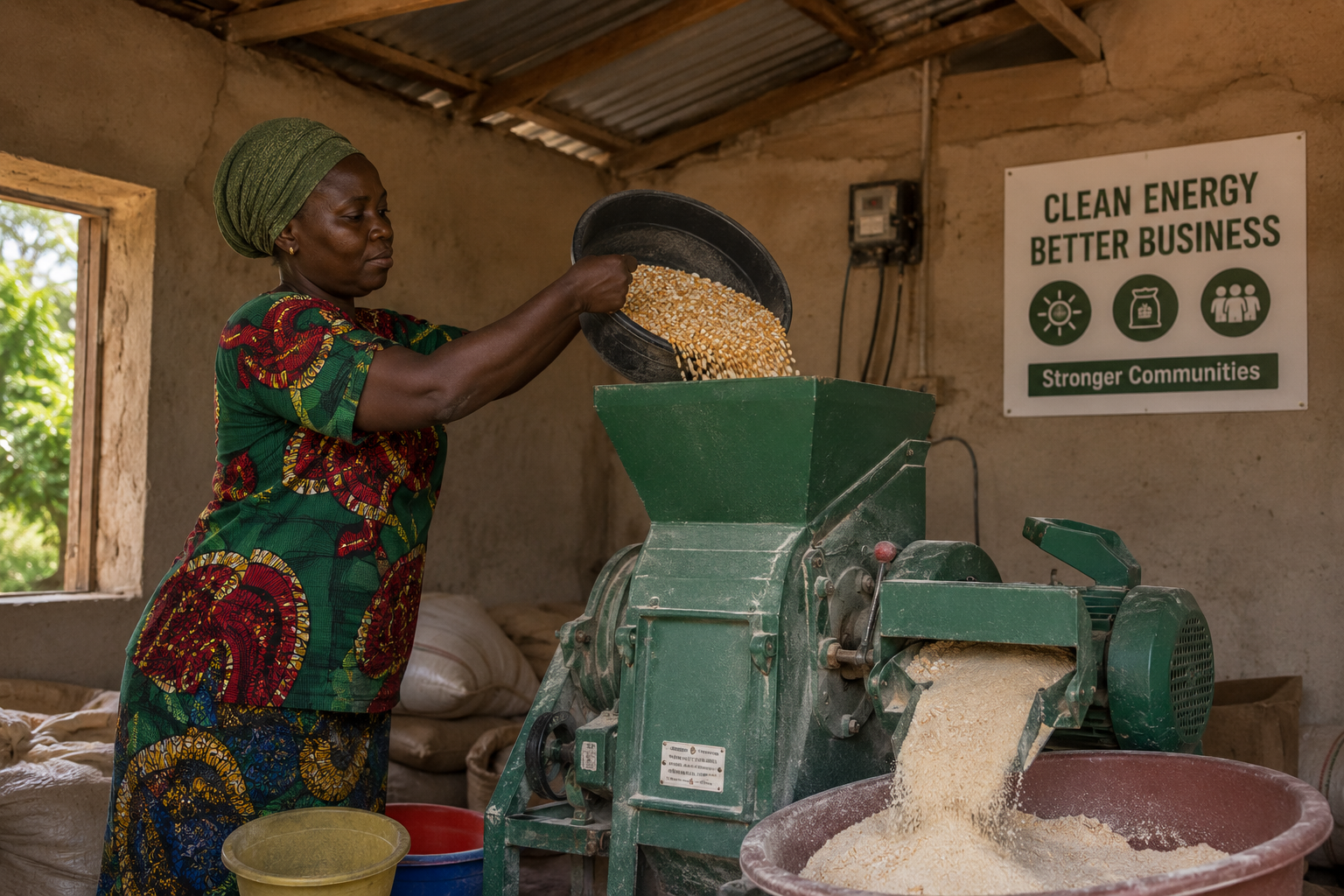
What changed was the tier of electricity, not a solar lantern or a phone charger, but a connection that could run a grain mill, keep a refrigerator cold, and power a business past sundown.
The foundational explainer in this series established why the binary connection count is the wrong unit of measurement and introduced the World Bank's Multi-Tier Framework as the tool that distinguishes between what a connection delivers. This piece makes the evidential case. Three bodies of country-level evidence, from Kenya, Nigeria, and Rwanda, now document what Tier 3 and Tier 4 access produces in income and employment terms with enough specificity to make an investment and policy argument. Not a general one based on aspiration, but a precise one grounded in activities, income figures, and economic mechanisms.
Kenya: what the tier difference enables
The evidence from Kenya is the most rigorous available at this scale. A cohort study of 2,658 household heads and business owners connected to solar mini-grids in Kenya and Nigeria across five years, published by Carabajal and colleagues in Environmental Research: Infrastructure and Sustainability in 2024, found that economic activities and productivity increased significantly among connected households and businesses, with the paper's abstract reporting that the median income of rural Kenyan community members quadrupled.
Two caveats are required before that figure is cited for any policy purpose. First, the underlying data in the paper's body shows median monthly income rising from 5,000 to 6,000 Kenyan shillings, a 20 percent increase, with the quadrupling claim appearing to reflect a different metric or sub-group not fully specified in the public version of the study. Second, the study was funded by and conducted primarily by employees of Renewvia Energy Corporation, a mini-grid operator; independent, third-party surveyors collected the data, and the paper is peer-reviewed, but the funder relationship warrants transparency. Both the headline claim and the specific income figures should be read as indicative rather than definitive.
What the evidence is more robust on is the mechanism. Among commercial and institutional customers, 85 percent reported an increase in overall earnings following mini-grid installation. For every additional 10 kilowatts of installed solar capacity, six local businesses reported increased earnings. Every ten new customer connections in Kenya correlated with five of those households reporting an increase in average monthly income. The activities that produced those earnings are specific: cold storage for fish and agricultural produce, grain milling and agro-processing, extended business hours into the evening, electronic payment systems and mobile money devices, water pumps, and small manufacturing equipment.
The ILO's employment impact assessment of Kenya's Green Mini-Grid Facility Programme adds independent confirmation across a separate sample. The ILO found, across a survey of 94 SMEs and focus group discussions at twelve mini-grid sites in rural western Kenya, that 84 percent of SMEs reported revenue from their productive use business had increased over two years. Forty percent reported their workers' wages had increased. Sixty-nine percent stated they were unemployed before their productive use business but would now consider themselves employed. The ILO also found that each mini-grid site produced three permanent jobs within the local community in the short term, with a key finding about what drives the longer-term employment effect: the main driver of job creation, across comparisons between different developers' sites, was appropriate access to finance, which allowed the setting up and expansion of productive use businesses.
The electricity connection is necessary, but not sufficient.
Nigeria: the agro-processing mechanism
The Nigeria evidence comes from a different entry point, not household income surveys but programme-level agro-processing data, and it illuminates the specific economic mechanism through which Tier 3/4 electricity changes income, rather than simply documenting that it does.
RMI's Energising Agriculture Programme analysis, working with the Nigerian Rural Electrification Agency across mini-grid communities in Nasarawa, Ogun, and Edo states, documented the economic sequence precisely. Processing equipment replacing diesel or manual labour reduces processing cost and increases throughput, leading to rising income.
The cold storage case in Kiguna, Nasarawa State, is the clearest single illustration available. A solar mini-grid operated by Husk Power Systems serves 300 families in Kiguna with reliable electricity. Before the introduction of cold storage, Alia Umoru and her neighbours, artisanal fishers and their families, faced a fixed constraint: they could sell fresh fish immediately at low local prices, smoke it at the cost of their health, or lose it to spoilage. The cold storage changed the constraint. Coldbox Store, supported by the Energising Agriculture Programme, now purchases up to 3,000 kilograms of fish weekly, stores it, and distributes it to markets in nearby cities, where prices can reach up to five times the local rate. The cold room prevented over a tonne of fish from spoiling in its first year of operation.
The mini-grid economics improved simultaneously. RMI's analysis found that a single walk-in cold room reduced the cost of producing mini-grid electricity from $0.56 to $0.42 per kilowatt-hour, a 25 percent reduction for a typical 50-kilowatt peak system. This is the double return of productive electricity access that the Tier 1/2 access conversation misses entirely: the productive load improves the economics of the system itself, reducing costs for all users, including residential households, while simultaneously changing the income possibilities of the productive users who drive that load.
The electricity threshold that makes this possible is the continuous power required to run cold storage, a Tier 3 minimum, moving toward Tier 4 for reliable commercial operation. Communities with sub-threshold electricity access cannot replicate this outcome regardless of how many solar panels are installed.
Rwanda: What happens when the tier is right but the appliance is not affordable
Rwanda provides the most instructive single-country case because it documents both what tier-based measurement makes visible and what remains invisible even after the right connection is made.
In 2022, Rwanda conducted a national energy survey using the Multi-Tier Framework, the most recent MTF-informed national survey in East Africa. The results show that 70 percent of Rwanda's population lived in towns and villages with electricity infrastructure in 2022: 49 percent from the national grid and 21 percent from off-grid solar systems. When access is defined as actual connection and use of electricity by households, the figure falls to 47 percent, representing 86 percent of the urban population but only 38 percent of the rural population. That 23-percentage-point gap between coverage and actual household connection is the MTF doing its job: revealing what the infrastructure deployment figure conceals.
Rwanda is also notable for being among the few African countries that have used MTF tier data to explicitly inform its electrification strategy. The 2022 survey was a deliberate follow-up to the 2016 baseline, designed to track not just whether connections had grown but what tiers those connections reached. This is the right direction for energy access reporting, and it has produced results that the binary figure would have hidden.
What the results show, however, raises the harder question. The Nature Communications study published in December 2025, the most comprehensive long-run evaluation of rural electrification in Africa, tracked 41 communities connected under Rwanda's grid extension programme for up to ten years. Its findings are: nearly half of households in grid-covered communities remain unconnected. Among those directly under the distribution line, connection rates barely exceed 80 percent. And among connected households, electricity consumption and appliance use are low and have not increased over time.
Rwanda's grid extension has reached communities. The electricity is available, and yet rural consumption hasn't grown, and productive economic activity enabled by electricity hasn't materialised at the scale that would justify the investment on economic development grounds alone. The study identifies the binding constraint: appliance affordability. Rural Rwandan households lack the capital to purchase the refrigerators, mills, motors, and processing equipment that would convert available electricity into productive economic activity. The connection alone, even at Tier 3 or 4, doesn't automatically produce the outcomes the Kenya and Nigeria evidence documents, because those outcomes require equipment that most rural households cannot afford to buy at connection time.
The package the evidence actually supports
Read together, three country cases converge on a finding that is more specific than "productive electricity access matters." The Kenya ILO data and the Nigeria agro-processing evidence establish that Tier 3/4 connections produce substantial income and employment outcomes when productive use equipment is available and financed. The Rwanda Nature Communications evidence establishes that the connection alone, even at the right tier, even sustained for a decade, doesn't produce those outcomes if the equipment isn't accessible and affordable.
The policy implication is precise: the investment case for Tier 3/4 electricity access isn't a case for electricity alone, but also for a bundled package; reliable electricity at the threshold the productive activity requires, combined with accessible financing for productive use equipment. The ILO Kenya finding that access to finance is the primary driver of job creation at mini-grid sites is the link between the two. The mini-grid at the right tier is the necessary condition, and the loan or lease for the grain mill, the refrigerator, the pump, or the cold room is the sufficient condition.
That bundled model is currently neither the standard policy design nor the standard financing structure for African electrification programmes. National electrification targets measure connections, not tiers, and productive use financing is largely absent from rural electrification programme designs. The Rwanda decade-long follow-up shows what results when only half of the package is deployed.