Ethiopia Banned Petrol Cars but Climate Was Never the Real Story
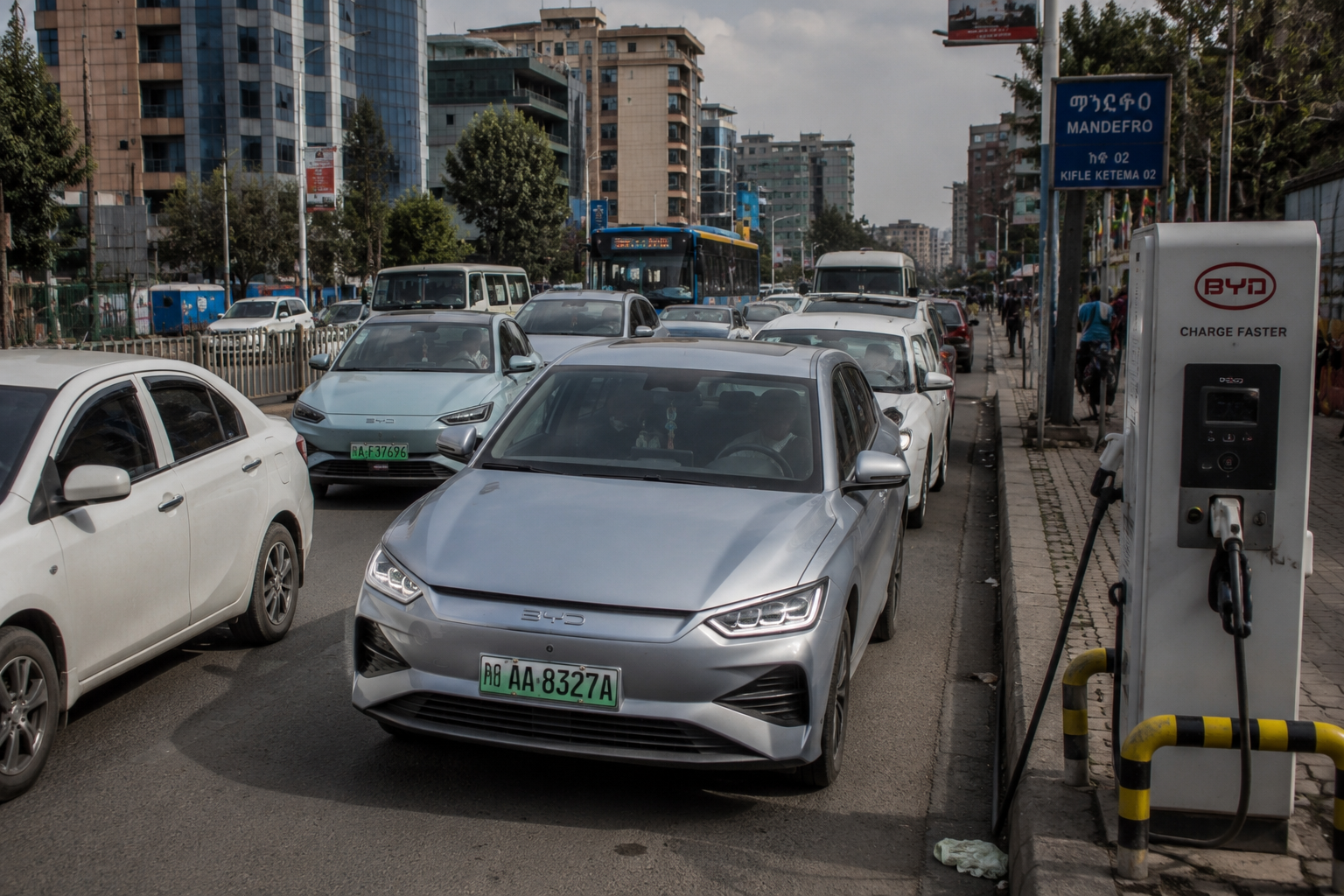
In January 2024, Ethiopia became the first country in the world to ban the import of petrol and diesel vehicles. Two years later, electric vehicles represent nearly 6 percent of its total vehicle fleet, above the global average of 4 per cent. The policy has attracted significant international attention as a model for Africa's energy transition.
Most coverage frames it as a climate story. That framing misses the more important argument. This piece explains what Ethiopia actually did, the economic conditions that made it work, what the data shows two years on, and why the lesson for other African governments is more specific and more useful than the headlines suggest.
What Ethiopia did and why
In 2024, the Ethiopian government banned the import of fossil fuel-powered vehicles and slashed tariffs on their electric equivalents. The policy was driven less by the country's climate ambitions and more by fiscal pressures.
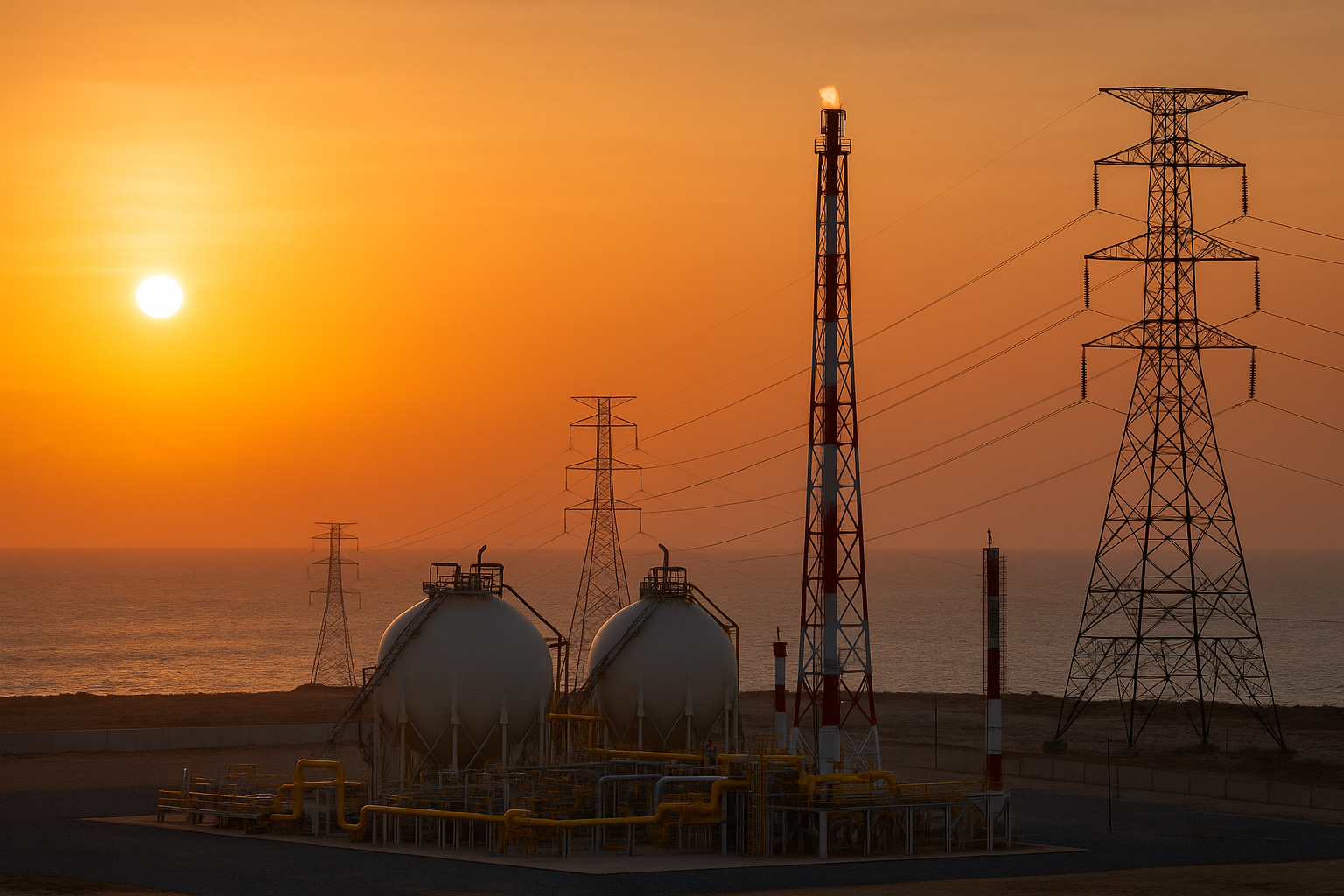
The fiscal context is essential to understanding the decision. Ethiopia defaulted on its sovereign bonds in 2023 and received a $3.4 billion bailout from the IMF in 2024 after rising interest rates drove up the costs of servicing its debts. At the same time, the country was spending an estimated $7 billion a year on fuel imports, one of the single largest drains on its balance of payments.
The calculation that followed was economic before it was environmental. Ethiopia was going to continue importing vehicles regardless of the policy. The question the government asked was which type of vehicle made more economic sense to import: one that would consume petroleum purchased in dollars from abroad, or one that would consume electricity the country already generated domestically.
Ethiopia's state minister for transport and logistics, Bareo Hassen Bareo, stated it directly: "Our transition to EVs is aimed at ensuring our energy sovereignty." The framing wasn't about emissions reductions or climate targets, but about where national energy spending was going.
The policy package that followed was coherent with that objective. The ban on ICE vehicle imports was paired with a reduction in import tariffs on EVs: 15 percent for fully assembled vehicles, 5 percent for semi-assembled kits, and effectively zero for vehicles imported as parts and assembled locally. In May 2025, the government expanded the ban to include semi-knocked-down and completely knocked down ICE vehicle kits, closing the last remaining route for petrol vehicle assembly in the country. In October 2025, the ban was extended to include gasoline and diesel trucks.
Why the electricity system made it viable
The vehicle ban only works as an import substitution strategy if the electricity replacing the imported fuel is generated domestically and at an affordable cost. Ethiopia's power system provides exactly that condition.
More than 95 percent of Ethiopia's electricity comes from hydropower, with wind and solar contributing the remainder, and fossil fuels less than 0.1 percent of the generation mix. The Grand Ethiopian Renaissance Dam, completed in 2025 for $5 billion, produces 5,150 megawatts of power. Combined with other generating assets, including wind farms and solar, the country now has excess generation capacity, which it sells to neighbouring Kenya, Tanzania, and Djibouti.
The price of delivering power to Ethiopian customers is about $0.10 per kWh, roughly half that of neighbouring countries and considerably less than the US average of $0.18 per kWh. Many Ethiopian consumers pay significantly less due to consumption-based subsidies.
This electricity price is the foundation on which the EV economics rest. Petrol prices in Ethiopia have risen to approximately $0.89 per litre following the removal of fuel subsidies in early 2025. For a driver covering 15,000 kilometres per year, switching to an EV produces annual energy cost savings of approximately $576, a 72 percent reduction.
In an economy where median monthly individual income sits near $50, that cost differential is a material economic consideration that shifts the adoption calculation from aspiration to rational household decision-making.
The reinforcing dynamic this creates is significant. Domestically generated electricity powers transport, excess generation produces export revenue to neighbouring countries, and reduced fuel imports ease pressure on foreign exchange reserves. The policy connects transport, energy, and macroeconomic strategy in ways that are typically treated as separate domains.
What two years of data shows
Before the introduction of the ICE vehicle import ban, EVs were extremely uncommon in Ethiopia. Since then, EVs have grown from less than 1 percent of vehicles on the road to nearly 6 percent, above the global average of 4 percent. There are now approximately 115,000 electric vehicles in Ethiopia, out of a total fleet of 1.5 million vehicles across the country. Ethiopia is now the fastest-growing country for EV uptake on the continent, with an anticipated compound annual growth rate of 58.92 percent through 2030.
The charging infrastructure is being built around the demand. Ethio Telecom's Bole-Megenagna charging hub in Addis Ababa served 14,280 vehicles over six weeks between February and April 2025, delivering 376,574 kWh of electricity and preventing an estimated 521,074 kilogrammes of CO₂ emissions. TotalEnergies has integrated EV charging points into its fuel stations across the capital. The government's target is 500,000 EVs on the road by 2032.
The dominant vehicle brands entering the market are Chinese. BYD's Seagull sells for approximately $23,000, competitive with the prices some secondhand petrol cars previously commanded. Chinese brands, including Changan Automobile, alongside Volkswagen and VinFast, are now common in Addis Ababa showrooms.
The conditions that made Ethiopia's model work and why they matter for replication
Ethiopia's EV transition rests on a specific combination of structural conditions that aren't universally present across the continent. Understanding these conditions is more important than understanding the policy instrument itself.
The first is a clean, domestically generated electricity system at scale. Only 55 percent of Ethiopia's population has access to electricity, with near-universal access in big cities but patchy coverage outside the capital. The transition is, for now, primarily an Addis Ababa story. But within that geography, the electricity is cheap, domestically sourced, and not dependent on imported fuel. That is the precondition that makes the import substitution calculation work. In a country dependent on diesel generation or with a fragile grid, an EV simply substitutes one form of fossil fuel import dependency for another.
The second is a significant fuel import bill creating fiscal pressure sufficient to motivate policy action. Ethiopia's $7 billion annual fuel import cost, combined with a sovereign debt crisis and an IMF bailout, created the political conditions under which an aggressive vehicle import restriction became viable rather than politically impossible.
The third is a relatively low vehicle ownership rate. Ethiopia has around 1.7 million vehicles for a population of 130 million. The political and logistical disruption of restricting ICE vehicle imports is proportionally smaller in a lightly motorised economy than it would be in a country with high vehicle density. The policy reshapes a market that is still forming rather than displacing an established one.
Nigeria illustrates the limits of replication clearly. Grid instability means large-scale EV charging would place additional pressure on an already fragile electricity system. The generator economy that dominates Nigerian self-supply is fossil-fuel dependent. Without major improvements in generation and distribution reliability, the Ethiopian calculation doesn't transfer. Kenya is closer to the model because of its renewable electricity base. Rwanda may be closer, still smaller, more policy agile, with a ban on ICE motorcycles already in force.
The reframing Africa should take from this
The most transferable element of Ethiopia's experience isn't the vehicle ban, but the policy question that preceded it.
The global climate conversation has spent years framing decarbonisation as an environmental obligation. That framing has limited political traction in economies where fiscal deficits, debt service, and energy access compete for policy attention. Ethiopia didn't use that framing. It asked an economic question: why should a country that generates most of its electricity domestically continue to spend billions of dollars importing fuel?
The moment the question was framed that way, the logic of the policy became accessible to finance ministries, not just environment ministries. The transition stopped being an obligation and became a strategy.
This reframing is available to any African government currently watching a significant share of its foreign exchange leave the country in petroleum import payments. The instrument Ethiopia used, a vehicle import ban, may not be appropriate in every context. The analysis that justified the instrument, mapping the relationship between domestic electricity generation, fuel import costs, and foreign exchange stability, is relevant wherever those conditions apply.
Ethiopia, which will host COP32 in 2027, has made increasing the rate of electrification in transport a key part of its most recent climate plan, submitted in 2025. In the previous plan submitted in 2021, there were only two mentions of electric vehicles in the entire document. That shift, from marginal mention to strategic centrepiece, reflects what happens when the energy transition is designed around economic interest rather than environmental obligation. The policy finds political home.
Africa's energy transition will become structurally durable when it is designed that way more consistently. Ethiopia's two-year record provides the most concrete evidence yet of what that looks like in practice.