What South Africa Can Learn From Morocco's Industrial Strategy and Why Electricity Is the Key
In May 2026, the African Development Bank published the 2025 edition of its Africa Industrialisation Index, a ranking built on 14 years of data across all 54 African countries, measuring industrial diversification, export sophistication, and productive capacity. For the first time since the index began in 2010, Morocco ranked first, and South Africa, which had led every edition, fell to second.
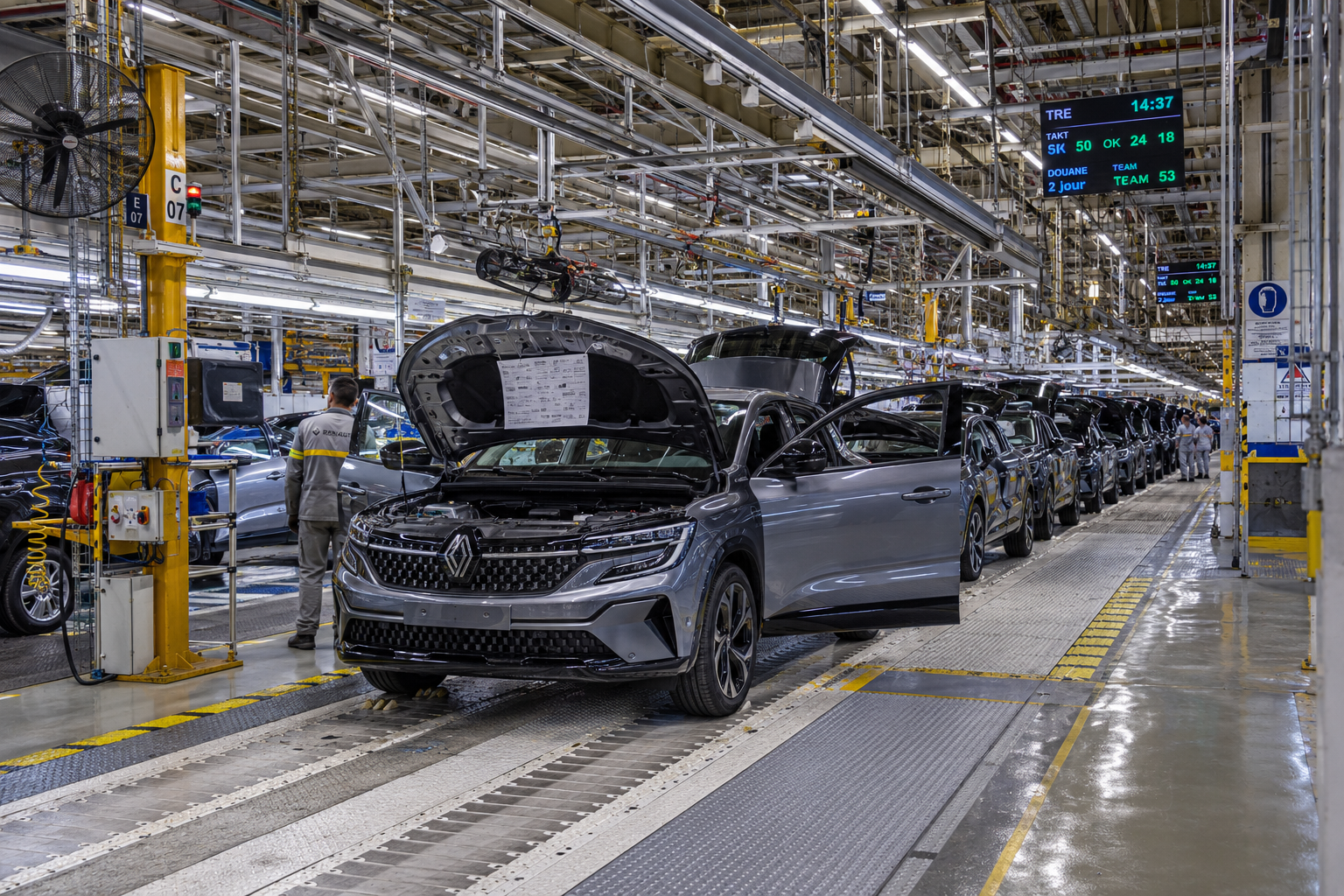
South Africa entered the post-apartheid era in 1994 as Africa's most industrialised economy by almost every available measure, the largest manufacturing base, the most diversified export portfolio, and the most developed financial and logistics infrastructure on the continent. Morocco entered it as a phosphate exporter with an agricultural base and a tourism sector. Three decades later, Morocco's automotive sector produced 493,004 vehicles in 2025 and became the European Union's largest automotive exporter by value, with shipments reaching €15.1 billion in 2023. South Africa produced 329,600 vehicles over the same period. ArcelorMittal has ceased long steel production at its Newcastle plant, and South Africa's last major manganese smelter is in restructuring. Manufacturing's share of South Africa's GDP has fallen from approximately 21 percent in the 1990s to 12.1 percent in 2023.
The AfDB's index is the cumulative record of choices both countries made, compounding over decades into the divergence that the 2025 ranking makes visible.
What Morocco did, and the sequence that mattered
Morocco's automotive success is now extensively documented, but the analysis of how it was achieved is often reduced to a generic statement about consistent industrial policy. The mechanism is more than that, and the sequence matters more than any single element within it.
Morocco built infrastructure before it began seeking investors. Tanger Med port, now the largest container port in Africa and the Mediterranean, became operational in 2007, built to create the conditions under which automotive investment would be rational. Renault's plant in Tangier followed in 2012, producing the Dacia Logan and Sandero for European markets. Stellantis opened its Kenitra facility in 2019, producing Citroën, Opel, and Fiat vehicles.
By the time the anchor investors arrived, the rail connections to the port, the industrial free zones, and the customs infrastructure were already in place. Each layer of investment made the next more attractive. Over 150 aerospace companies, including Boeing, Airbus, Safran, and Thales, followed the automotive entry into Morocco's industrial ecosystem. Aerospace exports grew from $839 million a decade ago to $2.87 billion in 2024.
The energy dimension of this story is the one least discussed in many accounts of Morocco's rise. Morocco doesn't have significant fossil fuel reserves. Its industrial competitiveness depends on imported energy, or, increasingly, on the renewable energy capacity it has been building to replace that dependence. OCP, Morocco's state phosphate group and one of the world's largest fertiliser companies, is building green energy infrastructure to replace dollar-denominated ammonia imports with domestically produced green ammonia. This isn't an ESG initiative or a climate commitment, but an industrial self-interest, because OCP's input costs are determined by global gas prices, and the strategic objective is to decouple from them. Energy sovereignty is designed as an industrial policy.
South Africa attempted a parallel programme. The Renewable Energy Independent Power Producer Procurement Programme, launched in 2011, attracted over R200 billion in private investment across more than a hundred projects and added meaningful renewable capacity to the grid. It was, by the standards of Africa's electricity sector, a genuine policy success. But REIPPPP was designed as an electricity sector reform, without integrating the industrial strategy implications of reliable, affordable electricity at scale into its design. It ran alongside industrial policy rather than as its foundation, whereas Morocco treated electricity as the precondition for industrial investment attraction.
The electricity number that explains the divergence
South Africa experienced 335 days of load shedding in 2023. The South African Reserve Bank estimated, in a figure subsequently cited by the OECD's 2025 Economic Survey of South Africa, that load shedding reduced GDP growth by 1.5 percentage points in 2023 alone, producing annual growth of just 0.7 percent. Cumulative estimates from Nova Economics place the total GDP impact at 15 percentage points between 2020 and 2023. Manufacturing bore the highest sectoral cost, and the effect on investment decisions was structural rather than cyclical.
Eskom's industrial electricity tariffs rose by 937 percent between 2007 and 2024, against cumulative inflation of 155 percent over the same period. A manufacturer paying R0.18 per kilowatt-hour in 2007 was paying over R1.40 per kilowatt-hour by 2024, a real-terms increase of roughly six times. Energy-intensive industries, the ones most likely to generate the kind of large-scale employment that industrial strategy targets, were confronting escalating input costs at the same time as supply was becoming unreliable. The combination isn't a business problem that management can solve, but a structural competitiveness problem that no factory-level decision can overcome.
ArcelorMittal's Newcastle facility didn't close because steel is a declining industry globally; it's because producing steel in South Africa, on unreliable electricity at a price that has risen faster than inflation for fifteen consecutive years, isn't commercially viable against global competitors operating in more stable electricity environments.
Transalloys isn't a failure of industrial vision. It is a factory that couldn't survive the specific combination of costs and reliability that South Africa's electricity infrastructure imposed on it. In a globally competitive environment, the marginal factor that determines where industrial investment locates is often not labour cost or mineral proximity, but whether the electricity will be there when the production line needs it.
Meanwhile, Morocco was building the electricity infrastructure its industrial strategy required. Noor Ouarzazate, still among the world's largest concentrated solar power complexes, wasn't built primarily to meet domestic residential demand, but as part of a programme to provide the industrial energy base that Morocco's export-oriented manufacturing sector would need. The timing, preceding and paralleling the anchor investor phase of Morocco's automotive build-out, reflects a sequencing logic that South Africa's electricity planning never adopted.
What South Africa can actually learn, and what it cannot
South Africa can't replicate Morocco's model wholesale. The conditions are different in structurally significant ways. Morocco's industrial success is anchored by phosphate endowment, geographic proximity to European markets that reduces logistics costs to levels South Africa cannot match for the same destinations, and over fifteen years of political continuity in industrial direction that South Africa's more contested political economy makes difficult to sustain across electoral cycles.
The specific combination of factors that made the Morocco-Renault relationship viable, a port, fiscal package, diplomatic relationship with France, and a geography that allows 48-hour delivery to European showrooms, doesn't have an obvious South African equivalent.
The lesson available from Morocco is a sequencing principle: reliable electricity at an industrial scale is a precondition for industrial investment attraction, not a downstream benefit of it. Investment decisions by the anchor manufacturers that build industrial ecosystems are made against a set of cost and reliability parameters that the electricity supply determines. Morocco understood that and built accordingly. South Africa's electricity investments have been reactive, responding to a crisis, rather than anticipatory, designed as the foundation for the industrial investment it was trying to attract.
Load shedding in South Africa has eased since March 2024, but the grid remains fragile, as the OECD notes in its 2025 survey. The industrial closures of 2025 and 2026, at ArcelorMittal Newcastle and Transalloys plant closures, across the metals and beverages sectors, represent productive capacity that doesn't automatically return when the electricity stabilises. Factories that close in a reliability crisis carry their own sunk cost calculus. The competitive advantage Morocco built over fifteen years of consistent infrastructure investment and industrial policy alignment can't be recovered in the quarter when the lights stay on.
The practical implication is narrow but specific. South Africa is currently in a period of relative electricity stability, the REIPPPP programme has added private generation capacity, and the grid is not in crisis. That is not a reason for complacency; it is the window in which the sequencing error of the past decade can be corrected. Industrial strategy and electricity planning must be designed together, not sequenced, and managed by different ministerial portfolios with different timelines, but integrated, so that the electricity investment decisions anticipate and enable the industrial investment decisions they are meant to support.
The AfDB index measures where things are. The question for South Africa is whether the window between this moment of relative stability and the next reliability crisis is long enough to begin changing the sequencing logic that produced the divergence the 2025 ranking makes visible.