Why Electricity Access Still Leaves African Households Behind
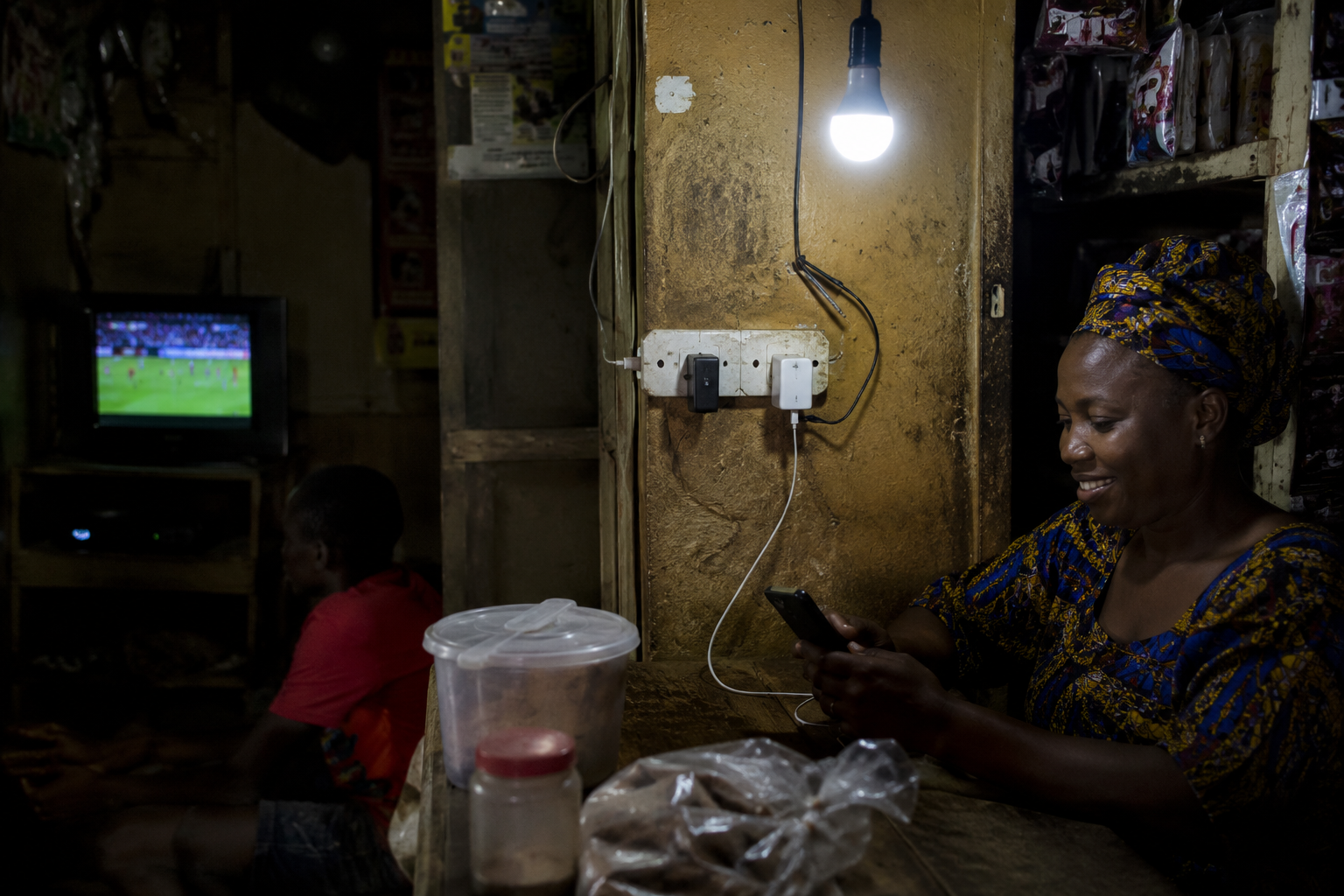
Sub-Saharan Africa connected close to 19 million people to electricity in both 2023 and 2024, down from 23 million in 2019, even as more countries adopt electrification targets and more capital moves into the sector. The number of people in the region without electricity is also rising: close to 600 million as of 2024, 47% of the population, with electrification barely keeping pace with population growth.
The SDG7 target of universal access by 2030 will be missed by hundreds of millions of people on current trajectories. Both facts are true, and they coexist because the mechanism connecting investment to access contains economic filters that systematically exclude the poorest households, filters that matter more than the investment gap itself.
The cheapest option on the market is still out of reach
The figure that best explains this rarely appears in the access conversation. Under the World Bank ESMAP and GOGLA's Off-Grid Solar Market Trends Report 2024, only 22% of households lacking electricity globally can afford the monthly PAYG payment for a Tier 1 solar kit, the cheapest available entry-level product, priced against the World Bank's own affordability threshold of 5% of household income. In Sub-Saharan Africa specifically, that figure drops to just 16%. PAYG financing was designed exactly to solve this problem, replacing a large upfront purchase with smaller instalments, and it has still left roughly five in every six unelectrified households in the region unable to afford even the cheapest financed product on the market.
The gap is worse exactly where the need is greatest. Some 82% of people lacking access live in low-density rural, remote, or conflict-affected areas, and in conflict-affected contexts especially, where 64% of the unelectrified live, reaching households costs enough more that Tier 1 PAYG prices rise by 57%, from around $127 to $199 a month.
Affordability gets worse and doesn't improve as programmes reach further into the deficit. The households still left unconnected are disproportionately the ones a commercial PAYG model was never designed to reach, and a solar company can shorten repayment periods, cut hardware costs, or expand distribution, but below a certain household income, the underlying economics do not work without a subsidy attached.
Grid economics reward density, not need
The default electrification tool has long been grid extension, and it is the right tool for dense, urban-adjacent communities and the wrong one for the communities furthest from the existing network. The economics are structural, not a matter of poor planning: cost-effectiveness depends on load density, how many customers a kilometre of line can serve, and in sparse rural areas that same kilometre may serve only a fraction of the households it would in a peri-urban district, for a broadly similar capital cost.
Extending grid access to sparse rural customers requires upfront subsidies of $500 to $4,000 per household, according to Sustainable Energy for All, with limited revenue from electricity sales to recover that cost over time. Grid extension and upgrade projects in sub-Saharan Africa can run to $5.5 million per megawatt-kilometre, and average connection costs of around $136 for a single-phase hookup understate the real cost once wiring and equipment are included. National utility connection costs in rural areas often exceed $2,000, carrying implicit subsidies, sometimes more than 40% of the connection cost, that utilities can rarely sustain at scale without government support.
This creates a rational bias in any programme measured by connection counts: connect the communities closest to the existing grid first, maximise connections per dollar spent, and defer the hardest-to-reach communities to the next cycle. That is not corruption or mismanagement. It is the predictable response to grid economics operating in low-density, low-income settings, and its effect compounds over time: each successive programme connects the easiest remaining communities, while the hardest-to-reach ones grow as a share of what is left, further from substations, more dispersed, and poorer than the communities connected before them. The final households in any electrification programme are, by construction, the most expensive ones left to reach.
A connection is not the same as a usable supply
ETA has previously reported that a large share of Africa's newly connected households receive under eight hours of electricity a day, enough for lighting and phone charging but below the threshold at which productive economic activity becomes possible, and a companion piece has since documented in detail what Tier 3 and Tier 4 access actually produces in income and employment terms across Kenya, Nigeria, and Rwanda.
That finding sits inside the World Bank's Multi-Tier Framework, which distinguishes electricity access across five tiers rather than treating it as binary: Tier 1 is a few hours of light at a minimum of 3 watts, and Tier 4 is the equivalent of a reliable grid connection capable of running a refrigerator, a water pump, or a small enterprise. Most new off-grid connections land at Tier 1 or Tier 2, sufficient for a light bulb and a phone charger, not for the appliances that convert electricity into income.
Nigeria's own household data illustrate the same gap even among households that are formally grid-connected. The National Bureau of Statistics' 2023-2024 General Household Survey found that households report about seven outages a week nationally, with a typical outage lasting 12 hours, forcing most to alternate between grid power and a generator to get through the day. These households count as electrified in the national access statistics, but they rarely have the reliability that productive use actually requires, and the quality-connection gap this represents means headline access figures consistently overstate what has changed for the household counted inside them. A government can report rising connection numbers in good faith while the lived reliability of that connection barely moves.
What would actually shift the mechanism?
The IEA's Financing Electricity Access in Africa, published in October 2025, puts the investment required at $15 billion a year to reach universal access across the region; less than $2.5 billion a year was actually committed as of the most recent full data, for 2023, more than 70% of it from public sources.
Reaching the households priced out of PAYG requires demand-side subsidies as a time-bound bridge between current affordability and the income level at which electricity becomes affordable without one, distinct from the supply-side subsidies that have historically dominated financing. It also requires utility reform, since public utilities are, in the IEA's own words, among the most indebted state-owned enterprises in sub-Saharan Africa, with margins too thin to sustain loss-making rural programmes without direct government support layered on top.
None of these three mechanisms is a secret. The IEA, World Bank, GOGLA, and SEforAll have each documented pieces of it, in separate reports written for separate audiences, using different datasets that rarely get read alongside one another. What the aggregate access statistics hide, by design rather than deception, is that the mechanisms are known, partially addressed, and still moving too slowly to converge with the roughly 100 million connections a year that universal access by 2030 would actually require.
The remaining gap won't close by repeating the approach that connected the easier population first. It requires programmes built specifically around the affordability, geography, and quality constraints that define the households still left behind, rather than programmes designed for an average household that, statistically, has already been connected.
That distinction should change how progress itself gets reported. A rising connection count isn't, on its own, evidence that the underlying problem is shrinking at the same pace, since the households behind that count are becoming, on average, harder and more expensive to reach with each successive year. Tracking affordability at the point of connection, the technology mix actually used to reach the last communities, and the tier of service those communities receive would tell a more honest story than the headline access rate alone, and it is a story African governments, utilities, and their financing partners are better placed to act on than one number moving slowly in the right direction.