Nigeria Wants Your Data Hosted at Home. Its Grid Cannot Power the Servers That Would Hold It.
There is a particular kind of pride in being told your data will stay home.
When Nigeria's regulators designated the Bank Verification Number database, the National Identification Number system, and the Nigerian Interbank Settlement System as Critical National Information Infrastructure, the message to the country was unambiguous: this is ours, it matters, and it will be protected on our own soil. I understand the instinct behind that. I have spent enough years working across this continent's institutions to know how often "compliance" has meant routing African data through servers in Frankfurt or Virginia, paying foreign companies to process what African citizens generated, and accepting the latency, dependency, and loss of leverage that comes with it.
The sovereignty argument isn't wrong. Data centres bring jobs, tax revenue, and the kind of digital economy multiplier effects that any serious industrial strategy should want. Nigeria's Data Protection Act 2023 doesn't impose blanket localisation; it requires that personal data transferred abroad receive adequate protection or appropriate safeguards. But the 2024 Critical National Information Infrastructure order went further for a specific category of sensitive financial and identity data: BVN, NIN, and NIBSS records now sit under a designation that treats their physical location and the infrastructure protecting them as a matter of national security.
I want to ask the question that I haven't seen asked with equal seriousness in any of the policy conversations I have followed on this.
Does Nigeria have the electricity to actually host that data reliably?
What a data centre demands that a hospital does not
A data centre is not simply a building with servers inside it. It requires continuous, stable, redundant electricity, with effectively zero tolerance for interruption. A few seconds of power loss can corrupt data, crash transaction systems, and destroy the one thing the entire facility exists to sell: trust that the information inside it is safe and available.
This is a different threshold from what I have written about elsewhere on this continent's energy gap. A rural clinic that loses power for six hours overnight loses its vaccine cold chain, devastating, but the clinic still functions the next morning once power returns. A data centre that loses power for even a fraction of that time can lose the data itself, or the confidence of every institution that trusted it to be available.
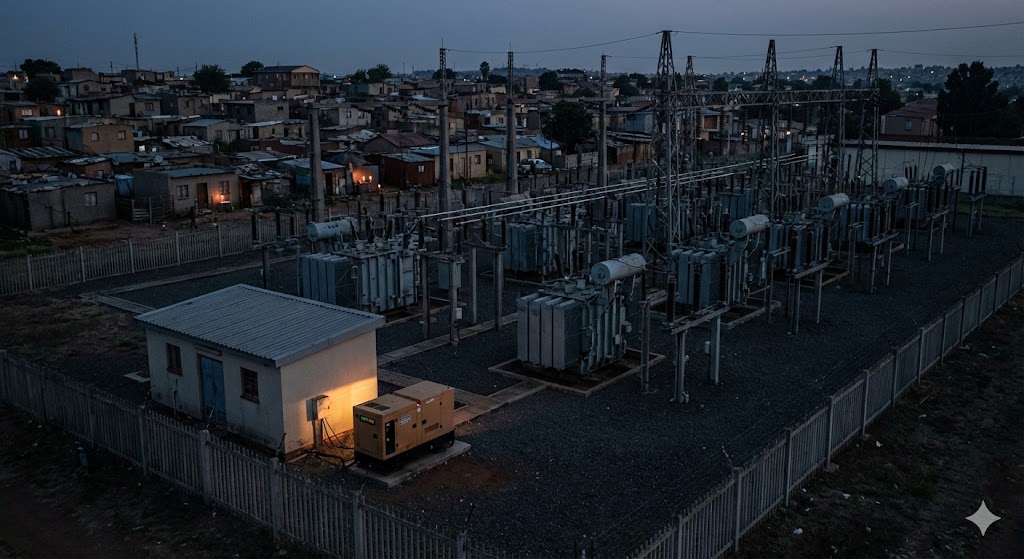
And here is the electricity environment into which Nigeria is proposing to host its most sensitive financial and identity records. The country has over 13,000 megawatts of installed generation capacity. The Nigerian Electricity Regulatory Commission's own quarterly figures show available generation ranging from roughly 4,900 to 7,300 megawatts in recent quarters, and that in the third quarter of 2025, more than 60 percent of the country's power plants were unavailable or idle, according to NERC's regulatory data. In large parts of the country, the grid is still described as delivering around four hours of usable power a day.
Nigeria's 17 data centres, the third-most of any African country after South Africa and Kenya, collectively required around 137 megawatts of power capacity in 2025. That figure is a small fraction of the national total. But the relevant comparison is the specific, redundant, zero-tolerance supply that each facility requires, and the well-documented fact that Nigeria's data centre operators aren't getting that supply from the grid, but from captive gas generation, hybrid solar systems, and diesel backup, because the grid Nigeria has can't be trusted to deliver what a data centre needs.
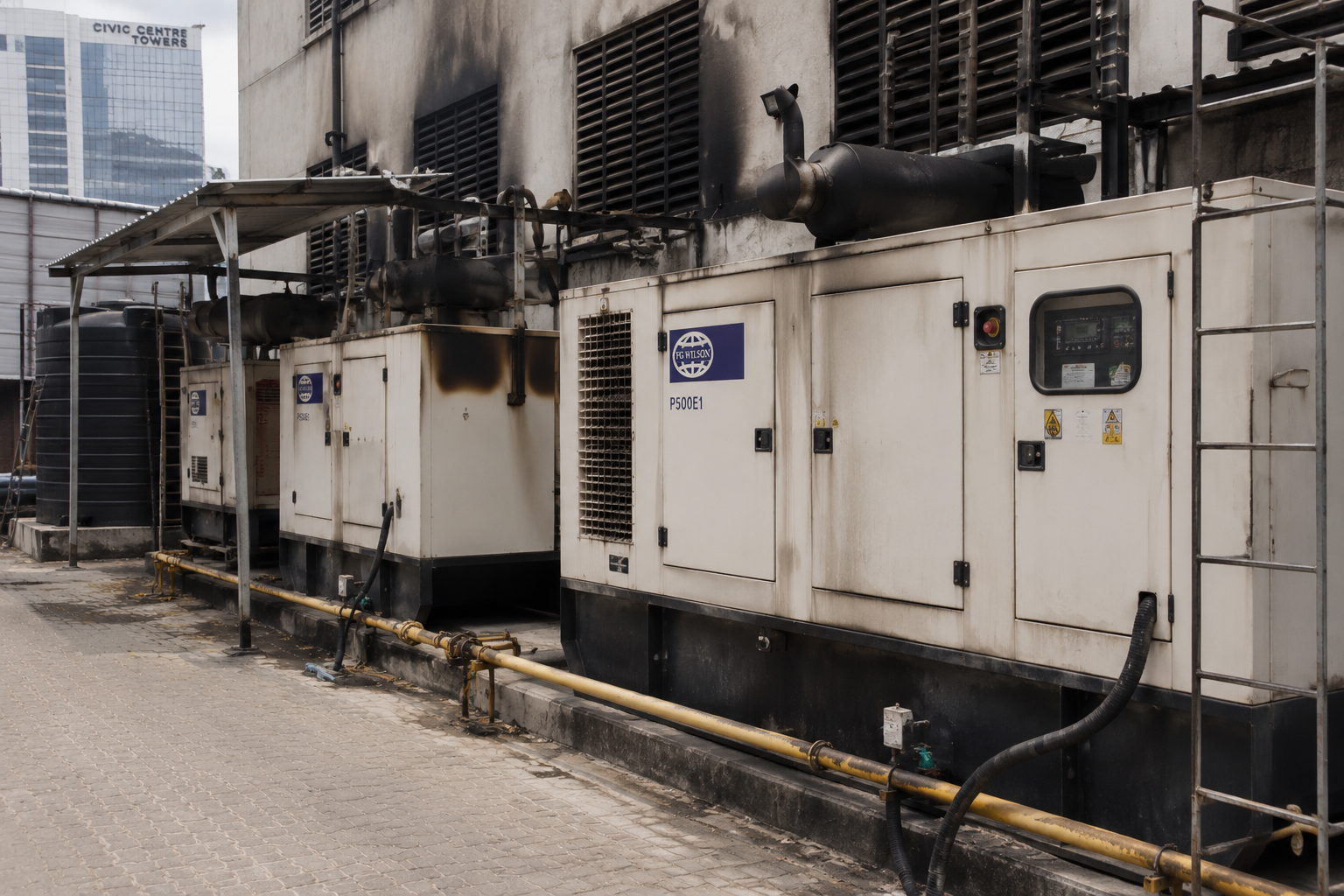
Diesel is not the backup here. It is the system.
In the markets where data centre policy conversations usually happen, in the United States and the European Union, diesel generators exist as a last resort. They are designed to run for a handful of hours a year during genuine grid emergencies, and even there, climate researchers and regulators are increasingly uneasy about the practice. Diesel is the exception that proves the grid works.
In Nigeria, the relationship is inverted. Diesel and captive gas generation aren't the backup to the grid, but the primary, planned, and budgeted source of reliable power for the facilities that need it most, with the national grid functioning as the unreliable supplement, present on the books but absent in practice.
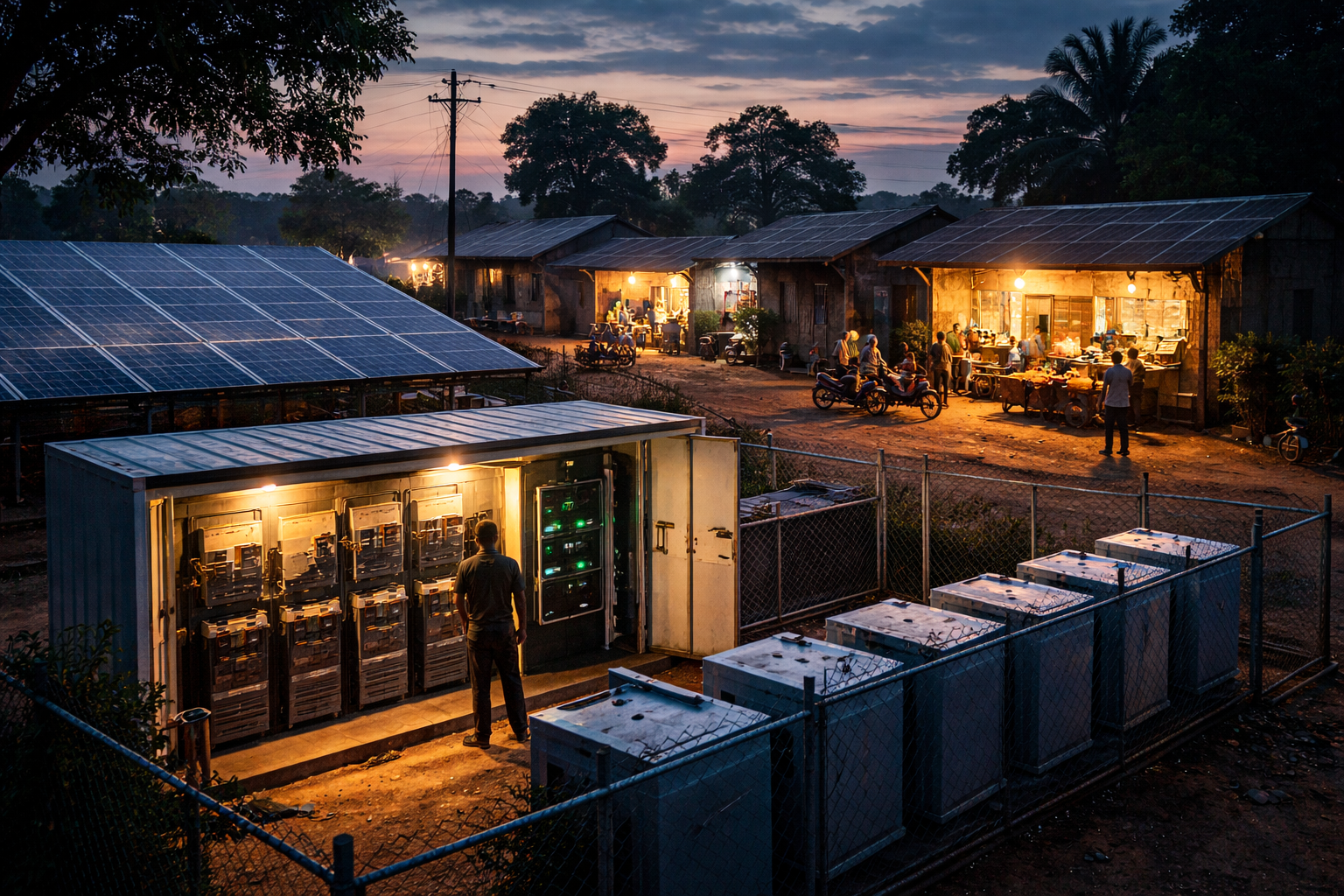
I have watched this pattern before, in sector after sector across this country. Nigeria's telecom industry has, by some peer-reviewed estimates, more than 50,000 base transceiver stations historically running on diesel generators, a figure from a 2019 study that almost certainly understates the current 2026 count, given how much 4G and 5G infrastructure has been added since. I have written about the hospitals and rural health facilities where the same pattern repeats: solar systems installed, batteries that fail within months, and a workforce and maintenance ecosystem that was never built to keep them running. I have equally written about Nigeria's $14 billion generator economy, a parallel power system that has survived every electricity reform this country has attempted, because the underlying grid has never given Nigerians, or Nigerian businesses, a reason to stop building their own.
Now the same structural failure is showing up in the place Nigeria has chosen to declare a policy victory.
Sovereignty has an unstated assumption, and the assumption has not been met
Here is the analytical point I want to leave you with, because I think it is the one the policy conversation has skipped.
Data sovereignty as a policy assumes that hosting data inside national borders is inherently more secure and more aligned with national interest than hosting it abroad. That assumption holds only if the infrastructure inside those borders can actually deliver the reliability the data requires. If it can't, if the servers holding Nigeria's BVN and NIN records are running predominantly on diesel because the grid cannot be trusted, then sovereignty has been achieved on paper, not in substance. The servers are physically in Nigeria, while the actual operational dependency has simply shifted from foreign cloud infrastructure to a domestic diesel supply chain that carries its own vulnerabilities: fuel price shocks, foreign exchange access for imported generators and parts, and the same maintenance and reliability questions I have documented in every other diesel-dependent sector this country runs on.
I do not want this to be read as an argument against data sovereignty. It is an argument that data sovereignty without electricity sovereignty is an incomplete policy, a flag planted on ground that has not yet been built to hold it.
What is coming, and what is not yet being planned for it
This isn't a small or temporary problem that current capacity happens to be insufficient for. Nigeria's data centre capacity is projected to grow roughly fivefold by 2030, from somewhere in the 65 to 86 megawatt range today to more than 400 megawatts. McKinsey projects that the five largest African data centre markets combined; Egypt, Kenya, Morocco, Nigeria, and South Africa, will grow from around 400 megawatts today to between 1.5 and 2.2 gigawatts by the same year, a three-and-a-half to five-and-a-half-fold increase driven by AI adoption, cloud migration, and government digitalisation.
That growth is coming regardless of what the grid can support, because the commercial incentive to build is strong and the capital is available. The question I am left with is whether Nigeria is planning the electricity infrastructure for that growth with anything close to the seriousness with which it is asserting the right to host the data.
Or whether the country is about to repeat, at a larger and more strategically consequential scale, the same pattern I have already documented in its hospitals and its telecom towers: declaring a policy victory at the moment of connection, while building an entire shadow economy of diesel and gas generation to make that victory function in practice, and calling the result sovereignty, when what it actually is, is dependency wearing a different uniform.