Africa's Energy Transition Has a Gender Design Gap. The Data Shows Where.
Women increasingly appear in Africa's energy policies, but major gaps remain in workforce, finance, and outcome measurement. ETA examines the latest data.


Women increasingly appear in Africa's energy policies, but major gaps remain in workforce, finance, and outcome measurement. ETA examines the latest data.

Zambia produced 890,346 tonnes of copper in 2025. ETA examines whether smelting, power and manufacturing can turn rising output into lasting value.

Fifteen professionals from eight countries have begun the ETA Fellows Programme, an eleven-week initiative focused on analysis and institutional capability.

Africa commissions megawatts and counts connections. It rarely measures whether the people to sustain what it builds are being developed at the same pace. Vincent Egoro on the human infrastructure gap that determines whether Africa's energy investments last thirty years or ten.

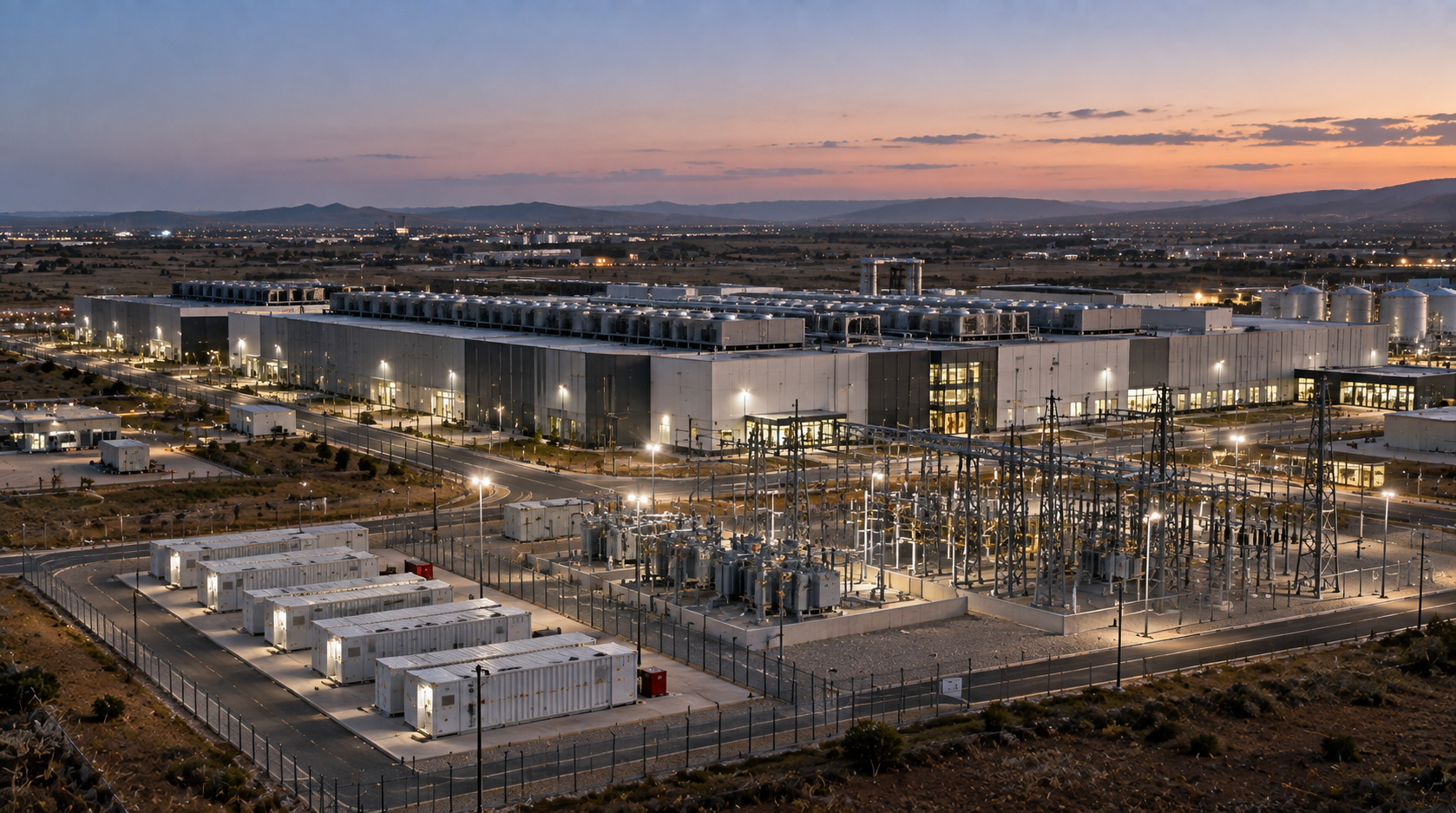
Africa's AI data centre build-out is converging on natural gas, not solar. A 20 MW facility in Nigeria needs a 100 MW gas plant. Kenya's geothermal grid shows the alternative. ETA on who bears the stranded-asset risk if the global AI capex cycle turns.

Only 2 of 54 African countries hold investment-grade ratings. Country risk explains the 56% variation in renewable energy financing costs. Bloomberg put $285m behind institutional capacity, not solar farms. Vincent Egoro on what the bet means, and the question it still hasn't answered.

Africa had the world's largest solar cost reduction of any region between 2015 and 2025, 76% lower installation costs 77% lower electricity costs. IRENA's 2025 report shows that country risk explains 56% of financing cost variation across markets.

Mission 300 assumes capable institutions. The Twin Transition assumes governance-literate regulators. Africa's energy systems are digitising rapidly. But who is training the policymakers, energy economists, and digital regulators who must govern all of it? Vincent Egoro asks.

Africa recorded the world's fastest improvement in energy transition readiness in 2026. Yet grid reliability declined, infrastructure remained the weakest of any region, and system performance barely improved. ETA Analysis examines what the data actually shows.

South Africa has opened the door to new oil and gas development. Guyana shows what happens next: growing dependence on hydrocarbon revenues, difficult policy trade-offs and shrinking room to change course. ETA Analysis on the risks policymakers should confront now.

Blended finance set records in 2025, mobilising $8.40 per dollar of MIGA guarantees and reaching $18.7 billion globally. Yet it still represents less than 0.5% of annual climate finance needs. Why has it failed to close Africa's energy investment gap?

The EU's Carbon Border Adjustment Mechanism is live. African exporters of steel, cement, fertiliser, and aluminium must now prove the embodied carbon in their products or pay punitive default tariffs. The problem: Africa lacks regional Life Cycle Inventory databases to do so.